
Air freight to Poland is one of the fastest ways to move goods across the Atlantic — but it comes with real trade-offs in speed, documentation, and logistics complexity.
Here’s a quick overview to help you decide if it’s the right option for your shipment:
| Factor | Air Freight to Poland |
|---|---|
| Transit time | 2–4 business days (standard); 1–3 days (express) |
| Main US departure airports | Newark (EWR), JFK, Philadelphia (PHL) |
| Main Polish arrival airports | Warsaw Chopin (WAW), Katowice (KTW), Gdańsk (GDN), Poznań (POZ) |
| Flight duration | ~8h 22m (EWR–WAW); ~8h 34m (JFK–WAW) |
| Best for | Urgent, high-value, or time-sensitive cargo |
| Key documents needed | Air Waybill, Commercial Invoice, Packing List, EORI number |
Whether you’re shipping personal belongings, business goods, or specialty cargo, understanding how international air freight works — and what it demands — saves you from costly delays and compliance headaches.
This guide walks you through everything: airports, transit timelines, documentation, cargo preparation, customs rules, and more.
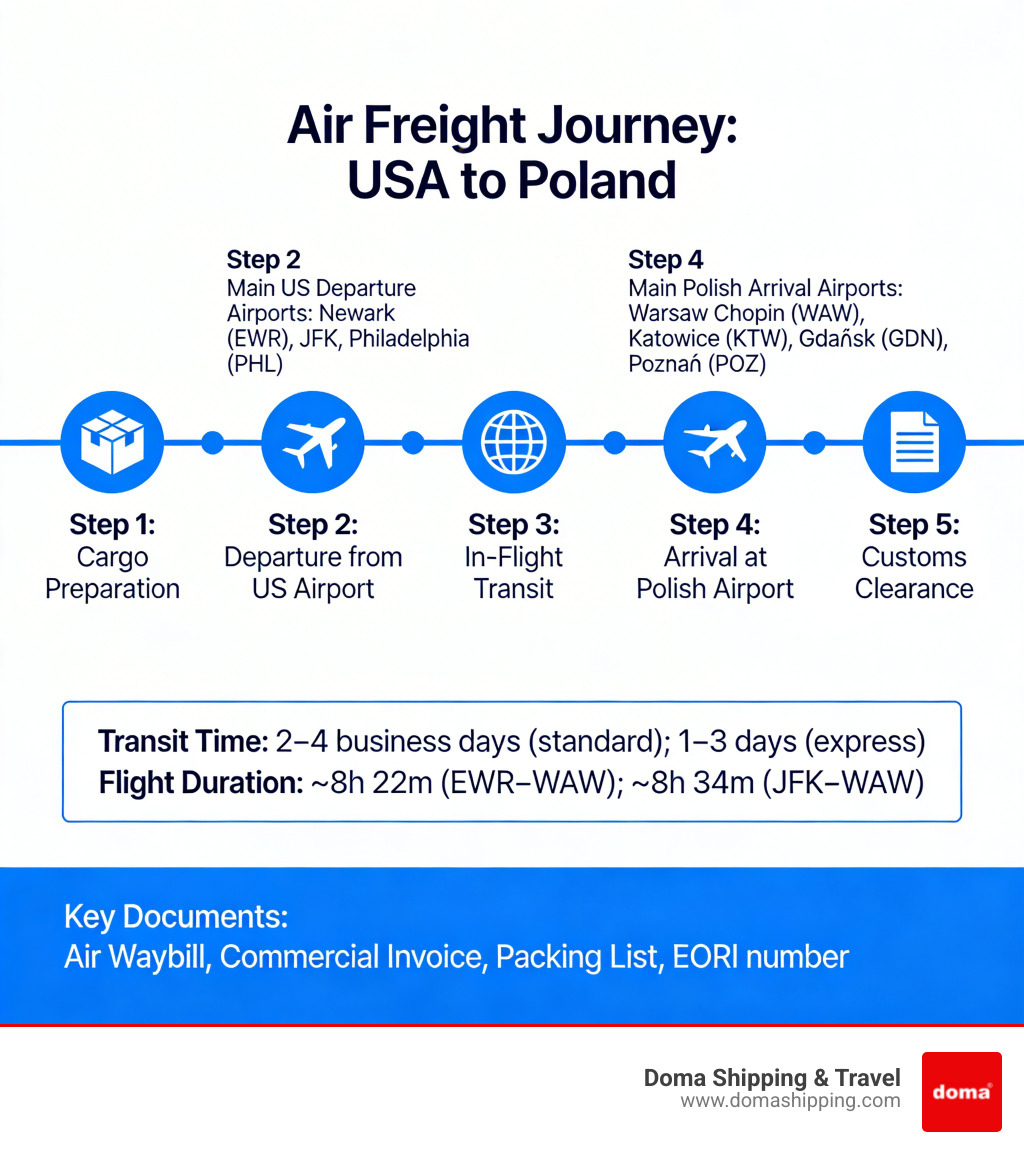
When time is the most critical factor in your supply chain, air freight to Poland stands out as the premier choice. Unlike ocean transport, which can take several weeks to cross the Atlantic and reach Polish ports like Gdańsk, air transport slashes that timeline to just a few days. This speed is essential for high-value cargo, electronics, or urgent International Parcel Shipping needs where every hour counts.
Poland’s position in the global market has shifted dramatically over the last few decades. As a member of the World Trade Organization, Poland has integrated deeply into the European and global economy. In fact, it has been recognized as one of the fastest-developing countries in the EU, making it a vital destination for American goods.
Choosing air transport isn’t just about speed; it’s also about security. Air cargo undergoes rigorous screening and spends significantly less time in transit, reducing the risk of damage or theft. For businesses in the Chicago area—from Palos Hills to Algonquin—utilizing air routes means your goods are handled with the precision required for a modern, global supply chain.
Poland boasts a sophisticated network of airports capable of handling diverse cargo types. While Warsaw is the primary gateway, regional hubs play a massive role in distributing goods across Central and Eastern Europe.
For those shipping from the East Coast, the connections are robust. The quickest route typically departs from Newark Liberty International Airport (EWR) to Warsaw, taking approximately 8 hours and 22 minutes. Daily flights are common from John F. Kennedy International Airport (JFK), while Philadelphia (PHL) often hosts dedicated cargo freighters, such as the Boeing 747-8F, which can transport massive volumes of goods in a single trip.
| Departure Airport (USA) | Arrival Airport (Poland) | Flight Duration | Frequency |
|---|---|---|---|
| Newark (EWR) | Warsaw (WAW) | 8h 22m | 2–4 times/week |
| New York (JFK) | Warsaw (WAW) | 8h 34m | Daily |
| Philadelphia (PHL) | Warsaw (WAW) | 14h 09m (Freighter) | Every 1–2 weeks |
| Chicago (ORD) | Warsaw (WAW) | ~9h 15m | Daily |
Navigating Polish customs requires a meticulous approach to paperwork. Since Poland is part of the EU Customs Union, once your goods clear customs in Poland, they can move freely across the rest of the European Union. However, that initial entry is strictly regulated.
Poland’s commitment to transparency and its stable political situation—highlighted by Transparency International—makes it a reliable partner for trade. To ensure a seamless transition from the airport to the final destination, many shippers opt for Door to Door Shipping services, which manage the customs clearance process on the client’s behalf.
Proper preparation is the difference between a successful delivery and a damaged shipment. Air freight requires specific packing standards to withstand the pressures of flight and the mechanics of loading.
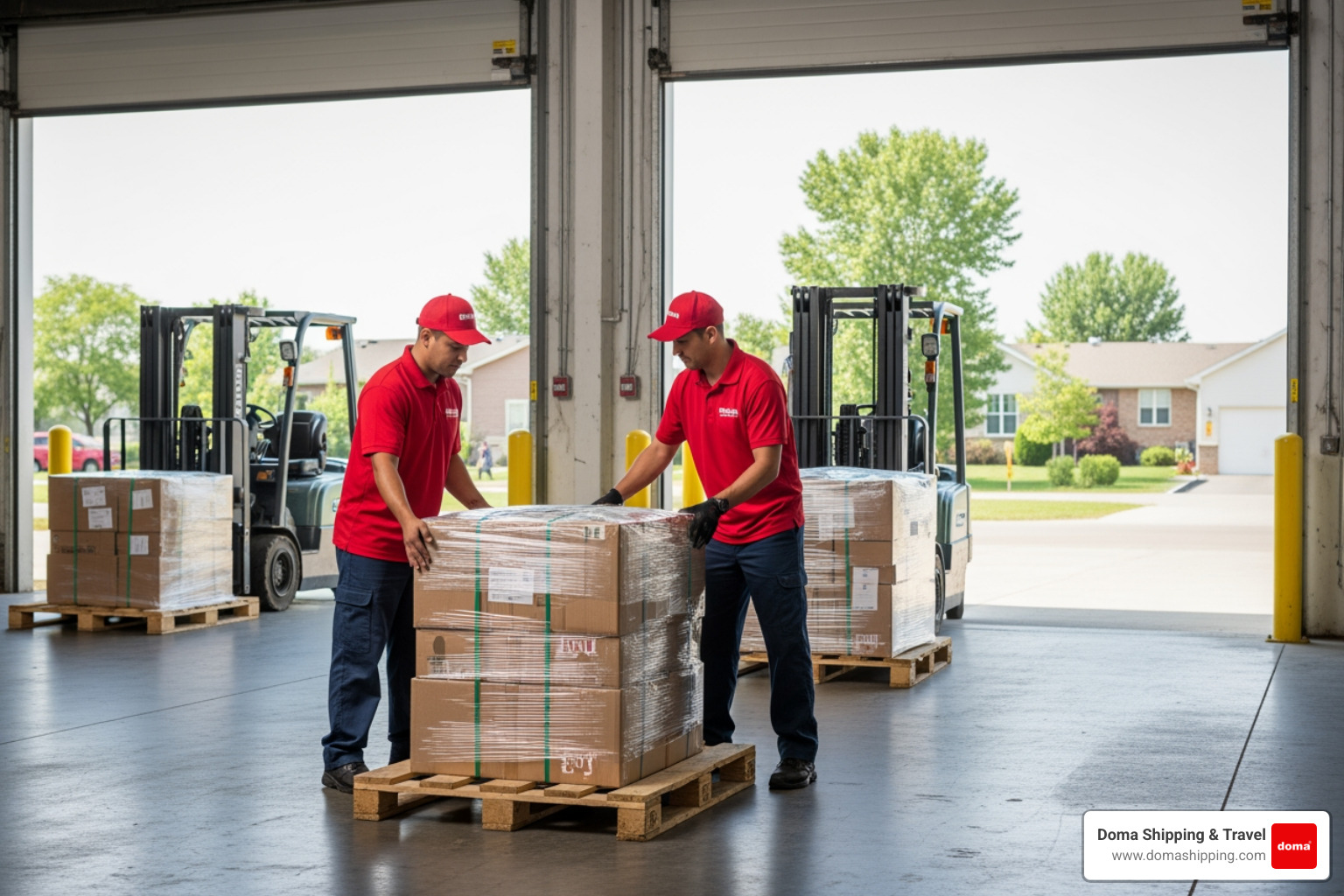
Not all cargo is created equal. Some items require “white glove” treatment:
To keep your goods safe and compliant, follow these industry standards:
For smaller shipments that don’t require a full aircraft pallet, Less Than Container Load Shipping principles apply—your goods are consolidated with others to maximize efficiency and ensure they are handled safely within the air cargo hold.
While the flight itself is under 10 hours from the East Coast, the total transit time usually ranges from 2 to 4 business days. This accounts for cargo drop-off, security screening, customs clearance at the destination, and final local delivery. Express services can sometimes shorten this to 1–3 days, while standard air freight might take up to a week depending on the flight schedule and hub congestion.
Safety is the top priority in aviation. Prohibited items include:
Modern logistics relies on visibility. Once your cargo is booked, you receive a unique tracking number associated with your Air Waybill. This allows you to see when the goods depart the US, when they land in Poland, and when they have cleared customs. You can access these updates through our Tracking portal to stay informed every step of the way.
Navigating air freight to Poland doesn’t have to be a daunting task. By understanding the major hubs like Warsaw and Katowice, staying on top of EORI and AES documentation, and ensuring your cargo is packed to international standards, you can take full advantage of the speed that air transport offers.
At Doma Shipping, we bring over 30 years of experience to every shipment. From our locations across the Chicago suburbs—including Roselle, Des Plaines, and Schaumburg—we specialize in connecting the United States to Poland with reliability and care. Whether you are sending a small parcel or managing complex commercial logistics, our team ensures your goods cross the Atlantic at lightning speed.
Ready to get started? Start your shipment to Poland today and experience the efficiency of professional air freight.