
When we consider flowers to be sent abroad, we are looking at a specialized branch of logistics. Unlike a standard parcel, flowers are living, breathing commodities that require specific environmental conditions to survive a journey across the Atlantic. In our experience at Doma Shipping, originating from hubs like Chicago, IL, or our offices in Roselle and Des Plaines, we see how the complexity of the shipment depends entirely on the form the flora takes.
There is a massive legal and logistical divide between sending a bouquet of cut roses and sending a potted orchid. To help you understand the requirements, we’ve broken down the primary differences:
| Feature | Cut Flowers | Potted Plants |
|---|---|---|
| Soil Content | None (Prohibited in most cases) | Contains soil/substrate (High risk) |
| Root System | No roots | Active root system |
| Risk Level | Low (Pests are easier to spot) | High (Soil can hide larvae/fungi) |
| Phytosanitary Certificate | Often required for bulk/commercial | Almost always mandatory |
| Customs Scrutiny | Standard inspection | Intense agricultural quarantine |
The United States Department of Agriculture (USDA) and its Animal and Plant Health Inspection Service (APHIS) division oversee the movement of plant materials. Their primary goal is to prevent the “hitchhiking” of invasive species that could threaten local ecosystems. If you are attempting International Parcel Shipping, you must be aware that almost all European nations require a phytosanitary certificate. This document is an official statement from the US government verifying that the plant material is free from pests and diseases. For a private individual, obtaining this can be a complex and time-consuming process, which is why most people opt for established floral networks that handle these regulatory hurdles on their behalf.
The European Union has some of the strictest biosecurity laws in the world. They maintain an Invasive Alien Species list, and if your chosen bloom is on it, it will be confiscated and destroyed at the border. Furthermore, soil is almost universally prohibited from entering the EU from North America because it can harbor nematodes and fungi that could devastate European agriculture. This is why professional shipping services emphasize soil-free arrangements or specialized substrates that meet international standards.
Not all flowers are built for the rigors of international travel. If we are coordinating a delivery, we recommend choosing “hardy” varieties. A Bukiet Różowych Gerber is an excellent choice because gerberas have thick stems and can maintain their structural integrity even if there are slight temperature fluctuations during the handover process.
When selecting blooms, consider these factors:
For romantic gestures, a Walentynkowy Flower Box is often superior to a standard bouquet. The box provides a sturdy base that protects the delicate heads of the roses and often includes a hidden reservoir of water or floral foam to keep the stems hydrated.
Most people assume that when they order flowers to be sent abroad, those specific flowers are put on a plane in Chicago and flown to Warsaw. In reality, the most efficient way this works is through a “Florist Relay” system.
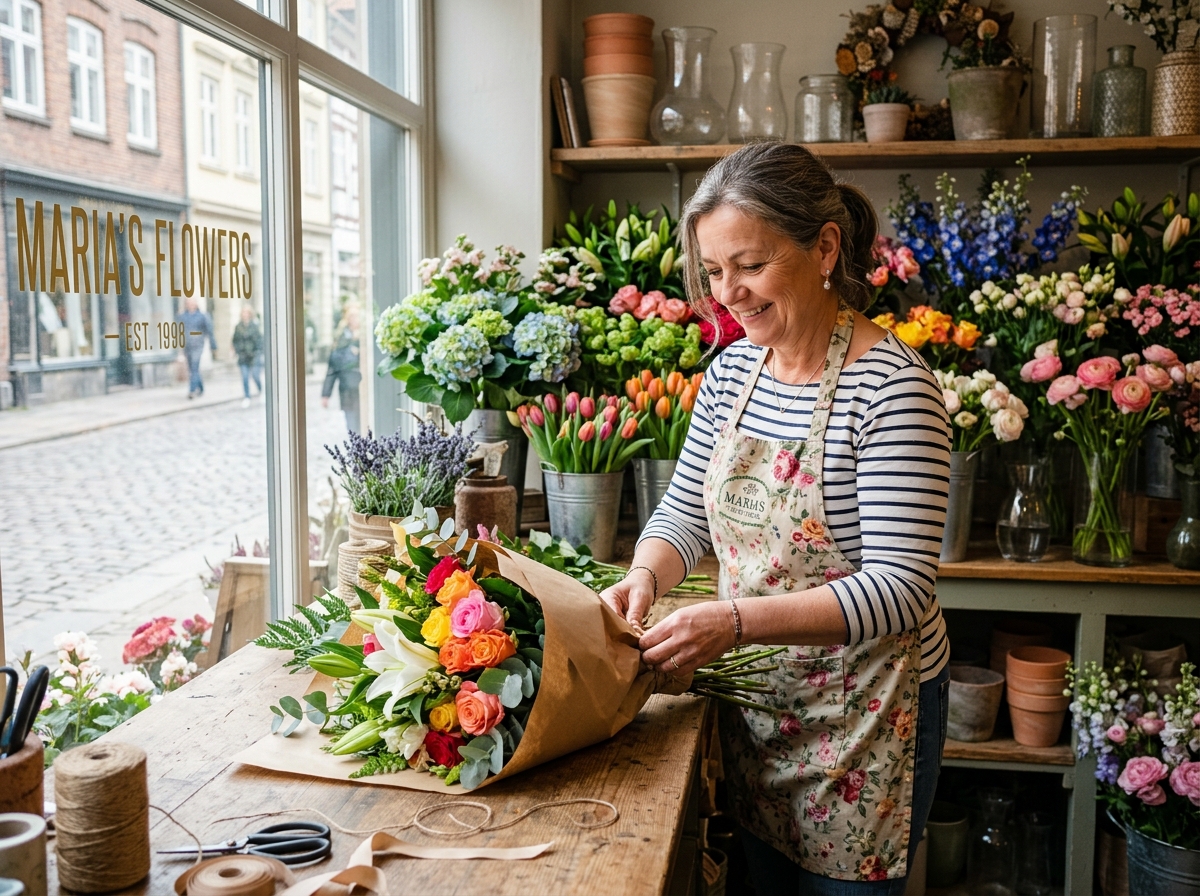
When you place an order through a global network, your request is transmitted to a local artisan florist in the recipient’s city. This is how services manage to offer same-day or next-day delivery across 3500 cities worldwide. By using local affiliates, the flowers only spend a few minutes in a delivery van rather than hours in a cargo hold. This ensures that the Kwiaty i Upominki arrive with the dew still on the petals.
This decentralized model is the backbone of modern perishable logistics, allowing for a level of freshness that traditional long-haul shipping simply cannot match. Whether the destination is a bustling street in Warsaw or a quiet suburb in Krakow, the local expertise ensures that regional floral preferences and delivery nuances are respected, providing a truly local feel to an international gesture.
Managing an international order requires keen attention to time zones. If you are in our Schaumburg or Algonquin locations and want flowers delivered in Poland by tomorrow morning, you have to account for the six-hour time jump. Our Door-to-Door Shipping philosophy applies here too—the goal is a seamless transition from the sender’s intent to the recipient’s doorstep. Modern order tracking systems now allow you to see exactly when the local florist has finished the arrangement and when the courier has departed for the final mile.
If you are working with a logistics provider to ship specialized floral products or preserved arrangements, the preparation phase is where the battle for freshness is won or lost.
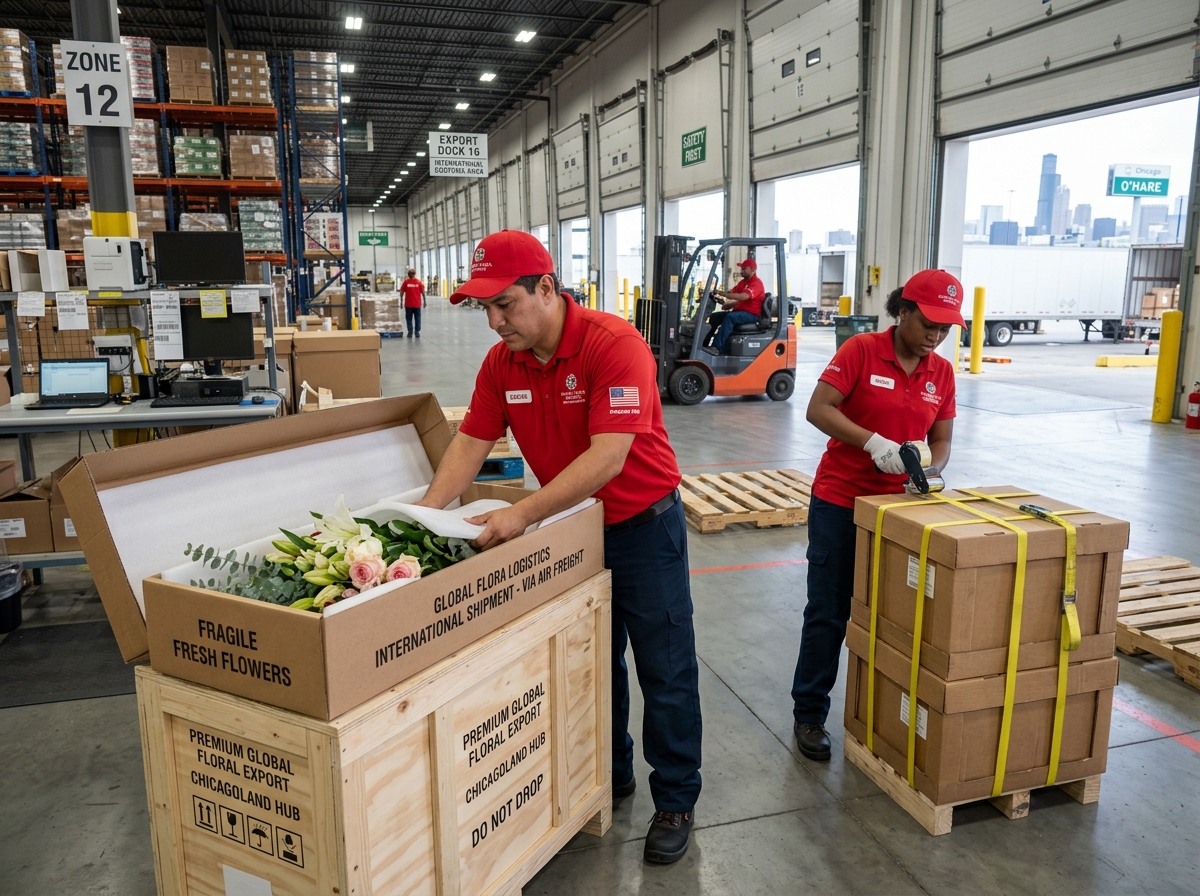
For cut flowers, the stems must remain in contact with moisture. The industry standard is “floral foam”—a dense, sponge-like material that holds many times its weight in water. We often see arrangements like the Bukiet My Love z Pralinami Fiore packaged with the stems wrapped in water-soaked cotton and sealed in plastic to prevent leaks while ensuring the flowers don’t “drink” themselves dry during the flight.
Flowers are highly sensitive to “thermal shock.” If they move from a chilled warehouse in Franklin Park to a hot loading dock, they will begin to sweat and wilt. Specialized packaging for overseas floral transport includes:
The restrictions are primarily agricultural. Soil is the biggest “no-go” for international shipping. Additionally, many countries have “Invasive Species” lists that prohibit certain grasses or wildflowers often used as “filler” in bouquets. Endangered flora, protected under CITES (Convention on International Trade in Endangered Species), cannot be shipped without extreme levels of federal documentation.
It is also important to consider the destination’s local policies. For example, if you are sending a Wieniec Żegnaj to a funeral or a hospital in Europe, be aware that many hospitals have banned lilies or highly fragrant flowers in certain wards due to allergies. Military bases also have strict security protocols that may delay the delivery of perishable items. In many cases, couriers are not permitted past the main gate, meaning the flowers must be left at a central processing point. If you are sending flowers to a service member stationed in Europe, it is vital to provide a local phone number for the recipient so the base mail room can notify them immediately upon arrival.
Freshness is guaranteed through a “Cold Chain.” This means the flowers are kept at a constant temperature (usually between 34°F and 38°F) from the moment they are cut until they reach the florist. In the international network, a 7-day freshness standard is the benchmark. Arrangements like the Kompozycja Niech Żyje Młoda Para are designed with flowers at various stages of “opening”—some in full bloom for immediate impact and some in bud form so they can bloom over the following week in the recipient’s home.
Yes, but this adds another layer of customs declarations. Adding chocolates, wine, or gourmet baskets to your Kwiaty dla Zakochanych is a popular choice. However, alcohol shipping is highly regulated in Europe and may require the recipient to be over 18 or 21 to sign for the package. Non-perishable add-ons must be securely fastened so they don’t shift and crush the delicate blooms during transit.
At Doma Shipping & Travel, we understand that when you send flowers to be sent abroad, you aren’t just sending a package—you’re sending an emotion across an ocean. With over 30 years of experience in international logistics and freight forwarding, we specialize in the complex journey from the USA to Poland and the rest of Europe. Whether you are navigating the intricacies of customs for a large gift or looking for comprehensive solutions for Kwiaty, Upominki i Zestawy Świąteczne, our team in Chicago, Niles, and beyond is here to ensure your sentiments arrive safely.
When you’re ready to bridge the distance, trust the expertise that knows the route best. Visit our Doma Shipping Homepage or explore our Usługi to see how we can help your gifts travel the world.