
Pallet shipping to Europe is one of the most practical ways to move large volumes of goods across the Atlantic — but only if you choose the right freight option from the start.
Here’s a quick overview of your main choices:
| Freight Option | Best For | Typical Volume |
|---|---|---|
| Groupage / LTL | Small to medium loads | 1-4 pallets |
| LTL (Less Than Truckload) | Medium loads | 5-25 pallets |
| FTL (Full Truckload) | Large, dedicated loads | 25+ pallets |
| LCL (Less Than Container Load) | Mixed or irregular cargo | Flexible |
| FCL (Full Container Load) | Maximum volume, best efficiency | Full container |
Getting this decision wrong costs you time, money, and headaches at customs.
Businesses shipping goods from the USA to Europe deal with a unique set of challenges: international freight standards differ significantly from domestic ones, customs regulations add layers of documentation, and the wrong pallet type can get your shipment rejected before it even leaves the warehouse.
Consider this: according to industry data, 30% of all road transport runs in Europe are empty. That inefficiency exists largely because shippers don’t plan their freight consolidation properly — and it’s a problem that starts at the booking stage.
This guide walks you through every decision point — from pallet types and packaging standards to customs compliance and freight options — so your goods reach Europe safely and without unnecessary delays.
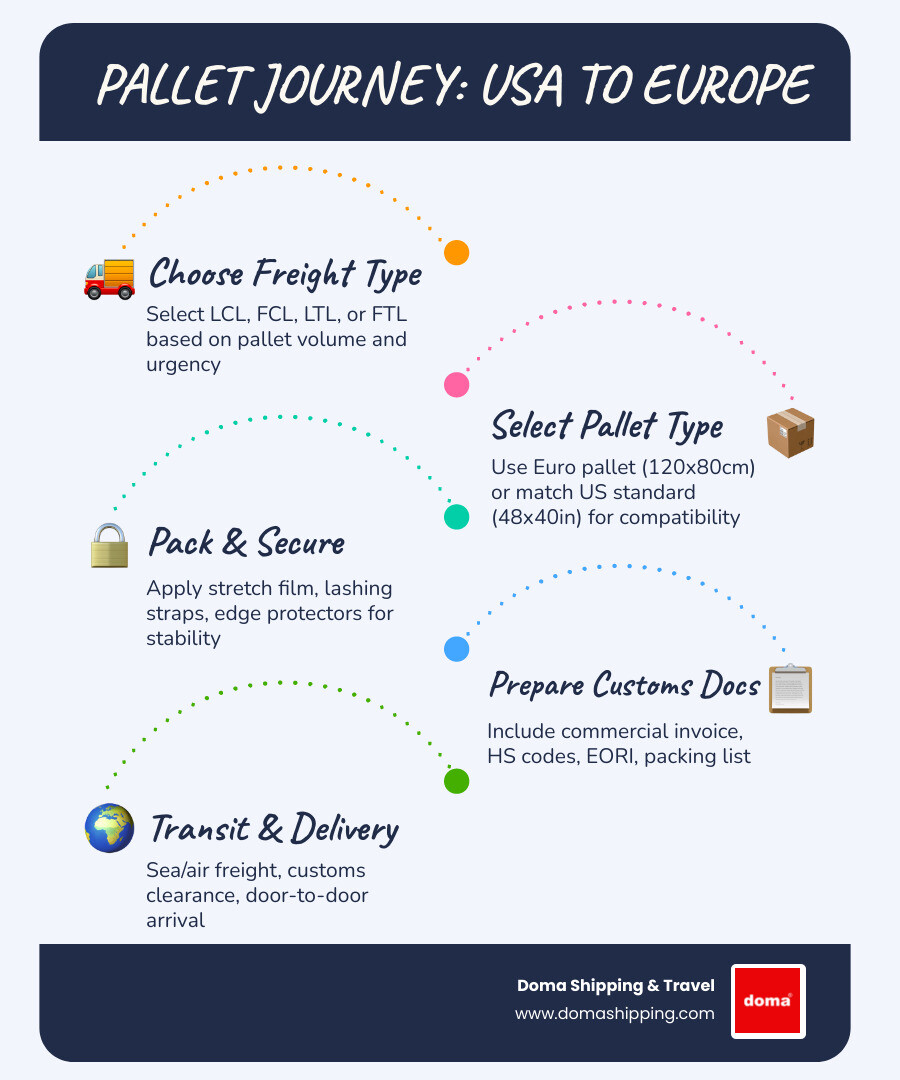
When we prepare a shipment for the European market, we aren’t just moving boxes; we are navigating a highly standardized logistics ecosystem. In Europe, the “Euro pallet” is the king of the warehouse. Unlike the varied sizes often found in US domestic transport, European logistics hubs are designed around specific dimensions to maximize space in trucks and automated storage systems.
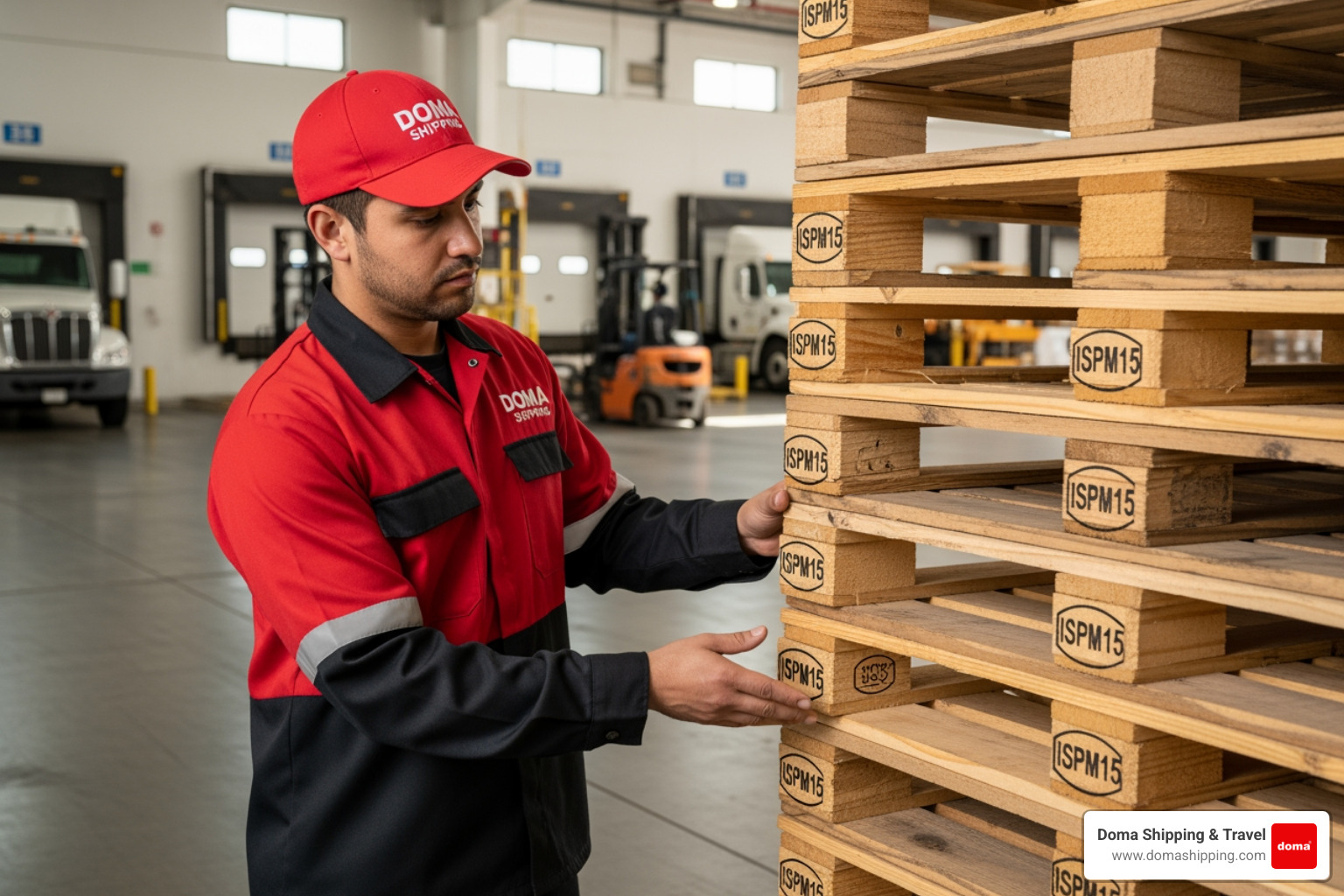
One of the most critical hurdles for transatlantic shipping is compliance with the ISPM15 international standards. Because raw wood can harbor invasive pests, all wood packaging materials—including pallets, crates, and dunnage—must be debarked and then either heat-treated or fumigated. Once treated, the pallet is branded with a globally recognized stamp of compliance. If we attempt to ship a pallet without this mark, European customs authorities may refuse entry or order the immediate destruction of the shipment.
Choosing the correct size is the first step in ensuring your goods are handled efficiently once they arrive in Poland or elsewhere in the EU. While the standard US pallet is typically 48 x 40 inches (approx. 121.9 x 101.6 cm), the European standard is slightly narrower.
| Pallet Type | Dimensions (cm) | Common Use |
|---|---|---|
| Euro Pallet (EPAL 1) | 120 x 80 | Standard for European retail and industry |
| Standard US Pallet | 121.9 x 101.6 | Common in North American logistics |
| Euro 2 (Block Pallet) | 120 x 100 | Often used for heavier industrial loads |
| Half Pallet | 60 x 80 | Ideal for smaller retail displays or trial shipments |
Using a standard US pallet is possible, but it may not fit perfectly into European racking systems, potentially leading to additional handling requirements. For businesses sending smaller volumes, we often recommend looking into international parcel shipping options if the total weight doesn’t justify a full pallet footprint.
The material of your pallet affects both the safety of your goods and the ease of customs clearance.
A pallet that looks sturdy in a warehouse in Niles or Schaumburg has a long journey ahead of it. It will be moved by forklifts, loaded into containers, and potentially face the movement of the Atlantic Ocean. Proper stabilization is non-negotiable.
We advise our clients to follow the “column stack” method. By stacking boxes directly on top of one another, you utilize the vertical strength of the cardboard. Avoid “pyramid” stacking, as this leaves the top items vulnerable to damage and prevents other pallets from being stacked on top, which is a key factor in freight efficiency.
Labels are the “ID cards” of your freight. Each pallet should have at least two labels, placed on adjacent sides (not the top), so they are visible to forklift operators.
For those shipping smaller quantities that don’t fill a whole container, understanding Less Than Container Load Shipping is vital, as your pallet will share space with other cargo, making clear labeling even more important for sorting at the destination.
To safeguard your investment, we recommend a multi-layered approach:
Shipping from the US to Europe involves more than just physical transport; it’s a digital and legal process. Every item on your pallet must be declared accurately to avoid delays at European ports.
When we manage shipments from our locations in Chicago or the surrounding suburbs like Mount Prospect and Des Plaines, we emphasize the importance of the “Paperwork Trail.”
For those requiring the most efficient movement of large volumes, Full Container Load Shipping provides a dedicated environment where the entire container is sealed until it reaches its final destination, often simplifying the customs inspection process.
Europe has strict regulations on what can enter its borders. Common restrictions include:
Choosing the right service level depends on your volume and how quickly you need the goods to arrive.
If you are unsure which category your shipment falls into, using a Shipping Calculator can help you visualize the logistics of your cargo based on its weight and volume.
The choice between air and sea freight is usually a balance between speed and volume.
We believe transparency is key to a successful supply chain. Modern tracking allows us to monitor the journey of your pallet from the moment it leaves our warehouse in Algonquin or Palos Hills until it is signed for in Europe.
Furthermore, while we take every precaution, international shipping involves many handlings. We always recommend cargo insurance to protect against unforeseen events. Most international road transport in Europe is covered by CMR regulations, but additional private insurance provides peace of mind for high-value goods.
The most common size is the Euro pallet (EPAL 1), which measures 120cm x 80cm. There is also the Euro 2 (or Block pallet) at 120cm x 100cm.
Look for the “wheat” stamp on the side of the pallet. This indicates the wood has been treated. When in doubt, purchase pallets from a certified supplier that provides a certificate of treatment.
At a minimum, you will need a commercial invoice, a detailed packing list, and a Bill of Lading. If you are shipping personal belongings, different forms like a declaration of household goods may apply.
Successfully managing pallet shipping to Europe requires a blend of local expertise and international reach. With over 30 years of experience, Doma Shipping & Travel has built a reputation for navigating the complexities of transatlantic logistics. From our roots in the Chicago area—including our hubs in Niles, Roselle, and Glenview—we provide the comprehensive support businesses need to grow their European presence.
Whether you are sending a single pallet of e-commerce goods or managing a complex supply chain of full container loads, our team ensures your cargo is packed correctly, documented accurately, and delivered safely. Start your international pallet shipment today and let us handle the heavy lifting.