
Your gls international tracking number is the unique code that lets you follow your parcel every step of the way — from a warehouse in the United States all the way to its destination in Poland or elsewhere in Europe.
Quick answer: Here’s what you need to know right away:
| Question | Answer |
|---|---|
| What is a GLS tracking number? | A unique alphanumeric code assigned to every GLS shipment |
| Common formats | 11 characters (e.g., GL123456789DE) or 14 digits (numeric only) |
| Where to find it | Shipping confirmation email, declaration form, or receipt |
| How to track | Visit gls-group.eu, select your country, enter the number |
| Delivery time (USA → Europe) | Typically 2–7 days for international shipments |
Sending a parcel overseas should be straightforward. But when a package goes quiet mid-transit, the anxiety sets in fast. Where is it? Has it cleared customs? Will it arrive on time?
GLS is one of Europe’s largest parcel networks, moving 926 million parcels in 2024/25 across 50+ countries. Despite that scale, tracking an international shipment across borders isn’t always obvious — especially when you’re shipping from the USA to Poland or another European destination.
This guide walks you through everything: reading your tracking number, using GLS tools, understanding status updates, and knowing what to do when things go quiet.

Before you can monitor your shipment, you need to identify the code itself. A gls international tracking number isn’t just a random string of characters; it is a structured identifier that tells the GLS system exactly where your package belongs in their global network.
Depending on the origin of the shipment and the specific service level selected, you will likely encounter one of two primary formats:
Knowing the easiest way to track international shipment starts with recognizing these patterns. If your number has spaces or special symbols, the system might reject it. GLS systems rely on 2D barcodes scanned at every major transport point to provide GLS International Tracking: Track Your Global Shipments Easily.
It sounds simple, but data entry errors are the leading cause of “Parcel Not Found” messages. When entering your gls international tracking number, follow these rules:
If you are standing in one of our locations in Chicago, Niles, or Schaumburg, you might be looking at several pieces of paper. Where is the code?
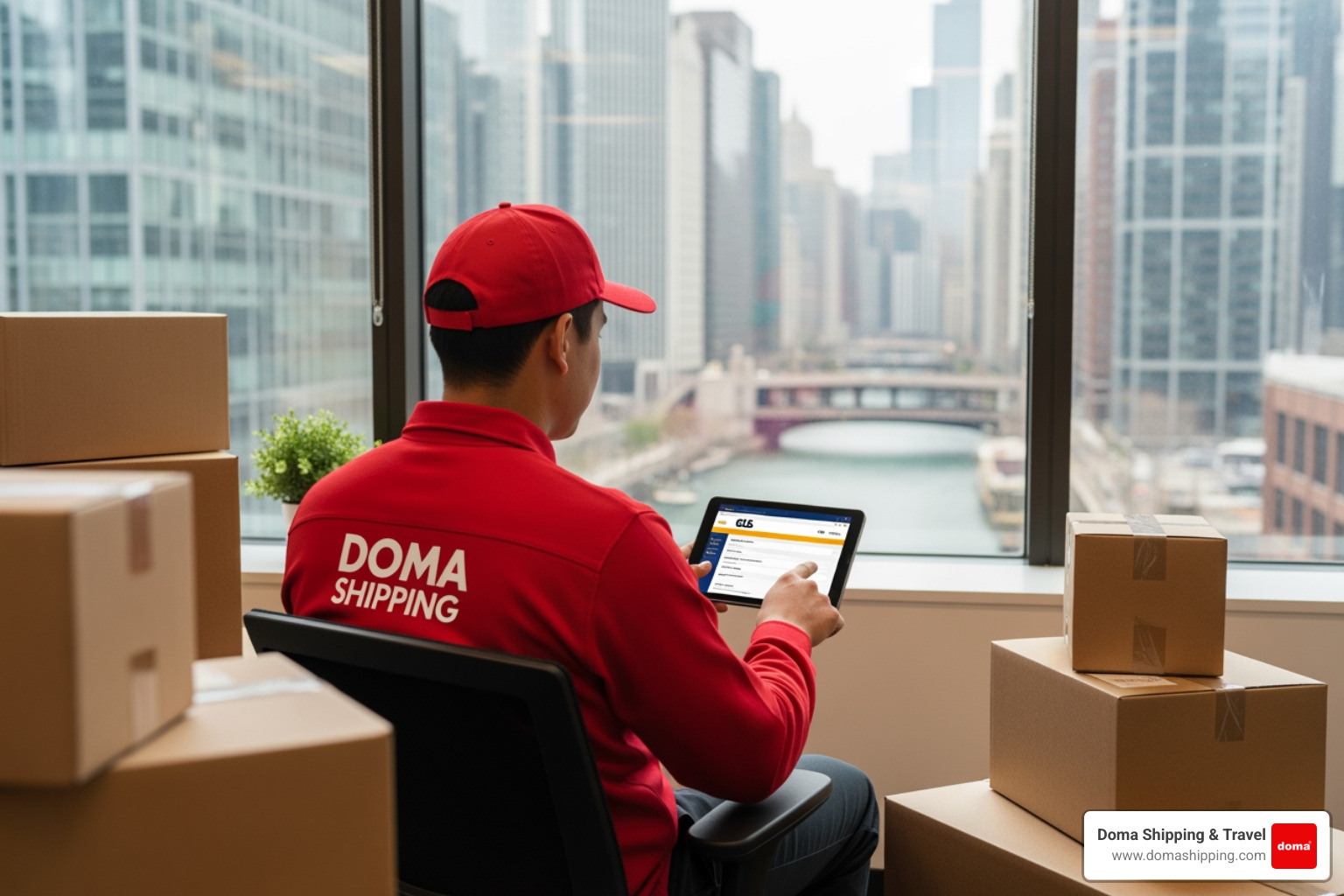
Once you have your number, the process of following your parcel from the USA to Europe is straightforward. We recommend using official channels first to ensure you are getting the most accurate, real-time data directly from the carrier’s servers.
The primary way to monitor your shipment is through the Parcel Tracking | GLS Parcel Service portal.
Sometimes, especially when a parcel is handed off between different logistics partners, the best tools to track worldwide parcel services today are multi-carrier platforms like AfterShip or Ship24. These tools use API integrations to pull data from multiple sources simultaneously. This is particularly helpful if your shipment involves complex overseas logistics before entering the GLS European network.
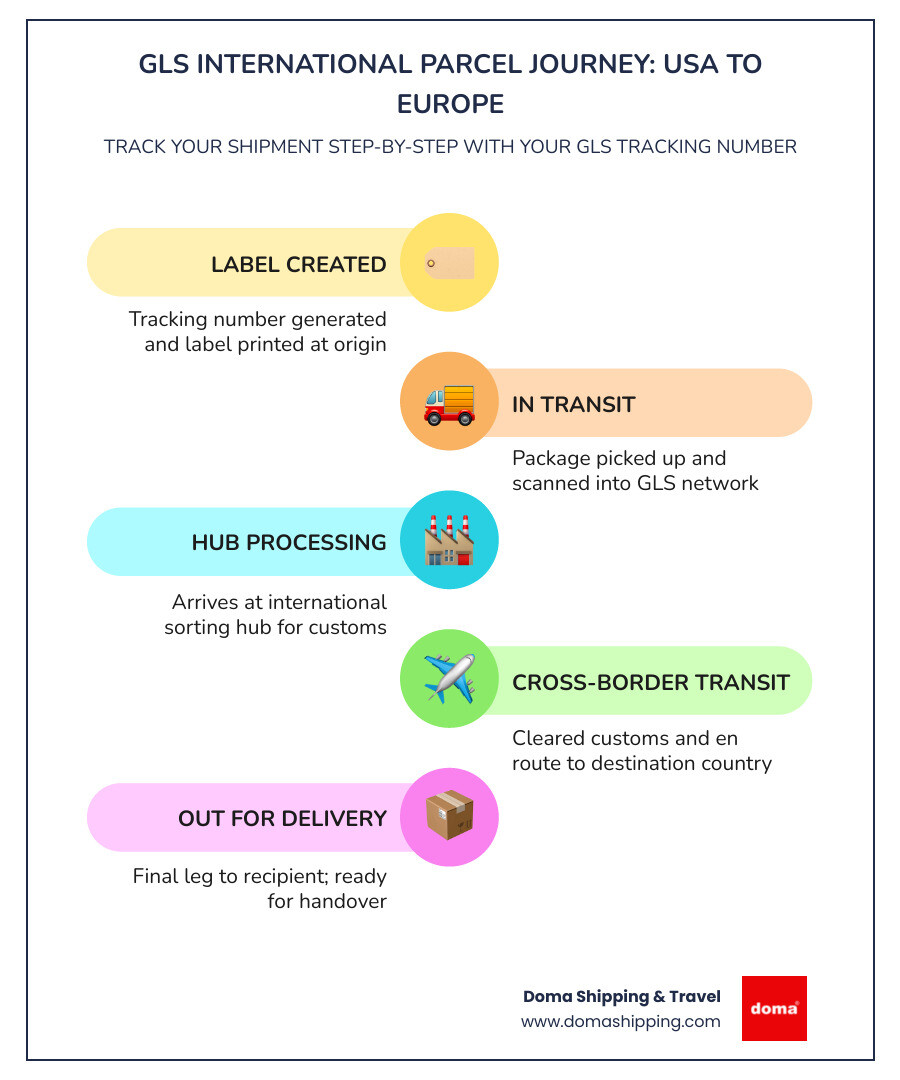
Seeing a status update is one thing; understanding what it means for your delivery date is another. Because we specialize in USA-to-Poland logistics, we see these statuses every day.
For a deeper dive into why these scans matter, see our guide on real-time package tracking: Never lose a shipment again.
It is common for tracking to “freeze” for a few days while a parcel is crossing the Atlantic. This is a “scan gap.”
As of May 2026, GLS has expanded its network significantly. Here are the typical timeframes you can expect for shipments from our Illinois locations to Europe:
One of the best features of the GLS network is the control it gives to the recipient. If you are shipping a package to family in Poland and they won’t be home, GLS offers several “FlexDelivery” options.
Don’t panic. During international transit, parcels often travel long distances between scans. If the parcel is on a long-haul transit route from a US port to a European hub, it is normal for the status to remain “In Transit” without a location change for a few days.
Yes. On the official GLS website and third-party tools like Ship24, you can enter multiple gls international tracking number sequences separated by a comma or by entering them on separate lines. This is ideal for businesses shipping large orders or families sending multiple boxes to Poland.
The parcel number is assigned when the label is created. The Track ID is typically found on a “Notification Card” left by a driver after a missed delivery attempt. Both can be used in the tracking tool to find your package’s current location.
Mastering the gls international tracking number is about more than just watching a screen; it’s about the security of knowing your valuable belongings are moving safely across the globe. At Doma Shipping & Travel, we leverage over 30 years of experience to ensure that your journey from the USA to Poland or Europe is handled with professional expertise.
Whether you are shipping from Chicago, Palos Hills, or Algonquin, our team is here to help you navigate the complexities of overseas logistics, customs handling, and international delivery.
Ready to see where your package is? Use the official tools to perform a Sledzenie paczki or track your international shipment today to ensure a smooth delivery experience. We make sure your connection to Europe stays strong, one scan at a time.