
For reliable flower cards international delivery, first choose the card type, then check the destination country’s import rules before it is sent. Fresh-flower cards need fast, protected transport and can face plant-health controls. Plantable seed-paper cards may be restricted because many countries regulate imported seeds. Dried-flower cards are often simpler because they are not living plant material, but customs rules can still apply.
If you are sending a floral gift from the USA to Poland or another European country, these steps reduce the risk of delays:
A flower card combines the warmth of a greeting card with flowers: a small fresh arrangement, dried blooms, or paper embedded with seeds. It can be a thoughtful choice for birthdays, sympathy messages, anniversaries, holidays, and simple “thinking of you” moments when family is far away. But crossing a border adds a practical layer: customs declarations, agricultural rules, and tracking matter as much as the message inside.
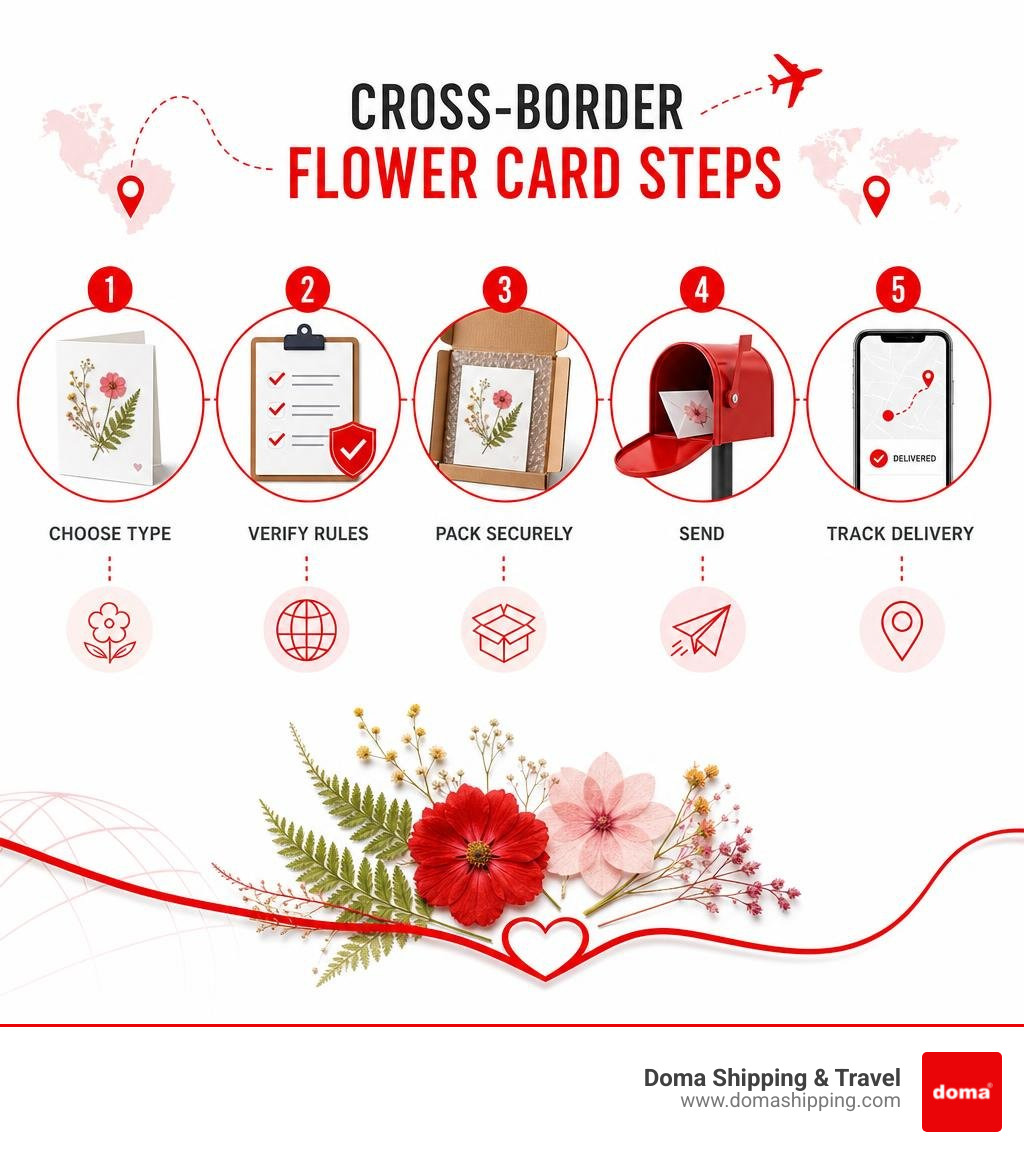
Easy flower cards international delivery word list:
Navigating cross-border sentiments requires balancing emotional impact with practical logistics. When we want to send a meaningful message across the ocean, a hybrid greeting offers a compact yet deeply personal alternative to oversized parcels. Understanding how these keepsakes are constructed helps ensure they arrive looking just as pristine as when they were assembled. For a broader overview of sending arrangements overseas, our worldwide flower delivery guide provides foundational insights.
A flower card bridges the gap between a heartfelt handwritten note and a vibrant floral display. While a traditional bouquet arrives in a bulky vase or wrapped in voluminous paper requiring immediate trimming and water, a flower card integrates miniature botanical arrangements directly into a structured display box or greeting panel.
These designs often feature a letterbox-friendly profile, allowing them to slip safely into standard European mail slots without requiring the recipient to be home at the exact moment of arrival. Specialized letterbox flower card designs focus on miniature floral displays nestled in sealed moisture bases, ensuring the blossoms remain stable throughout transport. The sentiment and the florals arrive unified as a single presentation piece that can sit directly on a mantelpiece or bedside table for days.
Floral cards generally fall into three distinct categories, each suited to different shipping methods and recipient preferences:
| Card Format | Botanical Material | Average Display Life | Primary Regulatory Consideration |
|---|---|---|---|
| Fresh Flower Card | Fresh cut blooms, moisture base | 5–12 days upon arrival | Phytosanitary checks, transit temperature |
| Dried Flower Card | Preserved/pressed botanicals | 6–24+ months | Low biosecurity risk, bark/soil bans |
| Seed Paper Card | Recycled cotton/pulp with embedded seeds | Indefinite until planted | Agricultural seed import regulations |
Shipping biological items across international borders involves stringent regulatory compliance. When parcels leave our facilities in the greater Chicago area–whether coordinated through our hubs in Niles, Schiller Park, or Schaumburg–they enter regulated cross-border transit channels governed by European customs and agricultural authorities. Consulting practical advice on avoiding customs headaches with cross-border gifts helps prevent avoidable delivery delays.
Live plants, cut stems, and agricultural seeds are subject to biosecurity controls designed to protect local ecosystems from invasive species, pests, and soil-borne pathogens. Senders can also review the European Commission’s guidance on plant health rules for trade from non-EU countries when preparing botanical gifts for delivery from the USA to Europe.
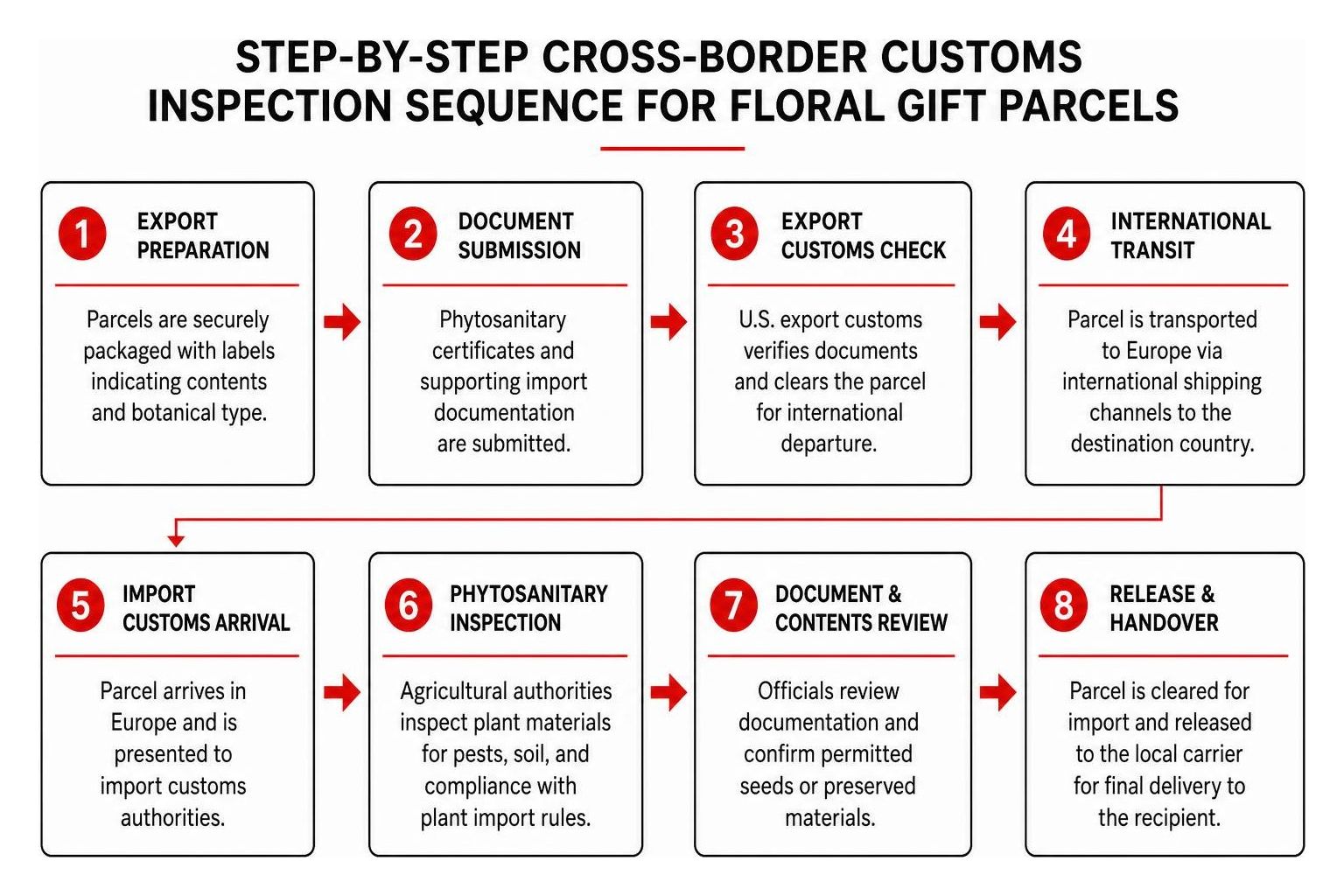
To withstand intercontinental transit, floral items require engineered packaging systems. Fresh designs utilize sealed hydro-pouches around the stem ends, locking in moisture while preventing water leakage that could compromise the outer cardboard.
Rigid structural boxes protect delicate petals from crushing forces inside cargo containers. High-density outer cartons combined with thermal liners shield temperature-sensitive blooms from extreme winter chills or summer heat during tarmac transfers and sorting hub operations.
Sending gifts across oceans demands careful coordination, especially when pairing sentimental greetings with perishable items or specialized care packages. Applying established international gift shipping best practices ensures your thoughtful gesture arrives exactly as planned.
When planning an overseas surprise, senders generally choose between two fulfillment pathways:
Proper timing prevents missed celebrations. Intercontinental parcel dispatches should incorporate generous lead-time buffers, particularly ahead of major holiday periods like Christmas, Easter, Mother’s Day, or All Saints’ Day.
When personalizing your message, ensure recipient names and street addresses are written using the destination country’s correct postal formatting. Include local contact telephone numbers on customs documentation so regional couriers can coordinate final-mile physical delivery smoothly without administrative holds.
Not always. Many agricultural authorities strictly regulate or restrict the importation of foreign seeds by mail to prevent the introduction of invasive botanical species. While dried cards are widely accepted, seed paper should always be verified against destination biosecurity lists before shipping.
For international parcel shipments originating in the US, we recommend initiating the dispatch process at least two to three weeks ahead of major European holidays. This buffer accommodates peak-season customs processing and regional transport schedules.
If live cut florals are detained at customs due to missing phytosanitary paperwork or mandatory inspections, the delay can exhaust the hydration pouch, causing the flowers to wilt. For guaranteed freshness across borders, using established local fulfillment networks or opting for beautifully preserved dried botanicals is the safest strategy.
Sending a personalized floral greeting across borders is a meaningful way to maintain deep family and personal ties across the globe. By selecting the right card format, understanding international biosecurity requirements, and utilizing sturdy protective packaging, you can ensure your heartfelt greeting arrives intact and beautiful.
At Doma Shipping & Travel, our over 30 years of logistics experience across the greater Chicago area—with convenient locations in Chicago, Melrose Park, Mount Prospect, Roselle, Palos Hills, Algonquin, Niles, Park Ridge, Des Plaines, Glenview, Franklin Park, Schiller Park, Bensenville, and Schaumburg—provides families with trusted bilingual customer support, comprehensive customs documentation management, and end-to-end shipment tracking. Whether you are preparing care packages, holiday gifts, or specialized greetings, explore our dedicated services for kwiaty, upominki i zestawy świąteczne to support your international delivery needs from start to finish.