
Business freight Poland is one of the most strategically important international shipping corridors for American businesses and families sending goods to Central Europe. Poland sits at the crossroads of East and West — bordered by Germany to the west and Ukraine to the east — making it a natural gateway for cargo moving deeper into the continent.
But 2026 has changed the game. New compliance requirements, tightening environmental rules, and shifting trade dynamics have made shipping to Poland more layered than it used to be.
Here’s a quick snapshot of what you need to know:
| Topic | Key Facts |
|---|---|
| Main seaports | Gdansk, Gdynia |
| Key airports | Warsaw Chopin, Krakow, Wroclaw, Katowice, Lodz, Gdansk |
| Rail terminals | Malaszewicze, Warsaw, Lodz |
| Sea freight transit | Varies by port schedule and container processing |
| Air freight transit | Typically 2-5 days |
| Key 2026 regulations | EU ETS (full coverage), CBAM, PUESC customs gateway, SENT monitoring system |
| Sensitive goods monitoring | SENT system — mandatory for specific goods, valid 10 days |
| Carbon border tax (CBAM) | Applies to steel, aluminum, cement, fertilizers, hydrogen, iron |
Poland’s economy is also growing fast. GDP is expected to rise by 3.5% in 2026, driven in part by record defense spending. That growth is pulling in more international trade — and more scrutiny of how that trade moves across borders.
For anyone shipping from the USA to Poland, understanding the infrastructure, the rules, and the right entry points is no longer optional. It’s essential.
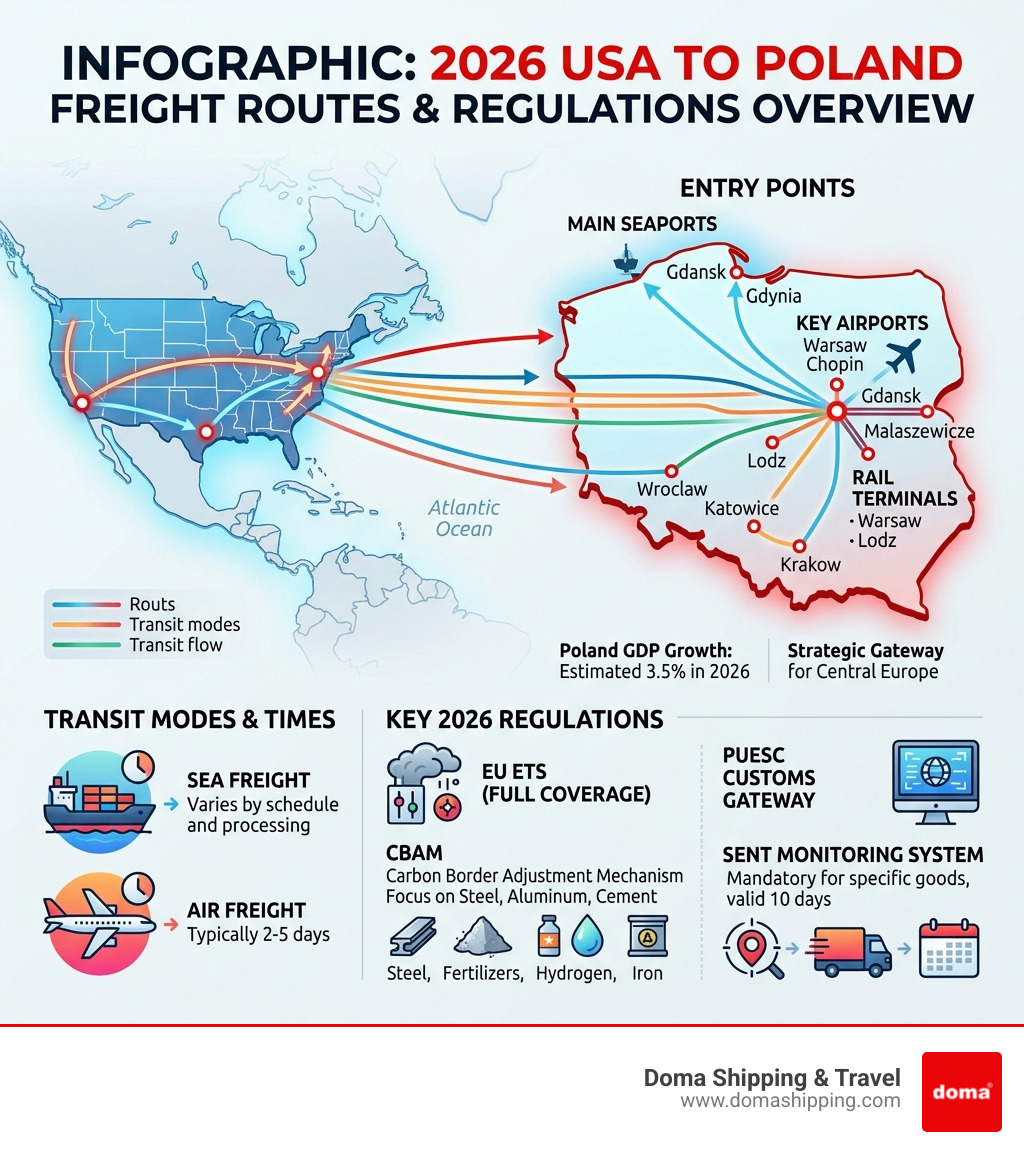
Navigating the landscape of business freight Poland requires a deep understanding of the country’s physical entry points. Poland has invested heavily in its infrastructure, transforming from a transit stop into a sophisticated logistics hub. For those of us shipping from the Chicago area or other US hubs, the choice of entry point significantly dictates the efficiency of the entire supply chain.
The maritime gateway is dominated by the Port of Gdansk and the Port of Gdynia. These ports are the primary recipients of American containerized cargo. Gdansk, in particular, has seen massive expansion, capable of handling the world’s largest container vessels.

When speed is the priority, air freight hubs like Warsaw Chopin Airport serve as the primary engine for express cargo. Meanwhile, the rail infrastructure, centered around terminals like Malaszewicze, acts as the “Land Bridge,” connecting sea arrivals to the rest of Central and Eastern Europe.
Whether you are utilizing Full Container Load Shipping for large industrial equipment or Less Than Container Load Shipping for smaller commercial batches, the infrastructure is designed to support high-volume transatlantic trade.
For sea freight, Gdynia and Gdansk are the heavy hitters. Gdynia specializes in versatile cargo handling, while Gdansk is the go-to for deep-water container terminals. These ports are equipped with modern customs facilities to process goods arriving from North America efficiently.
On the aviation side, the network is extensive:
For smaller, time-sensitive shipments, International Parcel Shipping through these airports remains the most reliable method to reach the Polish market quickly.
Poland’s rail network is the backbone of its “dry port” system. Terminals in Malaszewicze, Warsaw, and Lodz allow for seamless intermodal transitions. Goods arriving at the northern seaports are quickly transferred to rail for distribution to the south or across the border to neighboring EU countries.
This intermodal connectivity is crucial for Shipping Smarter Everything You Need to Know About International Container Transport. By utilizing rail, we can often bypass road congestion at border crossings, ensuring that freight moves predictably from the port to the final warehouse.
In 2026, the regulatory environment for business freight Poland is defined by digital oversight. The most critical system for shippers to understand is the SENT system (System for Monitoring Road and Rail Transport of Goods). Managed by the National Revenue Administration (KAS), SENT is designed to prevent tax fraud by tracking the movement of “sensitive goods.”
If your shipment includes items like fuels, lubricants, alcohol, tobacco, or even certain chemicals and food products, it must be registered in the SENT system. Each transport receives a unique reference number valid for 10 days. Failure to comply can result in significant fines for both the carrier and the cargo owner.
All import operations now rely on the PUESC (Polish Electronic Services for Customs and Excise) gateway. This platform acts as a real-time data validator. We have found that data parity is the most important factor here—the information on your commercial invoice must match your PUESC filing exactly to avoid lengthy port delays. Proper Customs Support Clearance is essential to navigate these digital hurdles, especially for Commercial Goods Shipping.
Sustainability is no longer a “nice to have” in Polish logistics; it is a legal mandate. As of January 1, 2026, the EU Emissions Trading System (ETS) has reached full coverage for maritime transport. This means that shipping lines must account for 100% of their emissions, which impacts the overall logistics landscape.
Key environmental factors in 2026 include:
For those sending International Parcel Shipping, these regulations often translate into a greater emphasis on using modern fleets that meet the highest EURO emission standards.
Shipping to Poland from the USA requires a specific set of paperwork to clear customs without a hitch. Beyond the standard commercial invoice and packing list, you may need:
Business entities can often benefit from VAT refund processes, provided they are properly registered and the documentation is filed correctly via the PUESC system. Ensuring every Parcel Package Shipping label and document is accurate is the best way to prevent your cargo from getting stuck in a customs warehouse.
Not all freight fits into a standard box. Business freight Poland often involves specialized cargo that requires extra care and planning. From oversized industrial machinery to temperature-sensitive pharmaceuticals, the Polish market demands high standards of safety and precision.
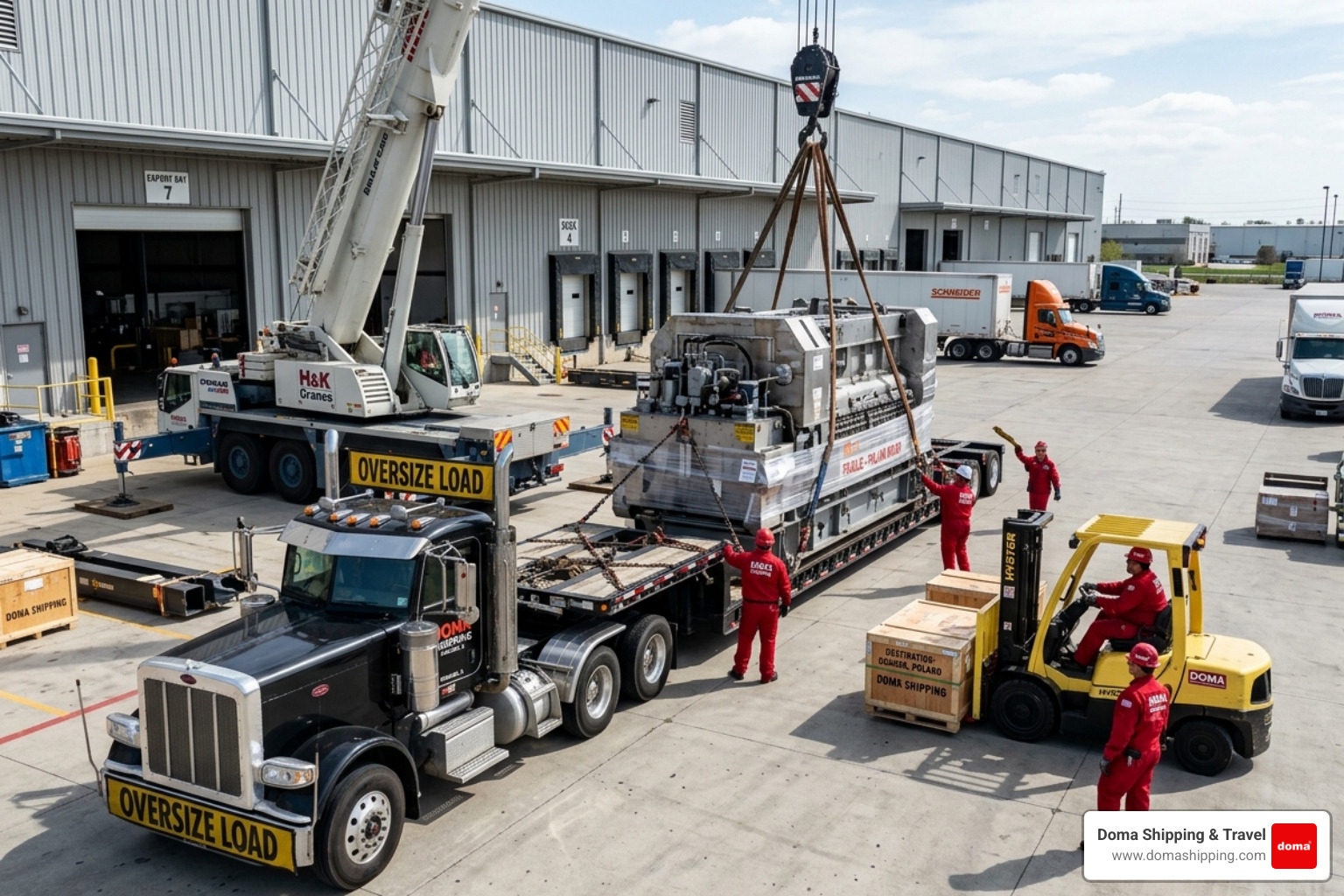
Specialized services include:
When shipping vehicles or heavy machinery, Vehicle Machinery Shipping experts ensure that the cargo is properly secured for the long Atlantic crossing.
| Mode | Typical Transit Time | Best For |
|---|---|---|
| Air Freight | 2 – 5 Days | High-value, urgent, or perishable goods |
| Sea Freight (FCL) | 3 – 6 Weeks | Large volumes, machinery, or full inventory |
| Sea Freight (LCL) | 4 – 8 Weeks | Smaller commercial batches, pallets |
| Intermodal (Sea+Rail) | 5 – 7 Weeks | Distribution to inland hubs like Lodz or Warsaw |
To ensure a smooth experience, we recommend several best practices. First, never underestimate the value of comprehensive cargo insurance. While modern logistics is safer than ever, the long journey across the ocean involves multiple handling points.
Second, utilize real-time tracking. In 2026, telematics has become a standard. “Trust Scores” are now used to verify carriers, helping to eliminate fraud and ensure that your goods are in reliable hands. Whether you are sending Household Personal Belongings Shipping or high-value commercial stock, knowing exactly where your container is at any given moment provides peace of mind.
Finally, consider Door to Door Shipping to simplify the process. This service manages the entire chain, from pickup in the US to final delivery in Poland, including all the customs brokerage in between.
Managing oversized cargo from US ports requires specialized trailers and route planning once the goods arrive in Poland. For high-value cargo, security is paramount. This often involves:
The SENT system is a digital monitoring tool used by the Polish National Revenue Administration (KAS) to track “sensitive goods” such as fuels, alcohol, and certain chemicals. It requires geolocation tracking for the duration of the transport. If your business freight includes these items, you must register the shipment on the PUESC portal to receive a SENT number, which is typically valid for 10 days.
Transit times vary significantly based on the mode of transport. Air freight is the fastest, generally taking 2-5 days for delivery. Sea freight is more variable; while the actual ocean crossing might take 2-3 weeks, the total door-to-door time—including port processing at Gdansk or Gdynia and final delivery—usually ranges from 4 to 8 weeks.
The two primary seaports are Gdansk and Gdynia. Gdansk is one of the fastest-growing ports in Europe and is the main hub for deep-water container ships. Gdynia is a versatile port often used for specialized cargo and smaller container shipments. Both serve as the primary gateways for goods entering the Central and Eastern European markets from the United States.
Navigating business freight Poland in 2026 is a complex task, but it is also full of opportunity. Poland’s position as a fast-moving logistics hub makes it the ideal entry point for American businesses looking to reach the European market. By understanding the infrastructure of ports like Gdansk, staying compliant with the SENT system, and keeping an eye on new environmental regulations like CBAM and EU ETS, you can ensure your cargo moves safely and efficiently.
With over 30 years of experience in the transatlantic corridor, we understand the nuances of this “infrastructure maze.” Whether you are moving a Full Container Load Shipping or looking for a reliable Door to Door Shipping solution, the key is preparation and local expertise. The landscape may be changing, but the goal remains the same: getting your goods where they need to be, right on time.