Understanding the Mechanics of International Logistics
When we talk about door to door shipping, we are describing the logistics equivalent of a “one-stop shop.” In a traditional shipping setup, you might feel like you’re playing a high-stakes game of telephone, trying to coordinate a trucking company in Chicago to get your goods to the port, an ocean carrier to get them across the Atlantic, and then a completely different entity in Poland to handle the final delivery.
With the door-to-door model, that complexity evaporates. We act as the single provider, overseeing the entire journey from the origin pickup at your home or warehouse in the Chicago suburbs—like Niles, IL or Park Ridge, IL—to the final destination in Europe.
This requires what we call multimodal coordination. Your shipment doesn’t just stay on one vehicle; it might travel by truck to a loading hub, move into a shipping container, board an ocean vessel, and finally be loaded onto a local delivery van in Europe. Because we manage the technical aspects of door-to-door logistics, you only have one point of contact. This single-provider approach ensures that if there’s a question about customs or a delay at the port, there is one team accountable for the solution.
Comparing Door to Door Shipping with Other Freight Methods
To truly appreciate the simplicity of door to door shipping, it helps to look at the alternatives. International freight is often categorized by where the carrier’s responsibility starts and ends.
- Port-to-Port: This is the bare-bones version of shipping. The carrier is only responsible for moving the goods from the US port (like New York or Savannah) to the European port (like Gdynia or Hamburg). You are responsible for getting the goods to the US port and picking them up from the European port, which involves navigating foreign terminals and local transport yourself.
- Door-to-Port: We pick up the goods from your location in, say, Schaumburg or Bensenville, and handle the international transit. However, once the ship docks in Europe, the recipient is responsible for clearing customs and arranging their own transport from the port to their home.
- Terminal-to-Terminal: Goods are dropped off at a US terminal and picked up at a European terminal. This is common for certain vehicle shipments but requires significant effort from both the sender and the receiver.
In international trade, these responsibilities are often defined by “Incoterms.” You might hear terms like DAP (Delivered at Place) or DDP (Delivered Duty Paid). While door to door shipping isn’t a formal Incoterm itself, it most closely aligns with DAP or DDP, where the goal is to get the product to the final address rather than just a transit hub.
Shipping Modality Comparison Table
| Feature |
Port-to-Port |
Door-to-Port |
Door to Door Shipping |
| US Pickup Included |
No |
Yes |
Yes |
| Ocean/Air Freight |
Yes |
Yes |
Yes |
| Customs Management |
Usually No |
Often No |
Yes |
| European Delivery |
No |
No |
Yes |
| Ease for Shipper |
Low |
Medium |
High |
The Step-by-Step Process of Overseas Delivery
Sending a shipment from the USA to Europe is a journey of thousands of miles, but for you, it starts with a simple pickup. Here is how the lifecycle of a typical shipment unfolds:
- Pickup from Origin: A professional team arrives at your location—whether it’s a residence in Roselle or a business in Franklin Park—to collect your items. For larger moves, we may provide container shipping services directly to your door.
- Export Customs Clearance: Before leaving US soil, the shipment must be documented and cleared by US Customs. We handle the paperwork to ensure everything is compliant with federal export laws.
- International Transit: Depending on the size and urgency, your goods are loaded onto an ocean vessel or an airplane. Ocean freight is the standard for containers and vehicles, while air freight is reserved for time-sensitive parcels.
- Import Customs Clearance: This is the most critical stage. As your shipment arrives in Europe, it must pass through the destination country’s customs. We utilize experienced customs brokerage services to navigate these regulations. Having AEO (Authorised Economic Operator) status—a certified standard for customs excellence—helps ensure a smoother, more reliable clearance process across the European Union.
- Last-Mile Delivery: Once cleared, the shipment is loaded onto a local vehicle and delivered directly to the recipient’s door in Poland or elsewhere in Europe.
Key Benefits of Choosing Door to Door Shipping for Global Logistics
The most obvious benefit is the reduction of stress, but the advantages go much deeper into the health of your supply chain.
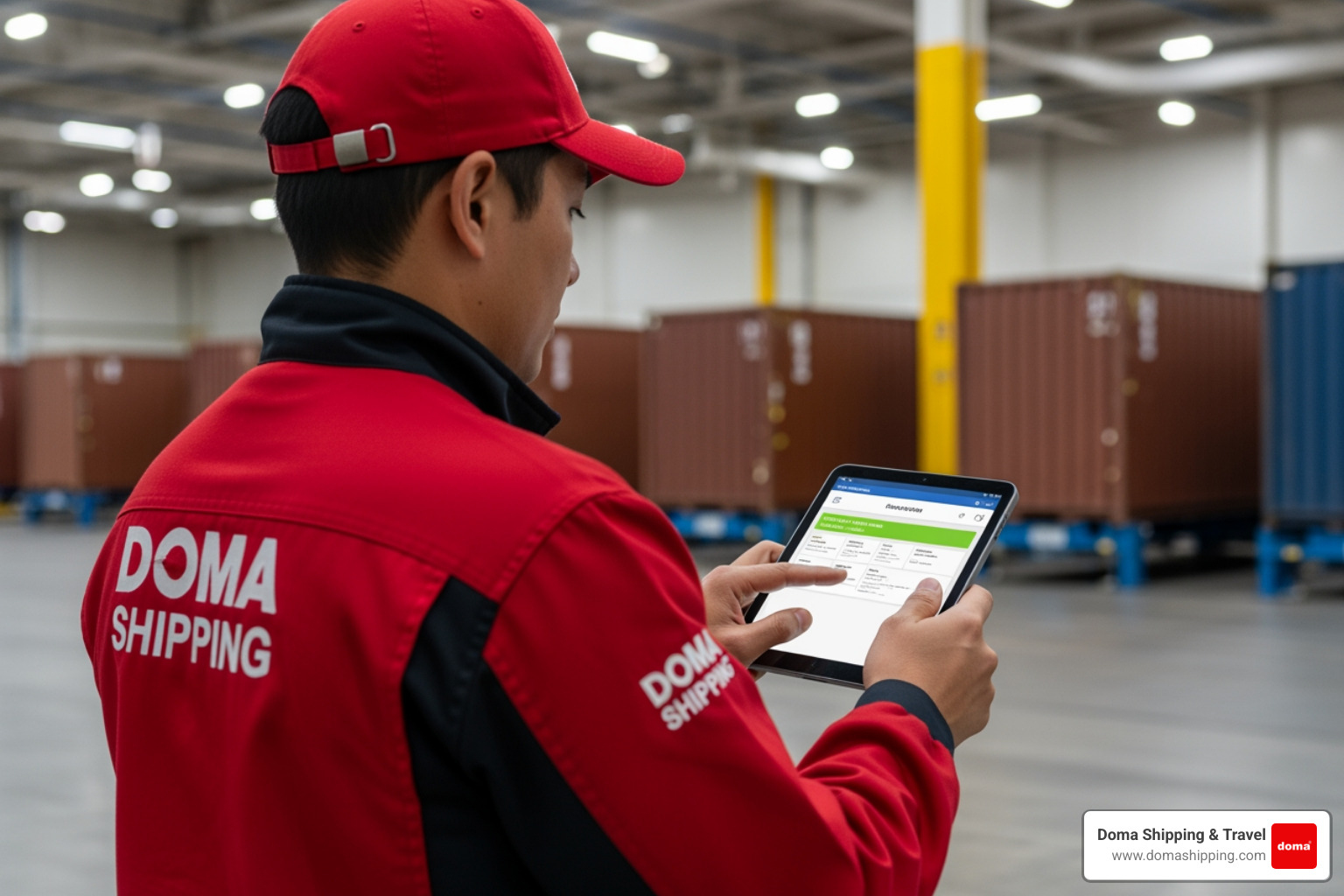
- Enhanced Visibility: As mentioned, 77% of companies believe end-to-end logistics visibility is crucial for resilience. When one provider handles the entire journey, you get a single tracking number that follows the shipment from Illinois to its final destination in Europe.
- Supply Chain Resilience: When global disruptions are common, having a door-to-door partner means having a team that can pivot. If a specific port is congested, we can often reroute shipments because we control the inland transport on both ends.
- Reduced Handling: Every time a package is handed off between different companies, the risk of damage increases. Door to door shipping minimizes these handoffs, as the same logistics network manages the transitions.
- Sustainability Trends: By May 2026, the industry has seen a push toward greener logistics. Many international carriers now utilize Sustainable Aviation Fuel (SAF) or optimized ocean routes to reduce the carbon footprint of parcel delivery to Europe.
Streamlining International Door to Door Shipping for Businesses
For businesses in the Chicago area, from Algonquin to Des Plaines, choosing the right service level is key to efficiency. We offer several door to door shipping services tailored to different needs:
- FCL (Full Container Load): If you are relocating an entire household or shipping large commercial volumes, you get exclusive use of a 20ft or 40ft container.
- LCL (Less than Container Load): For shipments that don’t fill a whole container, your goods share space with others. This is a highly efficient way to send larger items without the need for a full container.
- Air Freight: The fastest way to get goods to Europe, ideal for high-value or urgent items.
- Express Courier: Best for small parcels and documents that need to reach their destination in just a few business days.
Avoiding Common Mistakes in Door to Door Shipping
Even with a professional provider, the success of your shipment depends on preparation. Avoiding these common pitfalls will ensure your goods arrive without delay:
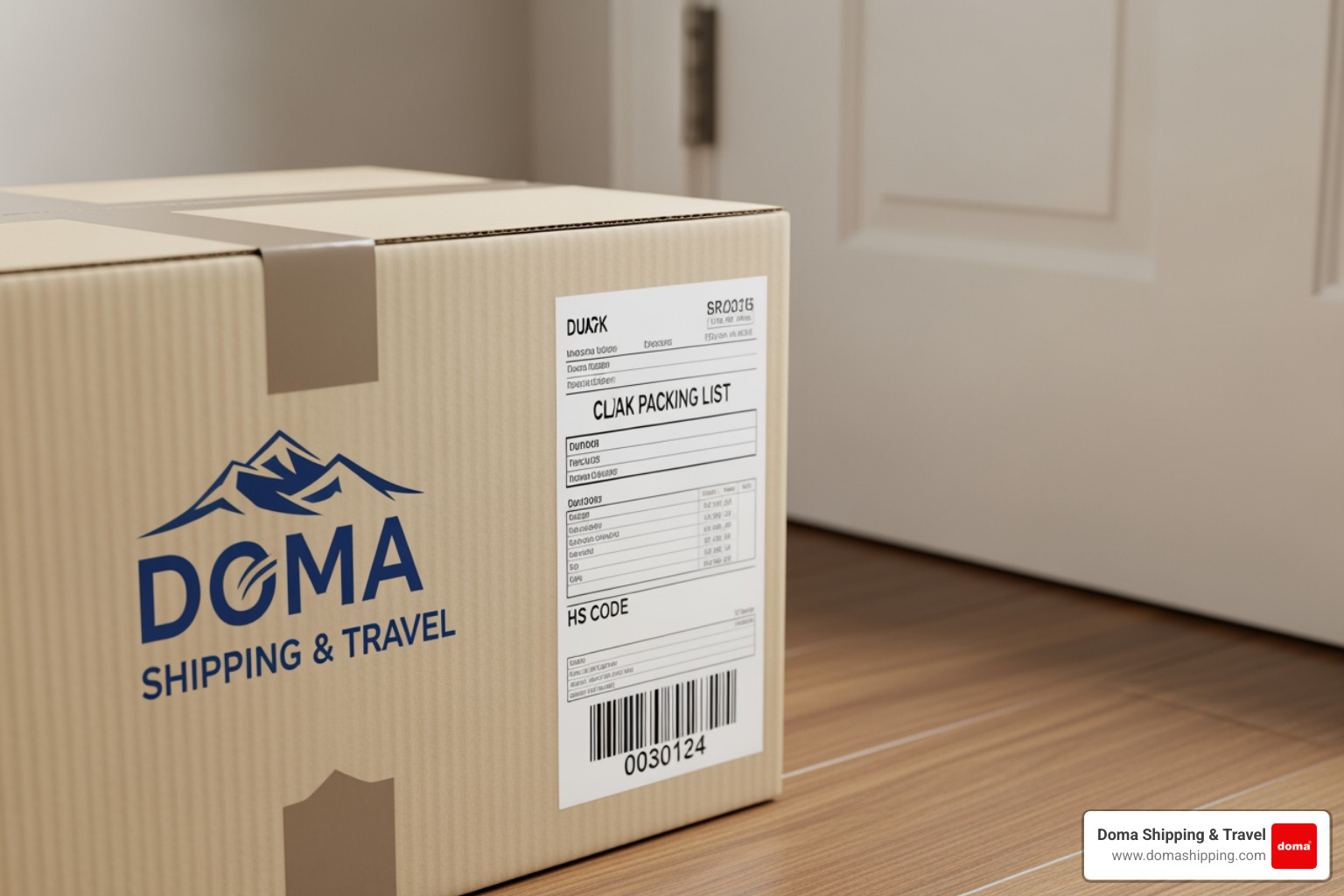
- Incomplete Documentation: Customs is the “gatekeeper” of international shipping. Missing a commercial invoice or a packing list can lead to weeks of delays.
- Ignoring HS Codes: Every item shipped internationally has a Harmonized System (HS) code that determines its classification. Incorrect codes can lead to improper handling or issues with import authorities.
- Underestimating Lead Times: International shipping is not overnight. Always factor in time for customs clearance and port processing when planning your shipment.
- Poor Packaging: Your goods will cross an ocean. Standard boxes might not be enough. We always recommend rigid, double-walled boxes and proper cushioning to protect against the movements of sea transit. You can find more tips in our guide on shipping to Europe.
Frequently Asked Questions
How is customs clearance managed in a door-to-door arrangement?
In a door-to-door setup, we act as the bridge between you and the customs authorities. We collect the necessary information from you (such as the contents and value of the shipment), prepare the declarations, and submit them to the relevant agencies in both the USA and the destination country in Europe. This eliminates the need for you to hire a separate customs broker.
Is door-to-door service available for vehicle transport to Europe?
Yes. Shipping a car or motorcycle from the USA to Poland or Europe is a specialized process. We can arrange for the vehicle to be picked up from your residence—whether you’re in Palos Hills or Glenview—loaded into a secure container, and delivered to a designated location or the recipient’s door in Europe. It is a much more convenient alternative to driving the vehicle to a distant port yourself. For those in the Illinois area, Chicago car shipping resources can provide additional context on local transport to the loading hub.

What documentation is required for international shipments?
At a minimum, you will need a detailed packing list (listing everything in the shipment) and a commercial invoice (stating the value of the items). For personal belongings, specific forms for “Transfer of Residence” may be required to qualify for certain duty exemptions in Europe. If you are shipping commercial goods, you may also need an export license or certificates of origin.
Conclusion
At Doma Shipping & Travel, we believe that moving your life or your business across the ocean shouldn’t feel like a “complicated relay race.” With over 30 years of experience, we have refined the door to door shipping process to be as seamless as possible. From our roots in Chicago and suburbs like Melrose Park and Mount Prospect, we have helped thousands of families and businesses reach Poland and the rest of Europe safely and efficiently.
Beyond just moving boxes and containers, we offer a comprehensive suite of services to support your international lifestyle, including online shopping assistance, secure money transfers, and travel booking. We handle the logistics so you can focus on the journey ahead.
Ready to simplify your international logistics? Start your international door-to-door shipment with us today and experience the peace of mind that comes with true end-to-end service.