Why Sending Package to Europe from USA Requires the Right Preparation
Sending package to Europe from USA involves more than just boxing up your items and dropping them at the post office. International shipping across the Atlantic requires careful packaging, accurate customs documentation, and choosing the right service to ensure your parcel arrives safely and on time.
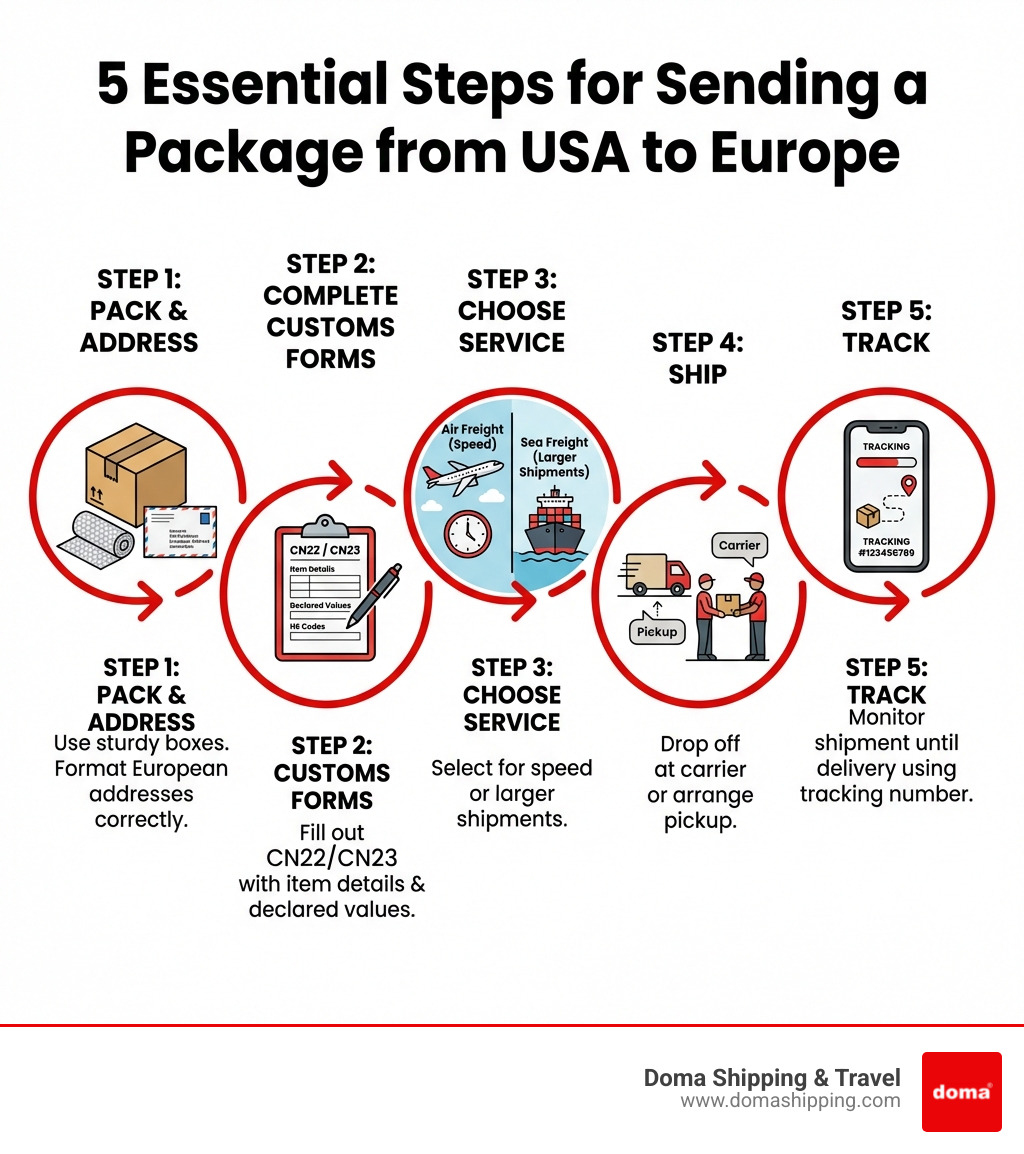
Quick Answer: How to Send a Package from the USA to Europe
- Pack securely using durable materials like double-walled boxes, bubble wrap, and strong tape
- Format the address correctly following European postal standards with postal codes and country names
- Complete customs forms (CN22 or CN23) with detailed item descriptions, values, and HS codes
- Choose your shipping method between air freight (7-14 days) or sea freight (4-6 weeks)
- Track your shipment using the tracking number provided by your carrier
Whether you’re sending a gift to family, shipping personal belongings overseas, or fulfilling an international order, understanding the process saves you time and prevents costly delays at customs.
The biggest challenges most people face are navigating customs regulations, avoiding prohibited items, and ensuring their package is properly documented. European customs authorities require detailed declarations for every shipment entering the EU, and missing or incorrect information can result in your package being held for weeks—or even returned to you.
This guide walks you through every step of the international shipping process, from selecting the right packaging materials to understanding who pays customs duties when your package arrives in Europe.
Preparing Your Package for International Transit
The journey across the Atlantic is a long one, and the way your package is prepared can significantly impact its safe arrival. Proper package preparation, secure packaging, and accurate international addressing are the foundation of a successful shipment. We understand the importance of your items, whether they are cherished family heirlooms or crucial business documents, and we guide you through preparing them for their European destination. For larger shipments like entire households, we offer specialized services to manage your Household & Personal Belongings Shipping.
Selecting the Right Packaging Materials
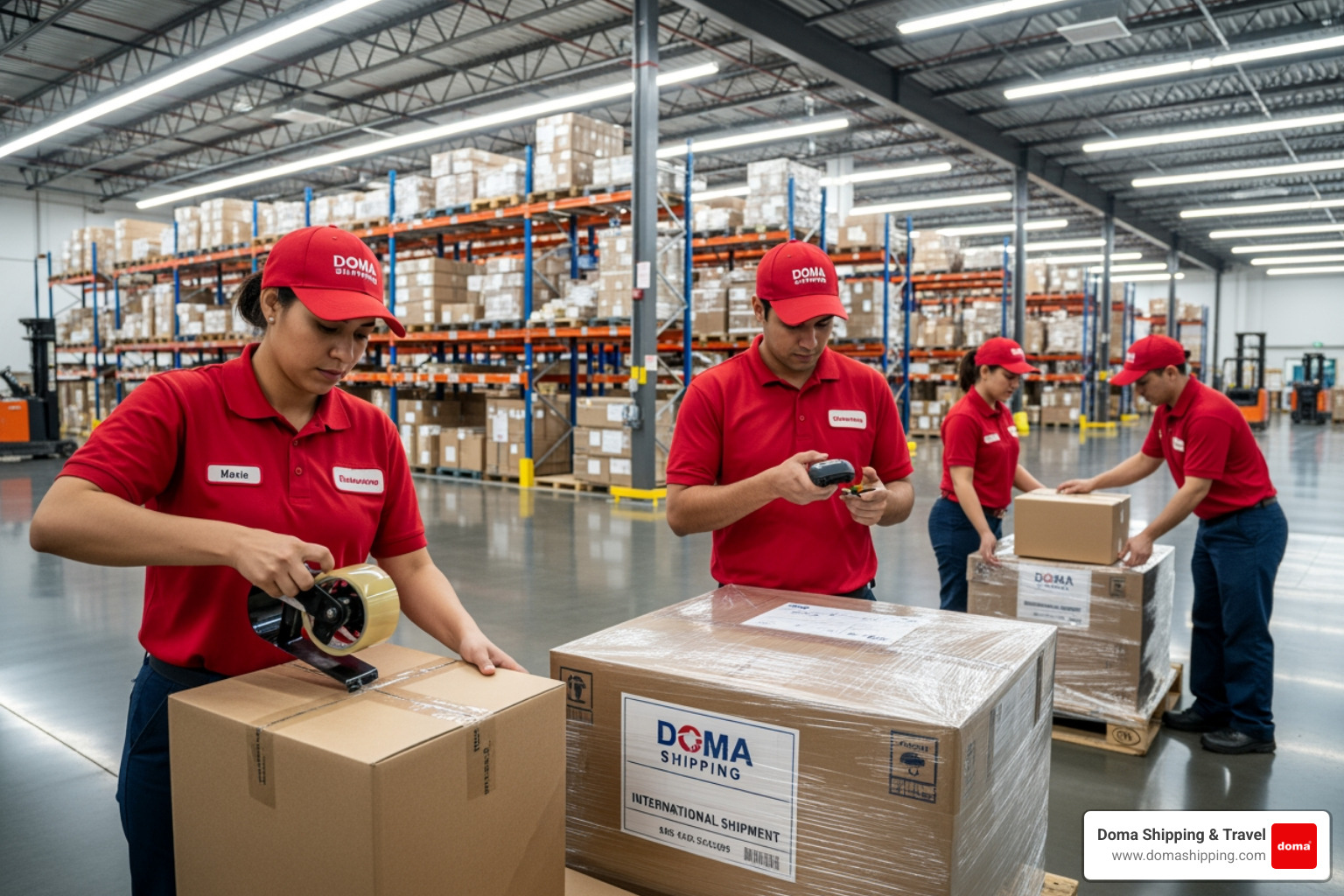
When preparing your package for international transit, durability is paramount. We always recommend using high-quality materials to protect your items from the rigors of shipping.
- Sturdy Boxes: Opt for new, double-walled corrugated cardboard boxes, especially for heavier or more fragile contents. Used boxes may have compromised structural integrity.
- Cushioning Materials: Fill all empty spaces within the box with ample cushioning. Options include bubble wrap, foam inserts, packing peanuts, or crumpled newspaper. The goal is to prevent items from shifting during transit.
- Fragile Items: For delicate items, wrap each piece individually with several layers of bubble wrap. Place them in the center of the box, ensuring they are not touching the sides of the outer carton.
- Water-Resistant Sealing: Consider wrapping items in water-repellent film or plastic bags before placing them in the box, especially for items sensitive to moisture.
- Strong Adhesive Tape: Use high-strength packing tape (at least 2 inches wide) to seal all seams and flaps of your box. Apply tape generously in an “H” pattern on both the top and bottom of the box for maximum security.
A well-packed parcel is less likely to incur damage, ensuring your items reach their destination in Europe in the condition you intended.
Accurate addressing is crucial to avoid delivery delays and ensure your package reaches the correct recipient in Europe. Each European country may have slight variations in its postal address format, so attention to detail is essential.
When addressing your package:
- Recipient Information: Clearly print the recipient’s full name or company name, followed by their full street address, including any apartment or suite numbers.
- City, Subdivision, and Postal Code: Include the city, followed by the appropriate subdivision (like a province, state, or county, if applicable), and then the postal code. Many European countries place the postal code before the city name, so verify the specific format for your destination.
- Country Name: Always write the full country name in capital letters on the last line of the address. For example, “GERMANY” or “POLAND.”
- Legibility: Print all address information neatly in capital letters using a pen or permanent marker. Avoid using commas or periods in the address lines.
- Internal Address: For added security, we recommend writing the recipient’s full name and address on a piece of paper and placing it inside the package.
For specific information about other countries’ postal addresses, you can consult the Universal Postal Union by clicking “Postal Addressing Systems (PAS).” Additionally, the USPS tips for international addresses provide helpful guidance on formatting.
Navigating Customs: Documentation and Regulations
Customs clearance is often the most complex part of sending package to Europe from USA. International regulations dictate that every item crossing borders must be declared to customs authorities. This involves completing specific documentation, understanding potential duties and taxes, and being aware of prohibited items. Proper navigation of these requirements is key to a smooth delivery process.
The customs declaration form is the cornerstone of any international shipment. This document provides customs officials with vital information about the contents of your package. For most international shipments, you will encounter forms such as CN22 or CN23.
Key elements for a successful customs declaration include:
- Electronic Customs Forms: Many carriers now offer electronic customs declaration forms, which can help streamline the process. These forms require the same detailed information as paper versions.
- Detailed Item Description: This is critical. Instead of vague terms like “gifts” or “clothes,” provide a precise description of each item. For example, “Men’s cotton t-shirt” or “New ceramic coffee mug.”
- Declared Value: Accurately declare the value of each item. This value is used by customs authorities to assess duties and taxes. Misrepresenting the value can lead to delays, fines, or even confiscation.
- Harmonized System (HS) Codes: For commercial shipments, including HS Codes (Harmonized System Codes) is highly recommended. These international codes classify products and help customs officials quickly identify the goods, preventing misinterpretation and speeding up clearance.
- Purpose of Shipment: Indicate whether the shipment is a “gift,” “personal belongings,” “sale of goods,” or “commercial sample.” This helps customs understand the nature of the transaction.
Filling out this form accurately and completely helps prevent your package from getting held up in customs.
Understanding Duties, Taxes, and Fees
When sending package to Europe from USA, it’s important to understand how customs duties, taxes, and other import fees work. These are charges levied by the destination country’s government on imported goods.
- Import Regulations: Each European country, and the European Union as a whole, has its own set of import regulations and tariffs. These are applied based on the type of goods, their declared value, and their country of origin.
- Value Added Tax (VAT): Most European countries charge a Value Added Tax (VAT) on imported goods. This is a consumption tax applied at various stages of production and distribution, ultimately borne by the consumer.
- Recipient Responsibility: In most cases, the recipient of the package is responsible for paying any applicable customs duties, taxes, or import fees. This is often referred to as Delivered Duty Unpaid (DDU). The carrier will typically notify the recipient of these charges upon arrival, and the package will not be delivered until they are paid.
- Sender Arrangements: Some senders may choose to arrange for duties and taxes to be paid upfront, known as Delivered Duty Paid (DDP). This ensures the recipient doesn’t face unexpected charges. We can discuss the best option for your specific needs.
- Calculation Basis: Duties and taxes are generally calculated based on the declared value of the goods, plus freight and insurance amounts. For example, a common duty rate for shipments to the EU can be a percentage of the item’s value. There may also be specific exemptions, such as for Polish residents, where no duties apply to shipments under a certain value threshold.
Accurate declaration of goods and their value is essential to ensure proper assessment of these charges and avoid delays.
Common Prohibited and Restricted Items
Before sending package to Europe from USA, it’s crucial to verify that your items are not prohibited or restricted in the destination country. Shipping restrictions exist for safety, security, and regulatory reasons, and these lists can vary significantly by country.
Common categories of prohibited or restricted items include:
- Flammable and Explosive Materials: This includes aerosols, paints, lighter fluid, ammunition, and fireworks.
- Alcohol and Tobacco: Regulations around alcohol and tobacco products are very strict and often involve high duties or outright prohibitions.
- Perishable Goods: Items that spoil quickly, such as fresh food, fruits, vegetables, and certain dairy products, are generally not allowed.
- Weapons and Ammunition: Firearms, knives, and other weapons, as well as their components, are strictly controlled or prohibited.
- Prescription Medication: Shipping prescription drugs internationally is highly regulated and often requires special permits or is entirely prohibited. Over-the-counter medications may also face restrictions.
- Hazardous Materials: Any item that poses a risk during transport, such as batteries (especially lithium-ion), chemicals, and certain cosmetics, falls into this category.
- Monetary Instruments: Cash, coins, and negotiable bonds are typically prohibited.
- Illegal Items: Naturally, any items deemed illegal in either the USA or the destination European country are strictly forbidden.
It is the sender’s sole responsibility to research and comply with the specific import regulations of the destination country. Failure to do so can result in confiscation, fines, or the return of your package. We always advise you to check the latest regulations for your specific European destination before preparing your shipment.
Choosing Your Service for Sending Package to Europe from USA
Selecting the right shipping service is a critical decision when sending package to Europe from USA. It involves balancing delivery timelines, the nature of your items, and the overall efficiency of the service. We offer various solutions customized to your specific needs, whether you require rapid delivery or an alternative approach for larger volumes. Our Door to Door Shipping ensures convenience, while our Less Than Container Load Shipping provides flexible options for commercial goods.
Air and Sea Shipping: Speed and Timelines
The primary methods for international shipping across the Atlantic are air freight and sea freight, each offering distinct advantages:
- Air Freight: This is the fastest method for sending package to Europe from USA. If your shipment is urgent or time-sensitive, air freight is the preferred choice. Typical transit times for express air services can be as little as a few business days, often ranging from 3 to 7 business days for express or 7 to 14 business days for standard air delivery. This speed makes it a prime choice for time-sensitive shipments.
- Sea Freight: For larger, heavier, or less time-sensitive shipments, sea freight is a practical option. This method involves transporting goods in containers on cargo ships. While significantly slower, with typical transit times ranging from 4 to 6 weeks, it is ideal for bulk shipments, personal belongings when relocating, or commercial goods where a longer delivery window is acceptable.
The choice between air and sea shipping depends entirely on your priorities. Consider the urgency of your delivery, the size and weight of your package, and the nature of its contents.
Key Factors When Selecting a Shipping Provider
When entrusting your package for its transatlantic journey, choosing the right shipping provider is essential. Here are the key factors we believe you should consider:
- Industry Experience: Look for providers with a proven track record in international logistics. Our over 30 years of experience in sending package to Europe from USA ensures a deep understanding of complex international shipping routes and regulations.
- Service Reliability: A reliable provider consistently delivers packages safely and within estimated timelines. This includes proper handling of goods and efficient processing through customs.
- Tracking Capabilities: The ability to track your shipment in real-time provides peace of mind. A robust tracking system allows you to monitor your package’s journey from our warehouse to its final destination in Europe.
- Insurance Options: For valuable items, comprehensive insurance coverage is non-negotiable. Ensure the provider offers adequate protection against loss or damage during transit.
- Range of Services: A provider offering a variety of services, such as door-to-door delivery, container shipping, and specialized handling for personal belongings, can cater to diverse shipping needs.
- Customer Support: Responsive and knowledgeable customer service is invaluable. You should be able to get answers to your questions and assistance with any issues that may arise during the shipping process.
We are committed to providing comprehensive, reliable, and expertly managed shipping solutions for your packages to Europe.
After You Ship: Tracking, Insurance, and Special Cases
Once your package is on its way, the process doesn’t end. Monitoring its journey, ensuring its protection, and understanding any special delivery considerations are the final steps to a successful international shipment. We provide the tools and support to keep you informed every step of the way.
How to Track Your Shipment from the USA to Europe
After sending package to Europe from USA, tracking your shipment is a crucial step that offers peace of mind and keeps you informed of its progress.
- Tracking Numbers: Every international shipment is assigned a unique tracking number. This alphanumeric code is your key to monitoring your package’s journey.
- Carrier Portals: We provide access to online carrier portals where you can enter your tracking number to get real-time updates on your package’s location and status. You can typically see when it leaves our facility, clears customs, and is out for final delivery.
- Delivery Status: These updates allow you to anticipate delivery, notify your recipient, and quickly address any potential issues.
We make it easy to monitor your parcel’s progress. You can use our dedicated tracking pages for updates: Tracking Paczek and Sledzenie Paczki.
The Importance of Shipping Insurance
While we take every precaution to ensure the safe delivery of your items, unforeseen circumstances can sometimes occur. This is why shipping insurance is an invaluable safeguard when sending package to Europe from USA.
- Shipment Protection: Insurance protects your financial investment in the event of loss, damage, or theft during transit.
- Declared Value Coverage: When you insure a package, you declare its value. In the unfortunate event of an issue, you can be reimbursed for this declared value, up to the policy’s limits.
- High-Value Items: For particularly valuable items, such as electronics, artwork, or important documents, shipping insurance provides essential protection.
- Peace of Mind: Knowing your package is financially protected allows you to ship with confidence, reducing anxiety about its journey.
We discuss insurance options with you to ensure your items are adequately protected for their international journey.
Shipping to APO/FPO/DPO Addresses in Europe
For those sending package to Europe from USA to U.S. military personnel or diplomatic staff stationed overseas, there are specific considerations for APO (Army Post Office), FPO (Fleet Post Office), and DPO (Diplomatic Post Office) addresses. These addresses are unique as they are processed through the U.S. postal system, even though the final destination is international.
- Military Mail/Diplomatic Post: These addresses serve as a domestic mail gateway to overseas locations.
- Unique Address Format: The address format for APO/FPO/DPO is distinct. It should include the recipient’s name, unit and box numbers, the APO/FPO/DPO designation, and then AE (Armed Forces Europe), AP (Armed Forces Pacific), or AA (Armed Forces Americas). Crucially, you should not include the city or country name of the European location, as this can divert the package into foreign mail networks.
- Customs Form Requirements: Despite being routed through the U.S. postal system, these shipments still require customs forms. It is essential to accurately describe the contents and declare the value, just as you would for any other international package.
Understanding these special address formats and customs requirements ensures your package reaches our service members and diplomatic personnel efficiently.
Frequently Asked Questions about Sending a Package to Europe from the USA
What is the most important document for sending a package to Europe from the USA?
The customs declaration form is the most critical document. It must be filled out completely and accurately, detailing the contents, value, and purpose of the shipment to ensure smooth passage through European customs. Inaccurate or incomplete forms are the leading cause of delays and potential issues.
Who is responsible for paying customs duties and taxes?
Typically, the recipient of the package is responsible for paying any applicable customs duties, taxes, or import fees levied by the destination country’s authorities upon the package’s arrival. However, arrangements can sometimes be made for the sender to cover these charges upfront, depending on the service chosen.
How can I ensure my package clears customs without delays?
To prevent delays, ensure all documentation is accurate, provide highly detailed descriptions of every item, declare the correct value, and confirm your items are not prohibited or restricted in the destination country. Utilizing Harmonized System (HS) Codes for commercial shipments can also significantly aid in quicker clearance.
Conclusion
Sending package to Europe from USA doesn’t have to be a daunting task. By understanding the nuances of international shipping—from meticulous package preparation and accurate documentation to selecting the appropriate service and navigating customs regulations—you can ensure a smooth and successful delivery. The key lies in thorough preparation, attention to detail, and partnering with experienced logistics professionals.
We pride ourselves on our extensive experience and comprehensive approach to international shipping. We are here to guide you through every step, ensuring your packages, containers, or personal belongings reach their European destinations safely and efficiently. For comprehensive guidance on your next shipment, explore our International Parcel Shipping services.