
Bike shipping to Europe is a practical, well-established process used by cyclists traveling for tours, competitions, relocations, and cycling holidays across destinations like France, Italy, Spain, and Poland.
Here’s a quick overview of how it works:
| Step | What’s Involved |
|---|---|
| Choose a shipping method | Sea freight (slower, higher volume) or air freight (faster) |
| Prepare your bike | Disassemble, clean, and pack in a hard-shell case or double-walled cardboard box |
| Handle documentation | Customs declarations, passport copy, and inventory list |
| Track your shipment | Door-to-door logistics with online tracking from the USA to Europe |
| Clear customs | Import duties and VAT apply depending on destination country |
Cyclists know their bikes intimately. Renting one at the destination simply isn’t the same experience. That’s why more and more riders are choosing to ship their own bikes internationally rather than deal with airline fees, size restrictions, or the risk of damage on a crowded flight.
But international bike transport does come with real complexity — from packaging requirements and lithium battery rules for e-bikes, to customs clearance and post-Brexit regulations for UK shipments. Getting it wrong can mean delays, extra charges, or a damaged bike waiting at the other end.
This guide walks you through everything you need to know to ship your bike from the USA to Europe safely and confidently.
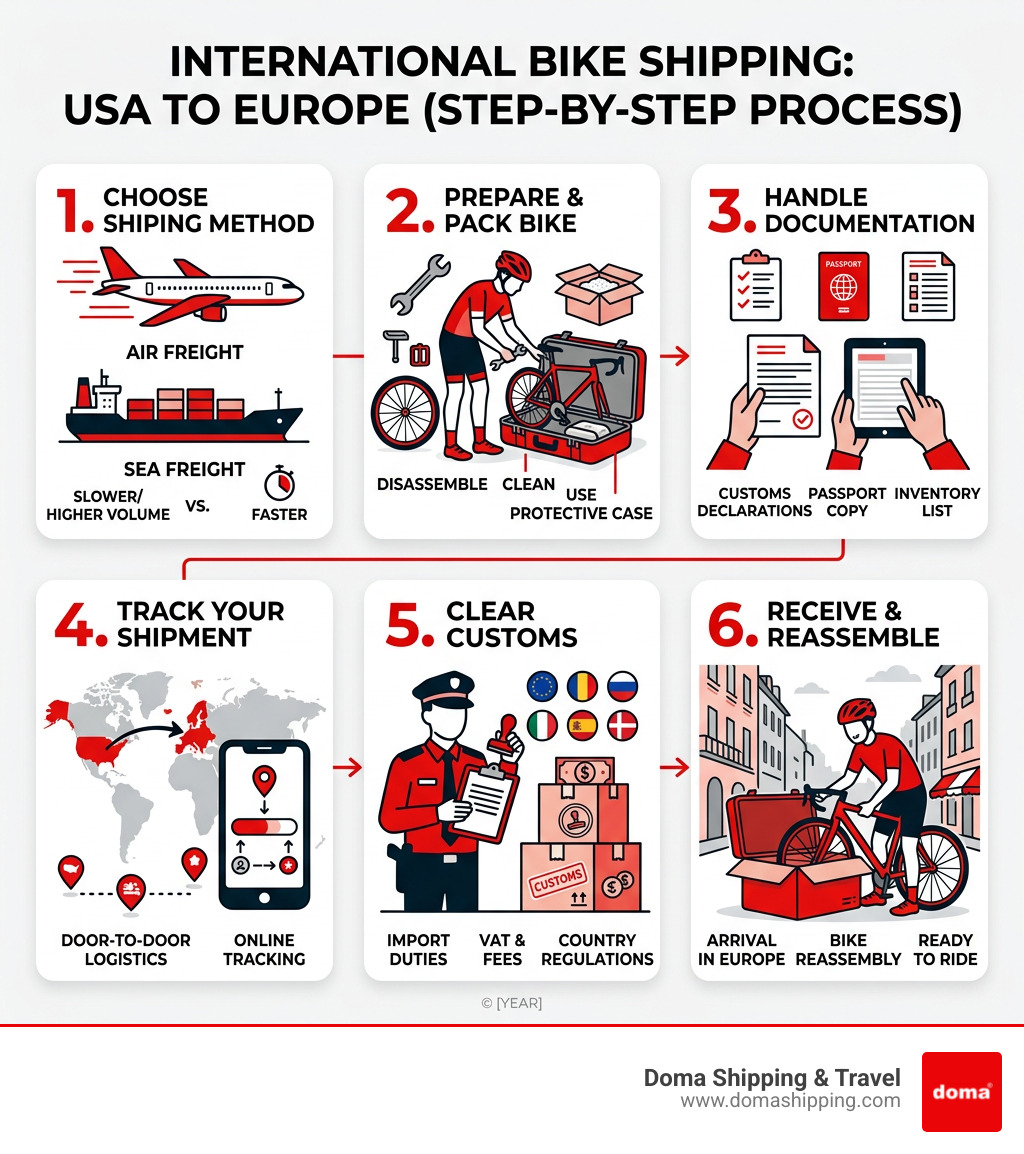
When you decide to send your bicycle across the Atlantic, the first major decision involves choosing the transport mode. Because a bicycle is a high-volume, relatively lightweight item, the choice between sea and air often depends on your arrival timeline and the total volume of gear you are sending.
For those who need their equipment to arrive quickly, air freight is the primary choice. This method is often preferred by competitive athletes or those on a tight vacation schedule. When you choose Paczki morskie i lotnicze do Polski, you gain the advantage of speed, though it requires more stringent adherence to size and weight restrictions.
Ocean freight, on the other hand, is the backbone of international logistics. It is ideal for relocations or long-term tours where you might be sending more than just a bike. We offer two primary container options:
| Feature | Air Freight | Sea Freight |
|---|---|---|
| Transit Time | 5–10 Days | 3–8 Weeks |
| Best For | Racing, Short Vacations | Relocation, Long Tours |
| Volume Capacity | Limited by Aircraft | Virtually Unlimited |
| Reliability | High Frequency | Subject to Port Logistics |
The most seamless way to manage bike shipping to Europe is through Door to Door Shipping. Instead of navigating the complexities of port terminals or airport warehouses yourself, we handle the entire chain.
From our hubs in the Chicago area—including locations like Roselle, Schaumburg, and Mount Prospect—we can arrange for the pickup of your boxed bicycle directly from your residence or a local bike shop. Our team manages the transit to the port, the ocean or air crossing, and the final delivery to your destination in Europe. This “hands-off” approach is particularly beneficial for travelers who want to land in Europe and have their bike waiting for them at their hotel or new home.
Shipping a bicycle internationally is not the same as putting it on a car rack for a weekend trip. The journey involves multiple handling points, vibration, and pressure changes. Professional-grade preparation is the only way to ensure your frame arrives in the same condition it left the USA.
The first step in any bike shipping to Europe journey is a thorough cleaning. European customs and agricultural authorities are very strict about soil and organic matter. We recommend paying close attention to the tires, pedals, and the underside of the mudguards. If a bike arrives with visible dirt, it may be subject to quarantine delays or cleaning charges at the port of entry.
Once clean, disassembly is required to fit the bike into a secure shipping profile:
While we take every precaution, international transit involves many variables. We always recommend purchasing full-value protection for your equipment. Standard carrier liability is often based on weight rather than the actual value of a high-end carbon fiber road bike or mountain bike.
For maximum safety, we suggest using a freight-approved hard-shell travel case. If you are using a double-walled cardboard box, reinforce the corners with extra tape and use “cardboard bridges” inside to prevent the box from collapsing if other items are stacked on top. Ensure there is no movement inside the box; any “play” during transit can lead to paint chips or structural rubbing.
One of the biggest hurdles in bike shipping to Europe is the paperwork. Each country has its own set of rules, and since Brexit, shipping to the United Kingdom requires different procedures than shipping to the European Union (EU). For official information on customs regulations regarding personal property, you can visit the European Commission Taxation and Customs Union.
When you utilize our International Parcel Shipping services, we assist with the digital forms required for customs.
Transit times for sea freight generally range from 3 to 8 weeks. For example, a shipment from our Chicago-area warehouses to a major port like Bremerhaven or Gdynia typically takes about 4 to 5 weeks on the water, plus time for customs clearance. Seasonal variations, such as the busy summer tourism months or winter holidays, can occasionally impact port processing times.
Yes, and they are quite strict. Lithium-ion batteries are classified as “Dangerous Goods” due to their flammability. Most air freight carriers will not accept e-bike batteries at all. For sea freight, batteries must be handled with specific hazardous materials documentation. In many cases, it is easier to ship the bike without the battery and rent or buy a battery at your destination in Europe.
Upon delivery, inspect the box immediately for any visible punctures or crushed corners. If you see damage, note it clearly on the delivery receipt before signing. Take high-resolution photos of the packaging and the bike itself. Because we emphasize the importance of insurance, you will need this documentation to verify your claim. Our 30 years of experience in logistics ensures we support our clients through the verification process if an issue arises.
At Doma Shipping & Travel, we understand that your bicycle is more than just a piece of sports equipment—it’s your ticket to exploring the winding roads of the Alps or the historic streets of Krakow. With over 30 years of experience in international logistics and freight forwarding, we specialize in moving the things that matter most to you from the USA to Poland and beyond.
Whether you are planning a permanent International removal to Poland or just heading over for a summer of cycling, we provide the comprehensive support you need. From our local offices in Chicago, Schaumburg, and Niles, to the final delivery at your European destination, we ensure your “pond crossing” is as smooth as a fresh stretch of asphalt.
Ready to get your bike moving? Contact us at one of our Illinois locations today to discuss your international shipping needs.
