
Making sure your family heirlooms ship safely across the Atlantic is one of the most stressful parts of relocating from the USA to Europe. These aren’t just objects — they’re irreplaceable pieces of your family’s history.
Here’s what you need to do to ship heirlooms safely overseas:
The stakes are real. The average insurance claim for a damaged or lost antique shipment exceeded $25,000 in 2023. And unlike a broken appliance, a cracked heirloom porcelain vase or a warped antique writing desk cannot simply be replaced.
International shipping adds layers of complexity that domestic moves don’t: ocean transit vibrations, humidity shifts inside cargo containers, customs inspections, and long transit windows that test even the best packing jobs.
This guide walks you through every step — from wrapping techniques to customs documents — so your most precious belongings arrive in Europe just as you left them.
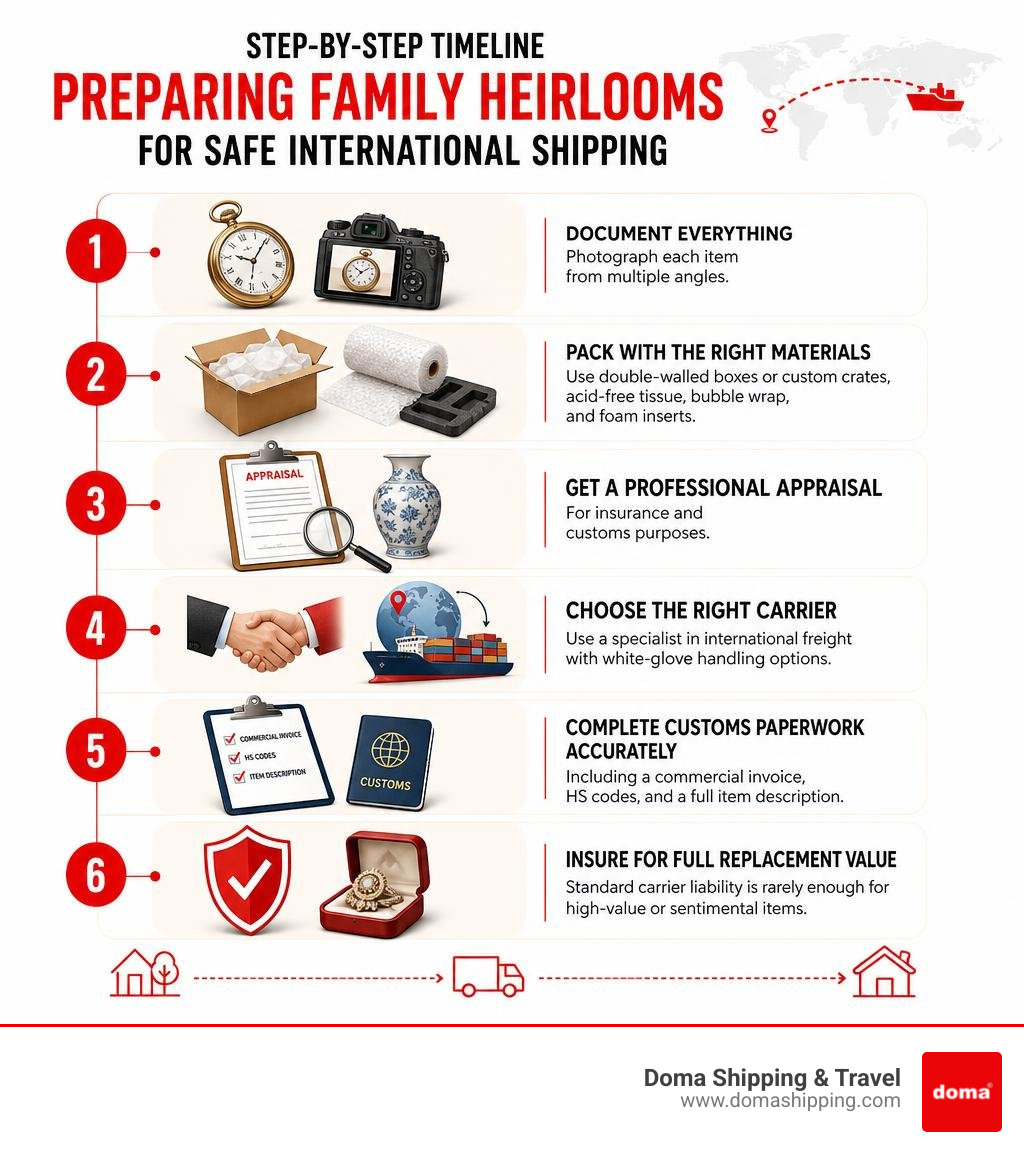
Family heirlooms ship safely further reading:
When you ship items internationally, they are subjected to physical forces vastly different from those experienced during a local move. To ensure family heirlooms ship safely, we must first understand what happens to them inside an ocean container.
During sea transit, cargo ships roll, pitch, and heave. In a heavy storm, the front of a container ship can bob up and down by over 15 meters. This motion generates continuous, low-frequency vibrations and occasional high-impact G-forces. If delicate items are not properly secured, these vibrations can cause microscopic fractures in ceramics, loosen joints in antique furniture, or cause items to rub against one another, destroying delicate finishes.

Furthermore, atmospheric conditions inside a shipping container change dramatically. As a ship travels across different climate zones, the temperature inside a standard container can fluctuate wildly. This temperature cycle creates “container rain” — condensation that forms on the ceiling and drips onto the cargo. High humidity and moisture can warp historic wood, rust metallic components, and cause mold growth on antique textiles or paper documents.
By utilizing consolidated ocean freight (LCL or Less than Container Load), your heirlooms are securely packed onto pallets, wrapped in protective materials, and positioned in the most stable areas of the container. To learn more about how containerized shipping works, explore our comprehensive guide on everything you need to know about shipping containers overseas.
To counteract the physical stresses of international transport, you must construct a robust defense system around each object. This begins with choosing the right exterior container and interior cushioning.
Standard, single-walled cardboard boxes are designed for lightweight retail goods and will easily crush under the weight of other cargo. For fragile heirlooms, double-walled or tri-wall corrugated cardboard boxes are essential. These boxes can withstand vertical compression and absorb external impacts. For exceptionally heavy, large, or highly fragile items — such as grandfather clocks, marble sculptures, or large oil paintings — custom wooden crates are the gold standard.
Here is a quick reference table comparing packing methods for different heirloom materials:
| Material Type | Primary Risk | Recommended Outer Shell | Recommended Cushioning | Special Requirements |
|---|---|---|---|---|
| Ceramics & Porcelain | Cracking, impact shattering | Double-walled box (or box-in-box) | Bubble wrap, custom foam inserts | Fill hollow centers with paper |
| Polished Wood Furniture | Warping, scratching, joint loosening | Custom wood crate or heavy padding | Cushioned furniture wrap, foam pads | Keep place screws secured in a labeled bag |
| Oil Paintings & Art | Canvas puncture, paint flaking | Custom wooden crate | Acid-free archival paper, foam corners | Avoid plastic directly touching paint |
| Textiles & Documents | Mold, mildew, yellowing | Double-walled box with waterproof liner | Acid-free tissue paper, silica gel packs | Vacuum-sealed moisture barrier bags |
Using the wrong packing materials can cause permanent chemical or physical damage to antiques. For example, standard newspaper contains acidic inks that can transfer onto porcelain or stain historical documents. Flannel wraps can trap abrasive dirt particles that scratch delicate wood finishes.
To help family heirlooms ship safely, invest in professional-grade materials:
For more detailed packing strategies, you can read about best practices for packing fragile keepsakes to see how museum-grade packing principles are applied to everyday heirlooms.
The Smithsonian Museum Conservation Institute recommends a highly reliable three-layer approach to packing fragile artifacts. This system can easily be adapted for your personal treasures:
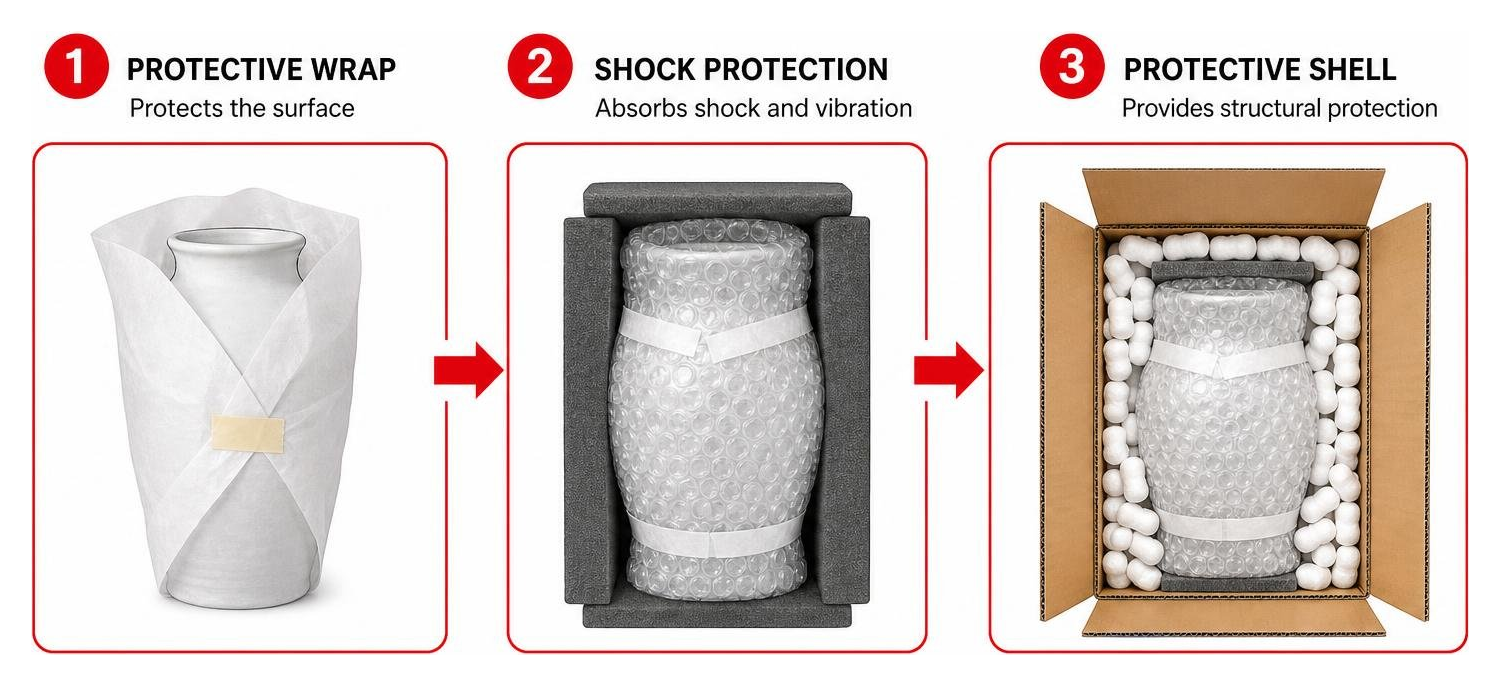
For smaller, extremely fragile items, use the box-in-box method. Pack the item securely inside a small box, then place that box inside a larger box with at least 2 inches of packing peanuts or foam pads separating the two containers.
Shipping family heirlooms across international borders requires meticulous attention to legal and customs frameworks. Unlike domestic shipping, international freight requires clearing customs at the port of entry (such as the port of Gdynia in Poland).
Every item in your shipment must be declared on a commercial invoice or packing list with an accurate Harmonized System (HS) code. Under-declaring the value of your items to avoid duties is highly risky; customs authorities inspect high-value cargo, and incorrect paperwork can lead to severe delays, fines, or seizure of your precious belongings. For a smooth transition, consult our detailed guide to international removals from the USA to Poland.
Before you pack a single box, conduct a thorough Heirloom Audit. This documentation is vital if you need to file an insurance claim or verify the condition of your items after delivery.
Choosing a generic courier service for irreplaceable antiques is a recipe for anxiety. Standard parcel networks handle millions of packages daily, utilizing automated sorting chutes and high-impact transit hubs.
To ensure family heirlooms ship safely, partner with an experienced international freight forwarder. A professional logistics provider will consolidate your items onto secure, shrink-wrapped pallets (LCL shipping), protecting them from individual handling risks. They can also arrange for custom crating and white-glove loading services directly from our US locations, ensuring a seamless transit process. For more strategic advice, check out our tips for shipping personal belongings overseas.
If an item arrives damaged, you must act quickly. Most international carriers require damage reports within 48 to 72 hours of delivery.
Yes. Certain high-value, small items should never be packed into a shipping container or sent via freight forwarding. This includes fine jewelry, coin collections, stamp collections, historic family gold, and essential legal documents (like birth certificates or property deeds). These items are highly susceptible to theft and are often excluded from standard marine insurance policies. Always carry these items with you in your personal carry-on luggage when flying to Europe.
Wood, canvas, paper, and textiles are organic materials that breathe. Rapid changes in temperature and humidity cause wood to expand and contract, which can crack historic finishes, loosen glue in antique furniture, and warp structural frames. High humidity also invites mold spores that can permanently stain fabrics and documents.
Professional crating prevents these issues by utilizing vapor barriers, moisture-absorbing desiccants, and insulated liners. For highly sensitive collections, consolidated container shipping via temperature-regulated pathways ensures your items remain in a stable, climate-controlled environment throughout their ocean voyage.
Shipping your family’s history across the world doesn’t have to be a leap of faith. By choosing professional-grade packing materials, utilizing the Smithsonian three-layer method, and keeping detailed documentation, you can ensure your precious family heirlooms ship safely to their new home in Europe.
With over 30 years of experience in international logistics and freight forwarding, Doma Shipping & Travel specializes in helping families relocate their lives from the USA to Poland and other European destinations. From our convenient locations across the Chicago area — including Chicago, Melrose Park, Mount Prospect, Roselle, Palos Hills, Algonquin, Niles, Park Ridge, Des Plaines, Glenview, Franklin Park, Schiller Park, Bensenville, and Schaumburg — we handle your personal belongings with the care and respect they deserve.
Let us handle the complex customs paperwork and ocean logistics so you can focus on your family’s next chapter. If you are also planning to send seasonal gifts or care packages to loved ones in Poland, visit our page on how to send gifts and care packages to Poland to discover our comprehensive international delivery options.