Why International Container Transport Matters for Your Shipment
International container transport is the backbone of global trade, moving goods efficiently across vast distances. Whether you’re shipping personal belongings, business inventory, or vehicles from the USA to Poland or Europe, understanding how containerization works helps you make informed decisions and avoid significant setbacks.
Quick Overview: International Container Transport Essentials
- What it is: A standardized method of shipping goods overseas in large steel containers.
- Why it matters: 70% of international cargo volumes move in containers today.
- Main options: Full Container Load (FCL) for large shipments or Less than Container Load (LCL) for smaller cargo.
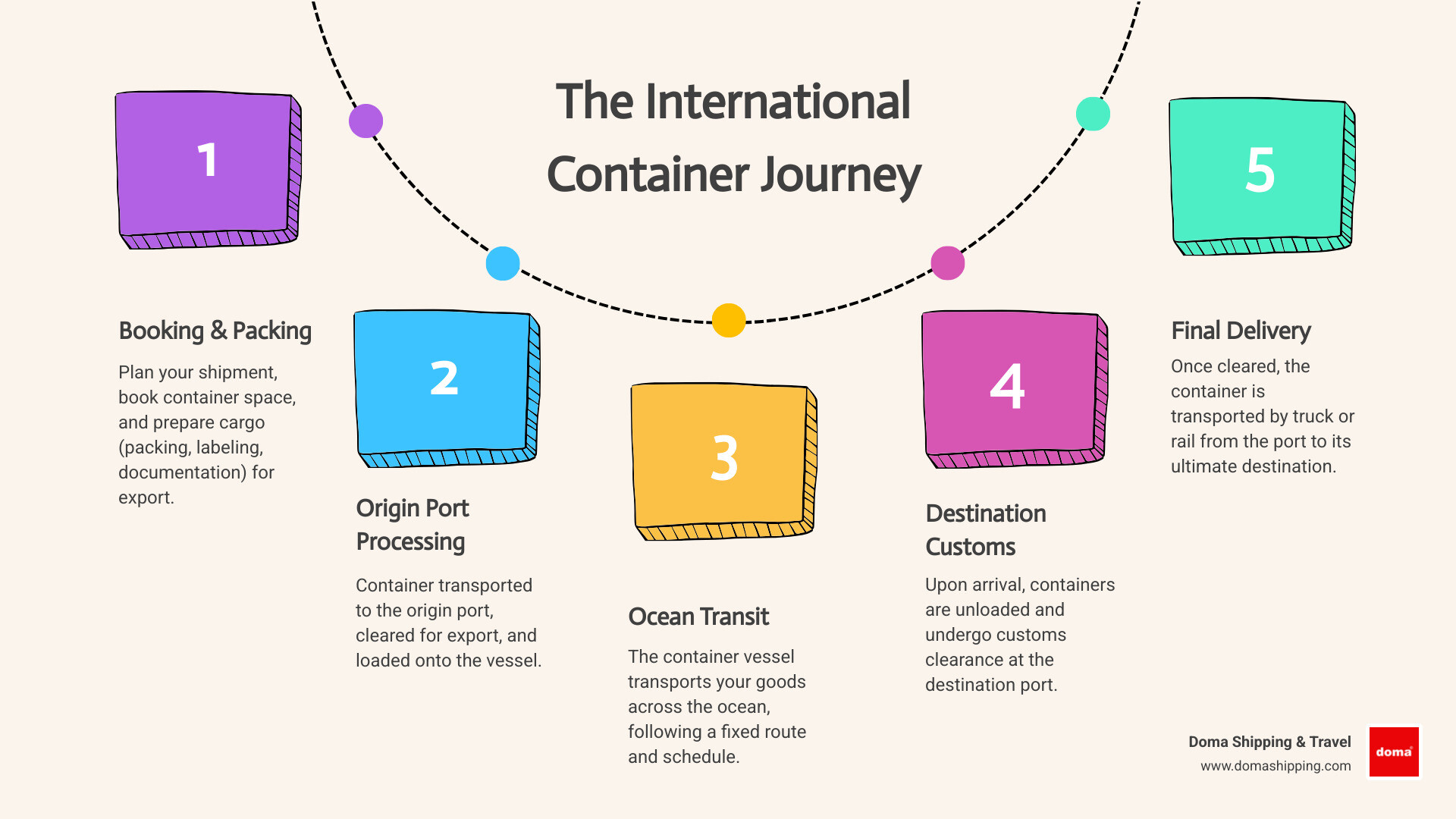
- Key stages: Booking → Packing → Port handling → Ocean transit → Customs → Final delivery.
- Average transit time: 2-6 weeks from US ports to European destinations, depending on route and customs.
The introduction of standardized containers in 1956 revolutionized international trade. Before this, loading cargo was slow and labor-intensive. Today, these uniform steel boxes make shipping faster, more secure, and more reliable.
Over half the value of goods moved by sea travels in containers on liner ships. These vessels follow fixed routes and schedules, making them predictable and efficient for businesses and individuals alike.
For those shipping from the USA to Europe, containerization offers several advantages: your goods remain sealed and secure, multiple transport modes (truck, ship, rail) work together seamlessly, and standardized processes mean fewer surprises.
However, the process involves more than loading a box. It requires navigating customs, choosing the right container, preparing documentation, and coordinating with logistics providers. Each step affects your shipment’s timeline and security.
The Fundamentals of Containerization
Before the mid-20th century, cargo was loaded piece by piece onto ships—a time-consuming process prone to damage and theft. The introduction of standardized shipping containers in 1956 by Malcolm McLean revolutionized the industry. His idea was to create uniform, stackable metal boxes easily transferred between trucks, trains, and ships, changing global trade.
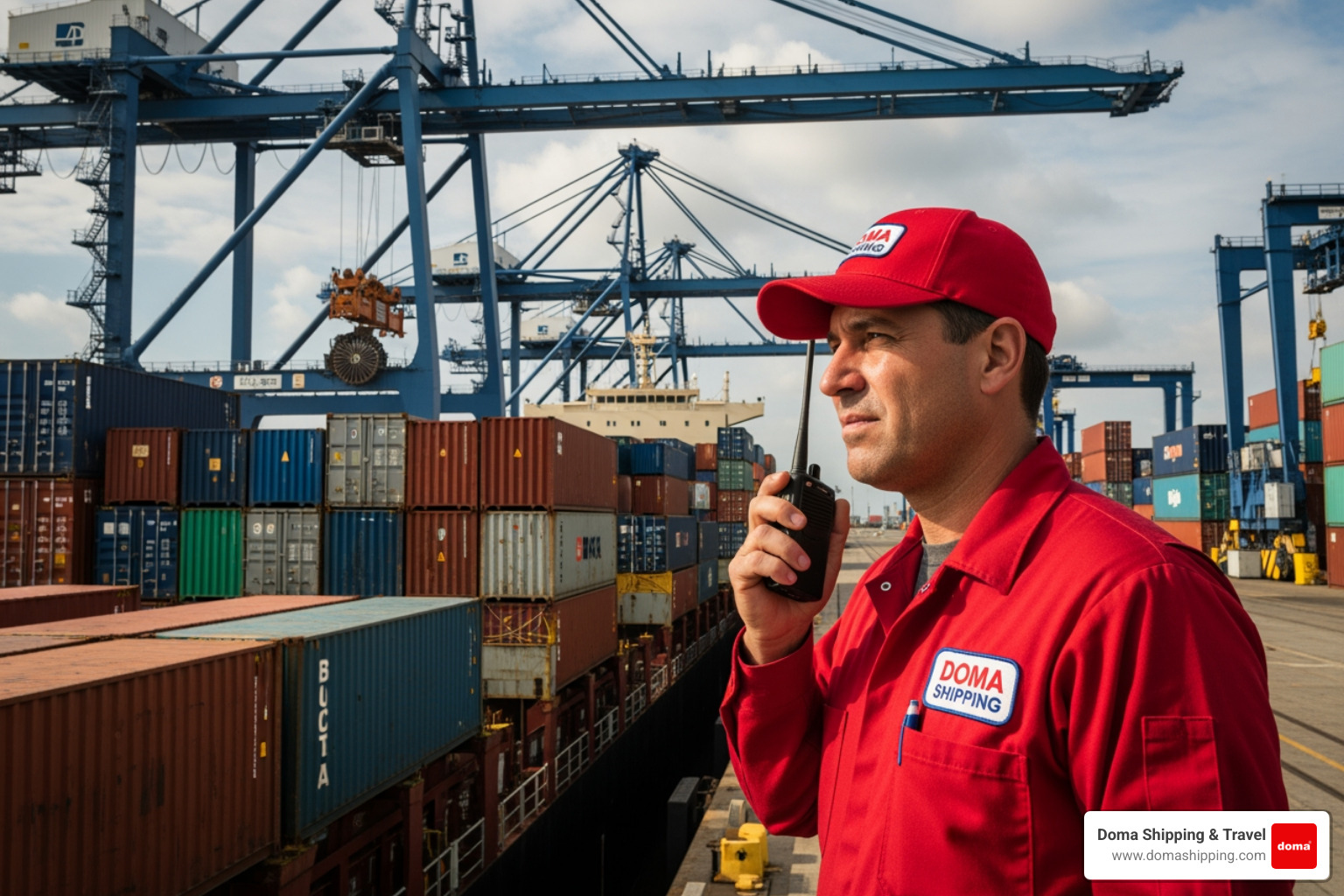
The benefits were immediate. Efficiency soared as loading times dropped from weeks to hours, allowing ships more time at sea. Cargo security also improved dramatically. Sealed at the origin, containers remain locked until the destination, reducing theft and damage. The robust steel boxes also offer superior protection from the elements.
Today, containerization is the backbone of global trade, moving everything from manufactured products to personal effects. It accounts for 70% of international cargo volume and over half the value of goods moved by sea. This underscores the critical role of international container transport in our interconnected world. You can explore How Container Shipping Works to learn more.
Choosing the Right Container and Service
When planning your international container transport from the USA to Europe, one of the most crucial decisions is selecting the right container and shipping service. This choice depends on your cargo’s volume and weight. Understanding the options helps you make the best decision for your needs.
First, let’s consider the characteristics of your cargo. Is it robust or fragile? Does it require temperature control? Is it oversized or hazardous? These factors will guide you toward the appropriate container type. For instance, a 20ft container is often chosen for heavy cargo, while a 40ft container (including High Cube versions) is ideal for lighter but larger loads.
The next big decision is between Full Container Load (FCL) and Less than Container Load (LCL). This choice impacts both logistics and overall efficiency.
Here’s a comparison to help you understand the differences:
| Feature |
Full Container Load (FCL) |
Less than Container Load (LCL) |
| Description |
Your cargo occupies an entire container, typically 20ft or 40ft. |
Your cargo shares space within a container with other shippers’ goods. |
| Volume/Weight |
Ideal for larger shipments, bulky items, or when you need dedicated space. |
Suitable for smaller shipments that don’t fill an entire container. |
| Security |
Container is sealed at origin and remains sealed until destination, offering higher security. |
Cargo is consolidated and deconsolidated, potentially handled more often, but still secure. |
| Transit Time |
Generally faster, as there’s no need for consolidation/deconsolidation at ports. |
Can be slightly longer due to the additional steps of combining and separating cargo. |
| Logistics |
Simpler, as you manage one container. |
More complex, as it involves coordinating multiple shipments within one container. |
| Use Case |
Best for larger shipments, offering exclusive use of the container. |
Best for smaller shipments that do not require a full container. |
Choosing FCL gives you the advantage of maintaining security of your property or merchandise, as the container is exclusively yours. This is often the preferred method for shipping vehicles, large household goods, or substantial commercial merchandise. If you’re considering this option, you can find More info about FCL shipping on our website.
On the other hand, LCL works well if you have less to ship and want to optimize resources. Your pallets or cases are stacked with other companies’ or senders’ cargo bound for a similar destination. This makes LCL a smart choice for smaller loads where using an entire container is not necessary. Learn more about More info about LCL shipping and how it can benefit your smaller shipments.
A Guide to Common Shipping Containers
Understanding the different types of containers available is key to ensuring your goods are transported safely and efficiently. Each container type is designed for specific cargo characteristics, offering custom solutions for your international container transport needs.
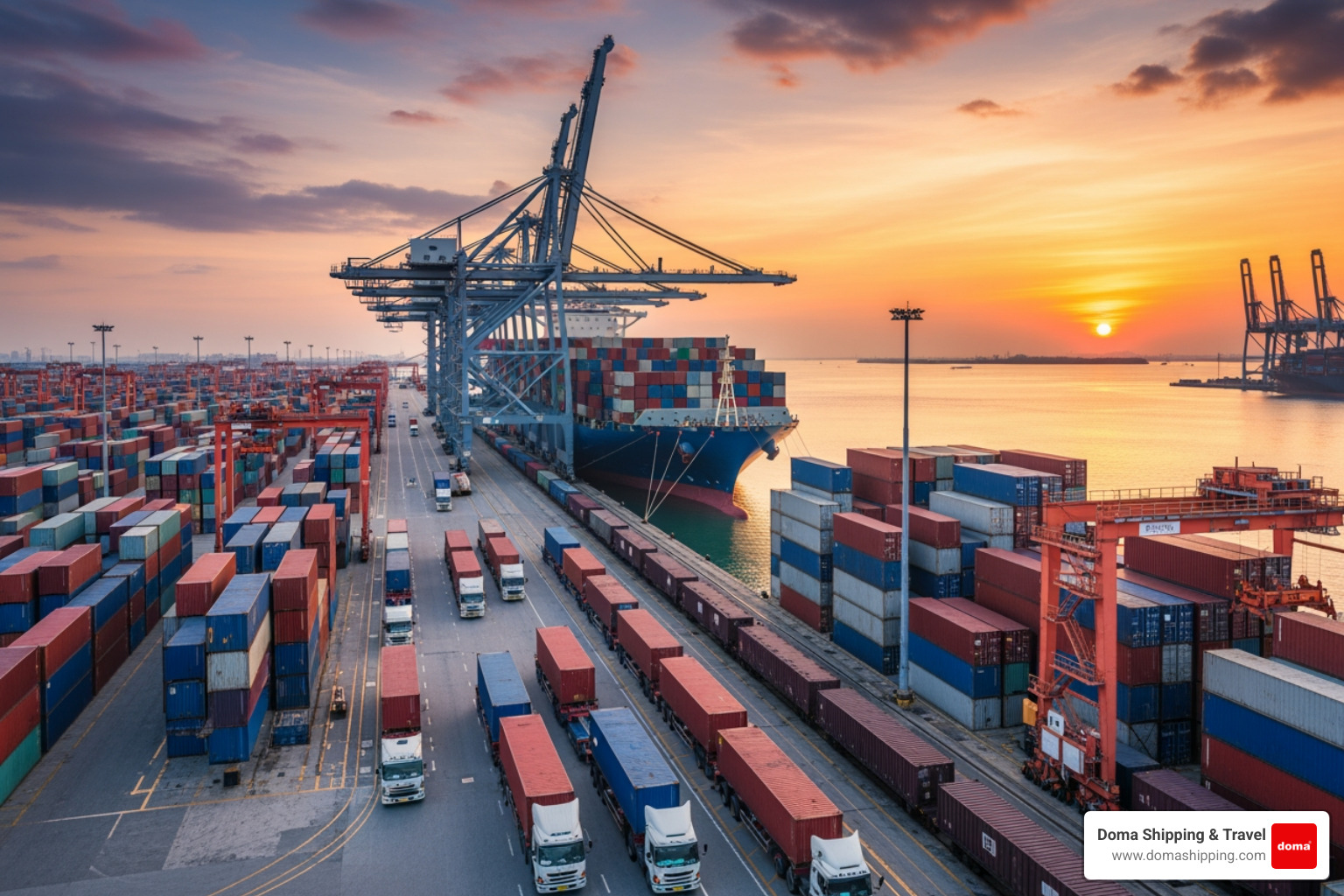
The most common types you’ll encounter are:
- Standard Dry Containers: Suitable for general, non-perishable goods. They come in two primary sizes:
- 20ft containers: Used for heavy cargo.
- 40ft containers: Ideal for lighter, larger loads.
- High Cube Containers: These are taller than standard containers, providing extra volume for light, bulky cargo.
- Specialized Containers: For cargo with unique requirements, specialized containers are indispensable:
- Refrigerated (Reefer) Containers: Essential for temperature-sensitive goods like food or pharmaceuticals. They maintain a consistent temperature, with some offering “controlled atmosphere” technology for perishable items.
- Open Top Containers: With a removable roof, they are ideal for oversized cargo loaded from the top, like heavy machinery.
- Flat Rack Containers: These platforms with end walls are for wide, oversized, or heavy cargo that won’t fit in standard containers, such as vehicles or large parts.
- Tank Containers: Specifically designed to transport liquids and gases safely.
- Garmentainers: Equipped with hangers for shipping clothing, reducing creasing.
When it comes to shipping vehicles or heavy machinery, these often require specialized handling and container types, such as flat racks or even open-top containers, depending on their dimensions. Our team can advise you on the best solution to ensure your items are transported securely and in compliance with all regulations to their European destination.
Navigating the International Container Transport Process
Starting on international container transport might seem daunting, but it’s a well-structured process. Understanding each stage will help you anticipate what to expect and prepare accordingly.
The journey of your cargo from the USA to Europe typically involves several key stages:
- Booking: This is the first step. We help you select the right container (FCL or LCL) and service. Planning ahead is crucial to secure space on a vessel.
- Cargo Preparation: Securely pack and label your goods to withstand transit. Larger items or vehicles may need specialized crating or securing.
- Inland Transport to Port: Your cargo is transported from its US origin (e.g., Chicago, IL) to the port via truck or rail to connect with the ocean vessel.
- Port Handling: At the port, your container is cleared for export and loaded onto the vessel. This is a precise and efficient process.
- Ocean Transit: Your container travels across the Atlantic on a liner ship, following a fixed route and schedule to a European port.
- Customs Clearance: Upon arrival in Europe (e.g., Poland), your cargo must clear import customs. This involves submitting documentation and handling any applicable duties or taxes.
- Final Delivery: After customs clearance, your container is transported from the port to its final destination, completing the door-to-door journey.
For those seeking a seamless experience, we offer comprehensive Door-to-door shipping options that manage every step of this complex process for you.
Key Roles and Documentation
Navigating the complexities of international container transport requires specialized knowledge, particularly regarding the roles of various parties and the essential documentation. This is where a freight forwarder becomes your invaluable partner.
The Role of a Freight Forwarder
A freight forwarder acts as your logistics expert, coordinating the entire shipping process on your behalf. We manage everything from booking cargo space to preparing documentation, handling customs procedures, and coordinating between different transport modes (truck, rail, ocean vessel). Our goal is to streamline your supply chain operations, secure optimal routes, and ensure your cargo reaches its destination efficiently and without unnecessary delays.
Essential Documentation
Proper documentation is the lifeblood of international container transport. Even a small error can lead to significant delays and penalties. Here are the key documents typically required:
- Bill of Lading (BOL): This crucial document is a contract, receipt, and document of title. It details the cargo, sender, receiver, and destination.
- Commercial Invoice: Details the transaction between exporter and importer, including goods description, quantity, and value. It’s vital for customs.
- Packing List: A detailed inventory of all items, including dimensions and weight. It helps customs verify the container’s contents.
- Certificate of Origin: Certifies the country of origin for the goods. It’s often required by customs for tariff purposes.
- Export and Import Declarations: Official forms submitted to customs in both the exporting and importing countries, providing details about the goods for control purposes.
We provide guidance on all rules and regulations, ensuring every piece of paperwork is accurately prepared and submitted, helping you avoid common pitfalls in international shipping.
Ensuring Compliance and Security for your international container transport
Compliance with regulations and robust security measures are non-negotiable aspects of successful international container transport. These elements safeguard your cargo, prevent delays, and ensure a smooth journey from the USA to Europe.
Customs Regulations in Europe
When shipping from the USA to Poland or other European countries, your cargo must adhere to the specific customs regulations of the destination country and the European Union. This includes:
- Prohibited Items: Certain goods are strictly forbidden from entering European countries (e.g., specific types of firearms, illegal substances, counterfeit goods).
- Restricted Goods: Other items may be allowed but require special permits or licenses (e.g., certain plants, animal products, medicines). It’s crucial to verify these requirements well in advance.
- Import Documentation: As discussed, accurate and complete documentation is essential. This includes the Bill of Lading, commercial invoice, and packing list, all of which must precisely match the cargo.
Non-compliance can lead to significant delays, fines, or confiscation of goods. We carefully review all documentation and guide you through the specific requirements for your European destination to ensure a hassle-free process.
Cargo Insurance
Unforeseen events can occur during transit. We recommend considering cargo insurance to protect your shipment against loss or damage from accidents or other incidents, providing peace of mind.
Container Security Best Practices
Ensuring the physical security of your cargo within the container is paramount:
- Container Seals: All containers are sealed at the point of origin with unique, tamper-evident seals. These seals deter and indicate unauthorized access.
- Tamper-Proof Best Practices: We also advocate for secure packing and loading to prevent shifting and damage.
- Shipment Monitoring: Modern technology allows for real-time tracking of shipments using GPS and RFID. This allows for continuous monitoring of your container’s location, providing transparency. You can Track your shipment through our system for peace of mind.
By combining diligent compliance with robust security measures, we strive to make your international container transport experience as safe and reliable as possible.
Optimizing Your Shipment and Understanding Regulations
Efficient international container transport isn’t just about moving a box; it’s about strategic planning and navigating a complex regulatory landscape. Our goal is to help you optimize your shipments from the USA to Europe, ensuring both efficiency and full compliance.
Shipment Planning and Efficiency
Effective shipment planning is the cornerstone of successful international logistics. This involves:
- Lead Times: Understanding and planning for realistic lead times is crucial. Transit times from US ports to European destinations can vary, typically ranging from 2 to 6 weeks, influenced by factors like port congestion, specific routes, and weather conditions. Planning in advance helps secure vessel space and ensures your goods arrive when needed.
- Intermodal Transport Efficiency: Leveraging intermodal transport, which combines different modes like truck, rail, and ocean vessel, is key to efficiency. For example, moving containers by rail from Chicago, IL, to a major US port, then by ocean to Europe, and finally by truck to the final European destination. This strategy optimizes speed and resources.
- Working with Logistics Partners: Partnering with experienced logistics providers, like us, helps streamline operations and steer the intricacies of international shipping. Our expertise ensures a smooth process from pickup in the USA to delivery in Europe.
International Regulations and Compliance
The global shipping industry is governed by a robust framework of international and national regulations designed to ensure safety, security, and environmental protection. While we focus on US export and European import regulations, it’s helpful to be aware of the broader context:
- International Maritime Organization (IMO): The IMO is a specialized agency of the United Nations responsible for measures to improve the safety and security of international shipping and to prevent marine pollution from ships. Conventions like SOLAS (Safety of Life at Sea) are fundamental.
- Safety of Life at Sea (SOLAS): This international maritime treaty sets minimum safety standards in the construction, equipment, and operation of merchant ships. For container transport, this includes regulations related to the verified gross mass (VGM) of containers to prevent accidents caused by misdeclared weights.
- Federal Maritime Commission (FMC): In the United States, the FMC plays a critical role in regulating the international ocean transportation system. The FMC is required to publish quarterly reports describing the total import and export tonnage and total laden and empty 20-foot equivalent units loaded or discharged by ocean common carriers at U.S. ports. This oversight helps ensure fair practices and transparency in the industry. It’s worth noting that 30 identified ocean common carriers are responsible for 98 percent of containerized freight moving in international commerce to and from the U.S. You can review these Federal Maritime Commission statistics for more insights into US trade flows.
Compliance with these myriad requirements is not just a legal obligation; it’s a best practice that ensures the reliability and integrity of your international container transport.
Best Practices for Cargo Preparation
Proper cargo preparation is a critical step in international container transport that directly impacts the safety and integrity of your goods. Mistakes here can lead to damage, delays, and other complications. We emphasize these best practices for shipments from the USA to Europe:
- Proper Packing Techniques:
- Use Sturdy Materials: Always use new, high-quality boxes made of corrugated cardboard. For heavier items, double-walled boxes are recommended.
- Internal Cushioning: Fill all empty spaces within boxes with appropriate cushioning materials like bubble wrap, foam peanuts, or crumpled paper to prevent items from shifting and colliding during transit.
- Protect Fragile Goods: Wrap fragile items individually with multiple layers of protective material. When possible, use “box-in-box” packing, where a smaller, cushioned box containing the fragile item is placed inside a larger, cushioned box.
- Weight Distribution:
- Even Loading: Distribute the weight evenly throughout the container. Heavy items should be placed at the bottom and center of the container to maintain stability.
- Avoid Overloading: Do not exceed the container’s maximum weight capacity. Overloaded containers can be rejected at ports, cause structural damage, or pose safety risks.
- Securing Cargo within the Container:
- Blocking and Bracing: Use wood blocks, bracing, straps, and dunnage bags (airbags) to prevent cargo from moving or shifting during the voyage. This is especially important for FCL shipments.
- Tie-Downs: For vehicles or heavy machinery, ensure they are properly secured with heavy-duty tie-downs to anchor them firmly to the container floor or flat rack.
- Container Stuffing: Proper container stuffing is a recognized method to pack more cargo safely and effectively. It involves strategically placing and securing goods to maximize space and minimize movement.
- Labeling Requirements:
- Clear and Durable Labels: All boxes and items should be clearly labeled with the recipient’s name, address, and contact information, as well as the tracking number.
- Hazardous Materials: If shipping hazardous materials, ensure they are correctly classified, packaged, and labeled according to international dangerous goods regulations.
- Protecting Fragile Goods: Clearly mark boxes containing fragile items with “FRAGILE” or “HANDLE WITH CARE” labels. They serve as an important visual warning to handlers.
By following these best practices, you significantly reduce the risk of damage and ensure your goods arrive in excellent condition at their European destination.
Future Trends in international container transport
The world of international container transport is constantly evolving, driven by technological advancements and a growing emphasis on sustainability. These trends are shaping the future of how goods move from the USA to Europe and beyond.
Technological Advancements:
- Smart Containers: The next generation of containers is “smart,” equipped with IoT sensors that monitor temperature, humidity, light exposure, and even potential tampering. This real-time data provides unprecedented visibility and control over cargo conditions during transit.
- GPS Tracking: Advanced GPS tracking systems offer precise, real-time location data for containers, improving security and enabling accurate estimated times of arrival. This is a significant leap from traditional, less granular tracking methods.
- Automation in Ports: Ports are becoming increasingly automated, utilizing AI and robotics for tasks like container loading, unloading, and stacking. This “smart logistics” approach reduces human error, speeds up operations, and improves efficiency.
- Digital Documentation: The shift from paper to digital documentation is gaining momentum. Technologies like blockchain are being explored to create secure, immutable, and transparent digital records for Bills of Lading (e-Bills of Lading), customs declarations, and other vital documents. This can drastically reduce administrative delays and fraud.
Sustainability Initiatives:
- Lowering Emissions: The shipping industry is under increasing pressure to reduce its environmental footprint. This includes developing and adopting more fuel-efficient vessel designs, optimizing shipping routes to minimize fuel consumption, and exploring alternative fuels like LNG, methanol, and even hydrogen.
- Eco-Friendly Fuels: Research and investment into cleaner, eco-friendly fuels are accelerating. The EU’s Emissions Trading System (ETS), for example, will require ocean carriers to account for their emissions, which will incentivize cleaner operations.
- Green Logistics: This encompasses a broader approach to minimize the environmental impact of all logistics activities, from sustainable warehousing practices to optimizing inland transport routes to reduce carbon emissions.
These trends collectively point towards a future of international container transport that is more intelligent, efficient, and environmentally responsible, ensuring that goods can continue to flow seamlessly and sustainably across the globe.
Frequently Asked Questions about International Container Shipping
What are the main factors that determine the duration of container shipping?
The duration of international container transport from the USA to Europe can vary significantly, typically ranging from 2 to 6 weeks. Several key factors influence this timeline:
- Route Distance: The geographical distance between the origin port in the USA (e.g., New York, Chicago via intermodal) and the destination port in Europe (e.g., Gdansk, Poland) is a primary factor. Direct routes are faster than those with multiple transshipment points.
- Port Congestion: Busy ports, especially during peak seasons, can experience congestion, leading to delays in vessel docking, loading, and unloading.
- Customs Clearance Efficiency: The speed at which customs authorities process paperwork and inspect cargo at both export (USA) and import (Europe) can impact transit times. Delays often arise from incomplete or inaccurate documentation.
- Weather Conditions: Adverse weather, such as storms or heavy fog, can cause vessels to slow down, alter their routes, or delay departure/arrival, adding days to the journey.
- Inland Transportation at Destination: Once the container arrives in Europe and clears customs, the final leg of inland transport (by truck or rail) to the ultimate recipient’s address also contributes to the overall duration.
How do I prepare my goods for container shipping?
Proper preparation is crucial for a smooth and secure international container transport experience. Here are the steps we recommend:
- Properly Pack Your Goods: Use sturdy, high-quality packing materials. For individual items, wrap them securely with bubble wrap or foam.
- Use Sturdy Boxes: Opt for new, double-walled corrugated cardboard boxes for most items.
- Protect Fragile Items: Individually wrap and cushion fragile items. Consider using a “box-in-box” method for extra protection.
- Distribute Weight Evenly: When packing boxes, ensure weight is distributed evenly to prevent shifting. Within the container, place heavier items at the bottom and center.
- Create a Detailed Packing List: Itemize everything you’re shipping. This list is essential for customs and insurance purposes.
- Secure Cargo Within the Container: For FCL shipments, use blocking, bracing, straps, and dunnage bags to prevent items from moving during transit.
- Label Clearly: Mark all boxes with the recipient’s name, address, and tracking number. Indicate “FRAGILE” where necessary.
- For Vehicles/Machinery: Ensure they are thoroughly cleaned (especially the undercarriage) to comply with import regulations. Disconnect batteries and secure loose parts. Drain fuel to a minimum level.
What is the role of a freight forwarder in container shipping?
A freight forwarder plays a comprehensive and indispensable role in facilitating international container transport. We act as your expert logistics partner, managing the entire shipping process from start to finish. Our key responsibilities include:
- Logistics Coordination: We plan and coordinate the movement of your goods across different transport modes (truck, rail, ocean vessel) and various stages of the journey.
- Booking Cargo Space: We book the necessary container space on vessels, negotiating schedules and ensuring timely departures from US ports to European destinations.
- Documentation Management: We prepare, verify, and submit all required shipping documents, including the Bill of Lading, commercial invoice, packing list, and customs declarations, ensuring accuracy and compliance.
- Customs Procedures: We guide you through complex customs regulations, helping to prepare the necessary paperwork for both export from the USA and import into European countries like Poland, minimizing delays.
- Optimization: We advise on the best container type (FCL or LCL) and route to optimize efficiency and security for your specific cargo.
- Problem Solving: Should any unforeseen issues arise, such as port delays or customs inquiries, we act as your advocate to resolve them swiftly.
Essentially, a freight forwarder simplifies the complex world of international shipping, allowing you to focus on your core activities while we handle the intricate logistics.
Your Partner in Global Shipping
Understanding the complexities of international container transport is the first step toward successful global shipping. By choosing the right container, preparing your cargo correctly, and navigating the documentation and regulatory landscape, you can ensure your goods arrive safely and efficiently. For over 30 years, Doma Shipping has provided expert guidance and comprehensive services for shipments from the USA to Poland and Europe. To learn more about how we can assist with your shipping needs, explore our international shipping services.