
Full container load shipping (FCL) is an ocean freight method where a single shipper books an entire dedicated ocean container for their cargo. Unlike shared shipping methods, your freight does not mix with items from other parties. The container is loaded, secured with a specialized seal at the origin, and remains unopened until it reaches its final European destination.
Here is what defines an FCL shipment:
Whether you are relocating household belongings and vehicles from the USA to Poland or managing commercial transatlantic freight, FCL provides a direct, secure, and reliable way to move goods across the ocean.
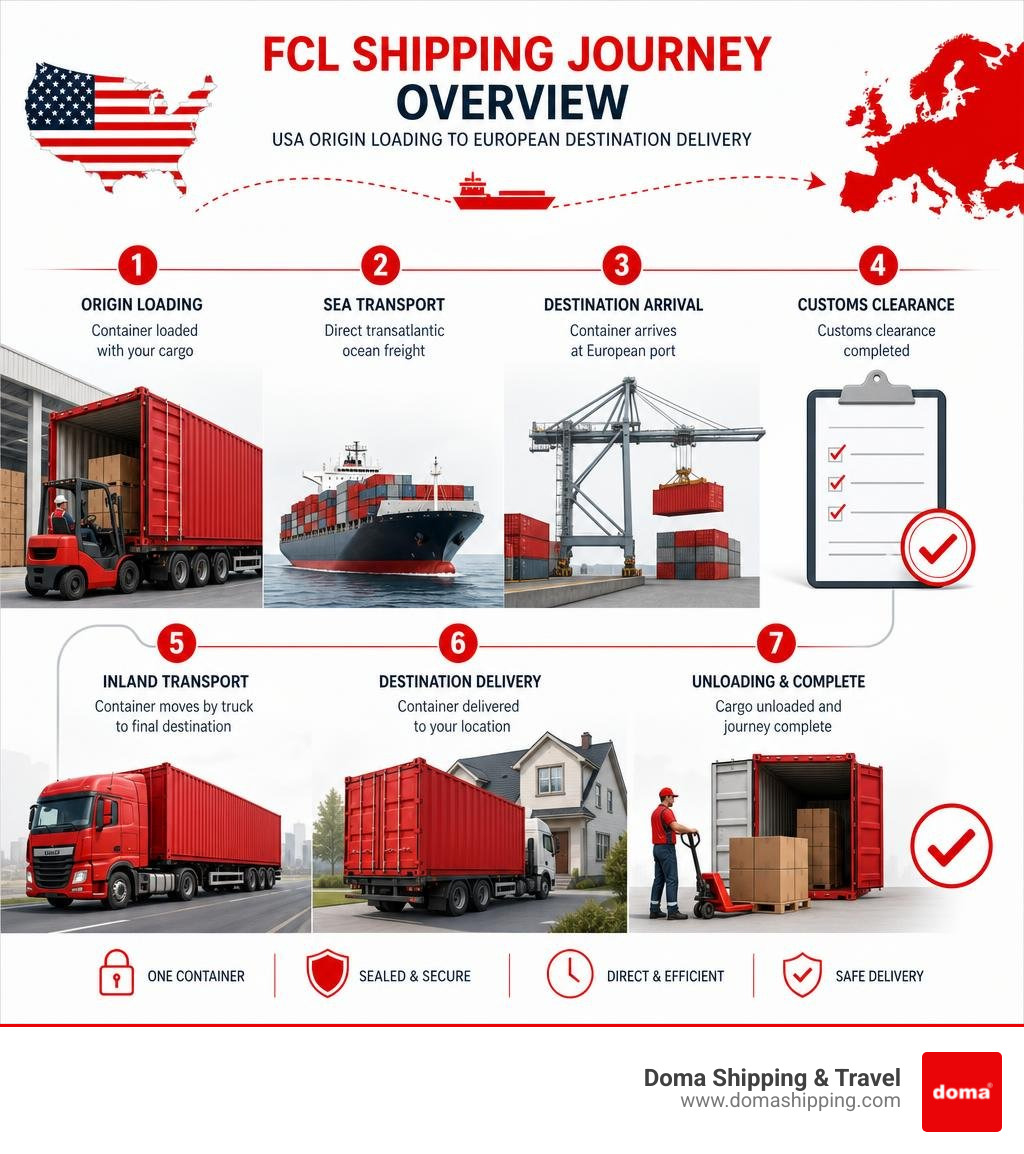
Navigating transatlantic maritime logistics requires a clear understanding of equipment, handling protocols, and operational workflows. When preparing to move goods across the Atlantic, shipping containers overseas involves reserving a secure steel unit exclusively for your inventory or personal belongings.
The primary operational benefit of this method is direct origin-to-destination integrity. Once cargo is staged, packed, and secured inside the unit, a high-security bolt seal is applied. This seal number is recorded on all transport documentation. The container remains sealed during drayage to the port terminal, crane loading onto the ocean vessel, ocean transit, and customs processing upon arrival in Europe. The seal is broken only by the consignee at the final destination or by customs authorities during a formal inspection.
The logistics chain for dedicated container freight follows a structured sequence that eliminates intermediate handoffs.
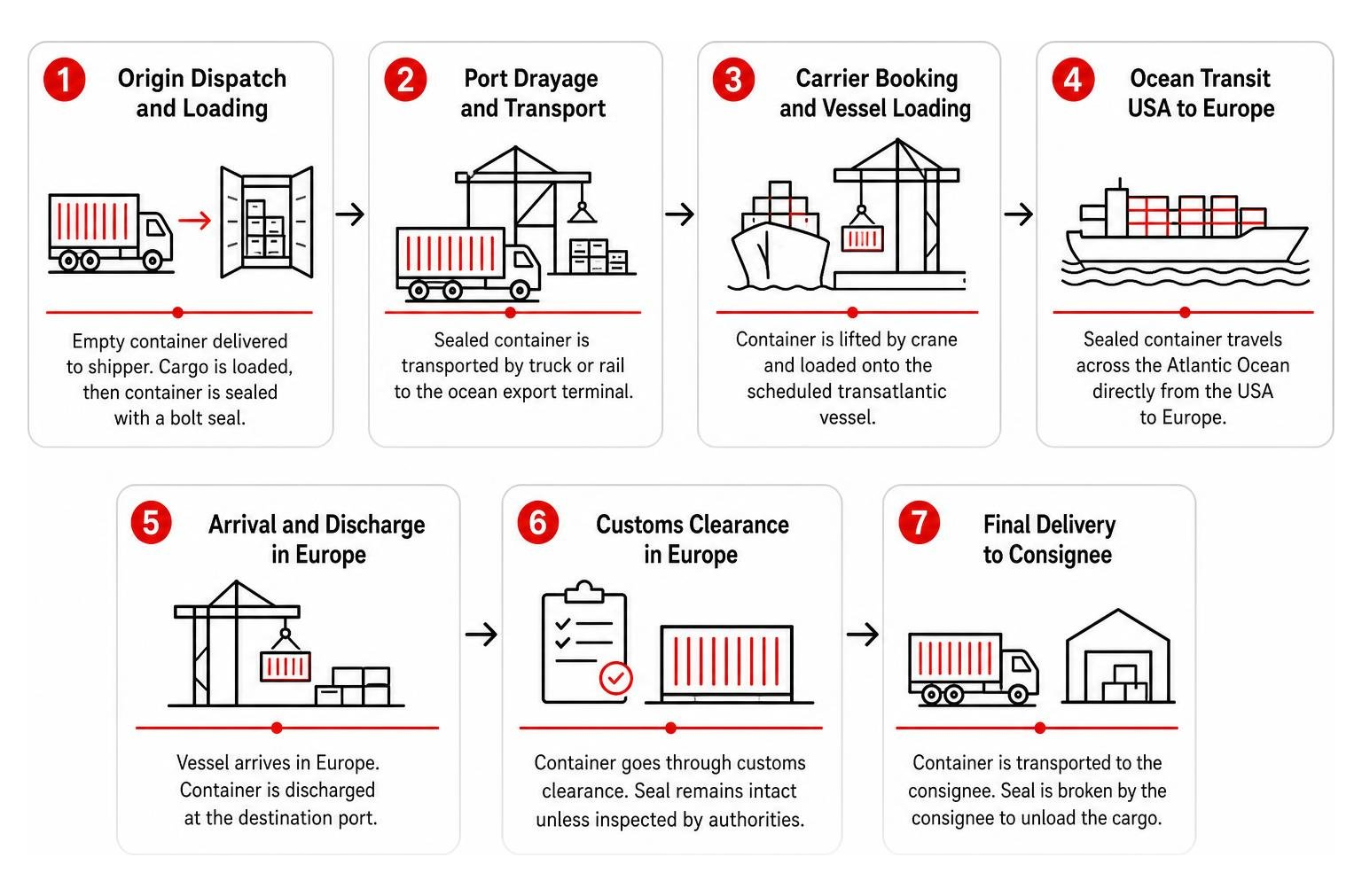
The end-to-end operational flow follows these key stages:
Managing this journey efficiently is critical to maintaining a smooth transatlantic pipeline. Using structured international container transport ensures your cargo transitions seamlessly across each modal interchange.
Selecting the right equipment profile depends on the dimensions, weight, and nature of your cargo based on standard intermodal container dimensions. Knowing how to properly containerize it maximizes space efficiency and cargo stability during rough ocean voyages.
Dedicated ocean transport offers significant operational advantages for businesses and individuals moving goods overseas:
For door-to-door moves, arranging comprehensive door-to-door container shipping ensures end-to-end accountability from your USA origin to your European destination.
Modern ocean logistics relies heavily on digital visibility. In 2026, real-time shipment monitoring utilizes satellite tracking, IoT-enabled container sensors, and Transportation Management Systems (TMS).
These systems monitor critical milestones:
IoT sensors also provide telemetry data regarding internal temperature, humidity, and door-opening events, ensuring absolute integrity for sensitive cargo.
When organizing transatlantic shipments, choosing between dedicated container space and shared container space depends on your specific cargo volume, timeline, and security requirements. Understanding general container shipping rates and operational structures helps clarify these differences.
| Feature / Metric | Full Container Load (FCL) | Less-than-Container Load (LCL) |
|---|---|---|
| Space Allocation | Entire container reserved for one shipper | Shared space among multiple shippers |
| Container Handling | Sealed at origin; unsealed at destination | Handled at origin/destination CFS facilities |
| Transit Speed | Direct ocean transit without sorting delays | Slower due to consolidation/deconsolidation |
| Risk Profile | Minimal; no contact with external cargo | Higher; multiple touchpoints and shared cargo |
| Documentation | Single Bill of Lading per container | Multiple sub-bills per consolidated container |
| Tracking Level | Real-time unit GPS and vessel-level updates | Milestone updates per consolidated batch |
While LCL is practical for small parcel batches, dedicated containers are standard for larger volumes. Deciding to fill or not to fill an entire container often depends on the specific operational profile of your cargo:
Ocean freight logistics workflows differ fundamentally between dedicated and consolidated methods. Detailed assessments of transatlantic container logistics show that FCL utilizes a single dedicated container unit, regardless of whether the container is partially or fully loaded.
In contrast, LCL shipments require cargo handling on a volume basis. While LCL provides flexibility for smaller freight volumes, terminal handling procedures, CFS receiving stages, and deconsolidation requirements introduce additional handling points. For larger shipments, dedicated container equipment provides clear operational predictability and eliminates intermediate sorting stages.

Proper preparation ensures your freight withstands transatlantic ocean voyages safely. When coordinating container shipping from Chicago or surrounding areas such as Des Plaines, Franklin Park, or Melrose Park, strict staging protocols are vital:
International shipping requires proactive management to navigate port logistics, regulatory compliance, and equipment scheduling. Reviewing these 10 questions to ask before hiring container transport Europe helps prevent common logistical setbacks:
No. You do not need to fill a container completely to book dedicated container transport. Shippers frequently choose FCL for smaller volumes when cargo security, dedicated sealing, and expedited transit times are top priorities.
Dedicated containers are packed once at the origin and unpacked only at the destination. By avoiding intermediate sorting warehouses, forklift cross-docking, and contact with other shippers’ freight, physical damage risks are significantly reduced.
Key documentation includes the Ocean Bill of Lading, Commercial Invoice, Packing List, and customs declaration filings. For individuals looking to ship a container to Poland, personal property relocation inventories or specialized vehicle registration titles are also required for customs clearance.
Full container load shipping remains the gold standard for secure, reliable, and predictable transatlantic cargo transport. By providing dedicated container security, direct port-to-port routing, and real-time visibility, FCL protects your goods throughout their journey to Europe.
With over 30 years of logistics experience, Doma Shipping & Travel provides dependable, end-to-end transatlantic ocean freight solutions. From container staging across Chicago, Mount Prospect, Palos Hills, and surrounding communities to smooth customs clearance and European delivery, our bilingual team ensures your cargo is handled professionally every step of the way. Explore our complete range of Full Container Load Shipping services to organize your transatlantic shipment with confidence.