
Getting your goods where they need to go, fast, can make or break a business. Air shipping is the answer when time is tight and your customers expect quick delivery. While it’s not always the cheapest option, it can save the day when you have urgent shipments, high-value items, or need to keep your supply chain moving. In this guide, we’ll walk through the basics of air shipping, what paperwork you’ll need, how to plan your shipments, and what to watch out for when it comes to costs and technology. If you’re thinking about air shipping for your business, here’s what you should know.
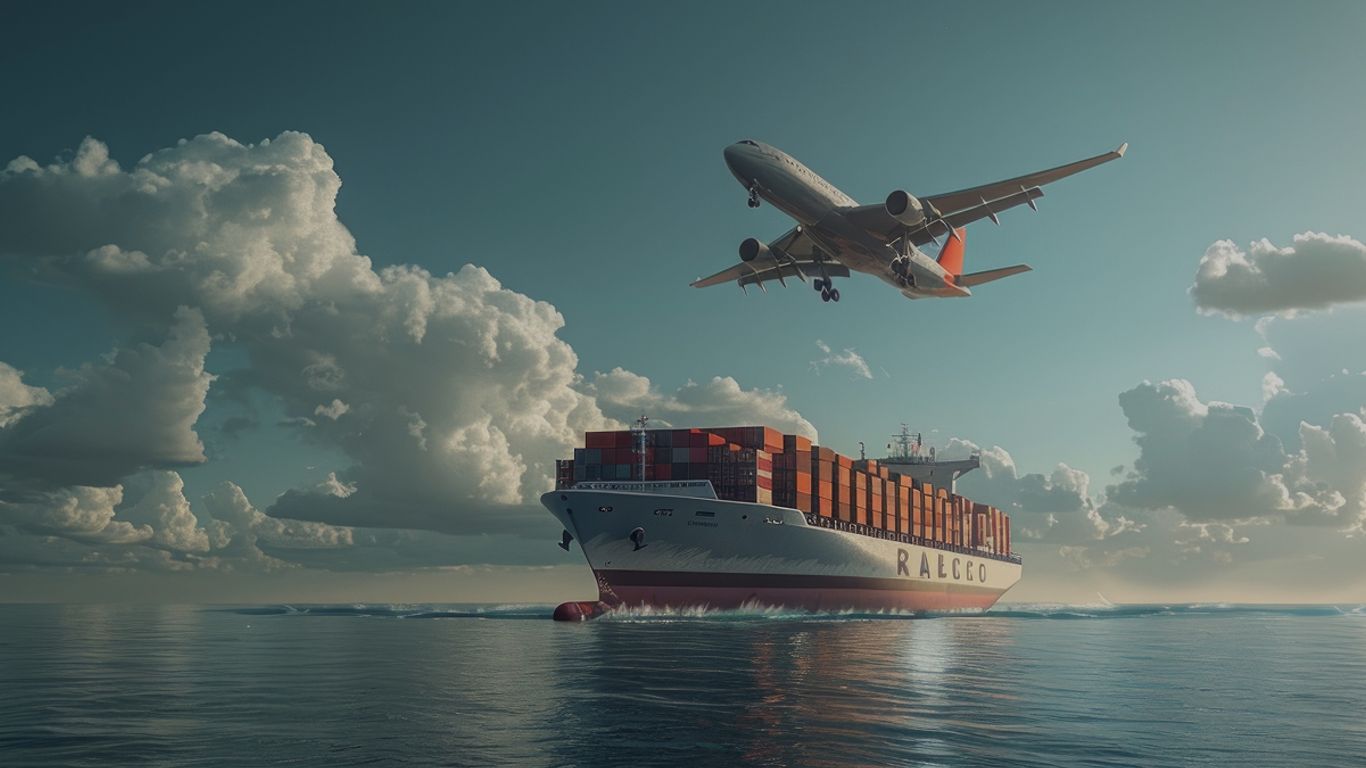
When you’re looking to get goods from point A to point B quickly, air shipping is often the go-to. It’s all about speed, plain and simple. But before you just book the first flight you see, it’s good to know what you’re getting into. Think of it like choosing between a sports car and a truck; both get you there, but for very different reasons and with different capabilities.
Deciding how to ship your goods is a big deal. You’ve got a few main options, and each has its own pros and cons. It really comes down to what you’re shipping, how fast you need it there, and how much you’re willing to spend.
This is the classic showdown in international shipping. Air freight and ocean freight are fundamentally different beasts, each suited for different scenarios.
| Feature | Air Freight | Ocean Freight |
|---|---|---|
| Transit Time | 3-7 days (typical) | 13-35 days (typical) |
| Cost | Higher per unit | Lower per unit |
| Capacity | Limited; best for smaller, lighter items | High; ideal for large volumes, heavy cargo |
| Ideal For | Time-sensitive goods, high-value items, perishables | Bulk goods, raw materials, large machinery, FCL/LCL |
The biggest difference boils down to speed versus cost and capacity. If you need it there tomorrow, you’re paying a premium for air. If you can wait a few weeks and have a lot to send, ocean freight is usually the way to go. For many businesses, a mix of both is common, using air for urgent needs and ocean for regular inventory.
When you’re deciding between air and ocean freight, it’s not just about the price tag. You have to consider the total landed cost, which includes everything from pickup to final delivery, plus any duties or taxes. Sometimes, a slightly more expensive shipping method upfront can save you money in the long run by avoiding delays or storage fees.
So, when does it make sense to book that flight for your cargo? It’s usually when time is more important than money, or when the nature of the goods demands it.
When you’re shipping goods by air, getting the paperwork right is super important. It’s not just about filling out forms; it’s about making sure your shipment moves smoothly through customs and gets to its destination without a hitch. Think of these documents as the passport for your cargo. If they’re not in order, your shipment could face delays, extra fees, or even get sent back.
There’s a core set of documents that are pretty much required for any air cargo shipment. These papers tell everyone involved exactly what you’re sending, where it’s going, and who’s responsible for it. Getting these details right from the start saves a lot of headaches later on.
The accuracy of your documentation directly impacts the speed and cost of your air shipment. Even small errors can lead to significant delays and unexpected charges. It’s always best to double-check every detail before submitting your paperwork.
These two documents go hand-in-hand. The commercial invoice is all about the financial transaction and the value of the goods. It needs to be super clear about what’s being sold, who’s buying it, and the price. This is what customs uses to assess duties and taxes, so being accurate here is key. The packing list, on the other hand, is about the physical stuff. It breaks down exactly what’s in every single box or on every pallet. If the commercial invoice says you’re shipping 50 widgets, the packing list needs to show which boxes contain those widgets, their weights, and their dimensions. Any mismatch between these two can raise a red flag for customs, potentially leading to inspections. It’s like having a detailed inventory that matches your sales receipt perfectly. For a deeper dive into these requirements, you might find this guide on air freight documents helpful.
The Air Waybill, or AWB, is a really important piece of paper for air shipments. It’s not just a receipt; it’s a contract between you and the airline carrying your goods. It confirms that the airline has received your cargo and will transport it to the destination listed. The AWB includes a lot of critical information, such as the flight number, departure and arrival airports, the type of goods being shipped, their weight and volume, and the names and addresses of both the shipper and the consignee. It also has a unique tracking number, which is how you and the airline keep tabs on your shipment’s progress. Unlike a bill of lading for ocean freight, an AWB is typically non-negotiable, meaning it doesn’t represent title to the goods. However, it’s still the primary document for tracking and claiming your cargo upon arrival. If you’re looking for a provider that handles air freight and other shipping needs, DOMA Shipping offers various services.
Getting your air cargo from point A to point B efficiently isn’t just about booking a flight. It involves smart planning and understanding the details. Let’s break down how to make your air shipments work better for your business.
This is a big one. For air freight, the space your cargo takes up is just as important as its actual weight. Carriers use something called ‘chargeable weight’ to figure out how much to bill you. It’s usually the greater of the actual weight or the ‘dimensional weight’. Dimensional weight is calculated based on the size of your package. Think of it like this: a big, light box takes up a lot of room on the plane, so it costs more than a small, heavy box of the same weight. You’ll need to measure your package’s length, width, and height, then use the carrier’s specific formula (often something like length x width x height divided by a factor, like 167) to find the dimensional weight. Always compare this to your actual weight to know what you’ll be charged.
Here’s a quick look at how it generally works:
| Metric | Value |
|---|---|
| Actual Weight | The real weight of your shipment. |
| Dimensional Weight | Calculated based on package volume. |
| Chargeable Weight | The higher of Actual or Dimensional Weight. |
Understanding this helps you pack smarter and potentially save money. Sometimes, rearranging items to make a package more compact can significantly reduce the dimensional weight.
This is super important to avoid headaches. What’s okay to ship domestically might be a no-go for air cargo, especially internationally. You can’t just throw anything in a box and send it off. Common items that often cause issues include:
It’s your responsibility to check the specific list of prohibited and restricted items for both the origin and destination countries, as well as the airline’s own policies. Getting this wrong can lead to delays, fines, or your shipment being confiscated. Always check with your air cargo shipping provider if you’re unsure about an item.
Before you pack anything, take a moment to review the prohibited and restricted items list. It’s a small step that can prevent major problems down the line. What might be fine for a road trip is often a different story when it comes to flying.
When your business relies on speed, air shipping is your best friend. But even with air freight, strategy matters. Think about:
When your business needs to get products to customers or suppliers quickly, air shipping is often the go-to solution. It’s not just about speed, though; it’s about how that speed impacts your operations. Think about it: if you have a critical component that’s holding up your entire production line, waiting weeks for it to arrive by sea just isn’t an option. Air freight can get that part to you in a matter of days, sometimes even hours. This kind of rapid transit can be a real game-changer for keeping your business running smoothly. It’s a smart and efficient shipping solution for time-sensitive goods [07c9].
Here’s a quick look at how speed helps:
The ability to move goods rapidly via air cargo means businesses can react more nimbly to market changes or unexpected demand spikes. This agility is a significant competitive advantage in today’s fast-paced economy.
Supply chains can be unpredictable. Weather events, port congestion, or unexpected political issues can all cause delays. Air shipping offers a way to bypass many of these common bottlenecks. Because planes fly above most weather and don’t rely on port infrastructure in the same way ships do, they are often less susceptible to disruptions. If a major port is backed up, your air cargo can still move. This reliability is super important for businesses that can’t afford downtime. Air freight shipping offers numerous advantages, including speed, reliability, and global reach [e543].
Consider these points:
Ultimately, faster and more reliable delivery translates directly to happier customers. In today’s world, people expect their purchases to arrive quickly. When you can meet or exceed those expectations, it builds trust and loyalty. Imagine a customer ordering a product and receiving it within a couple of days instead of weeks. That positive experience can lead to repeat business and good reviews. It’s a direct way to make your customers feel valued and well-served.
So, you’re looking at air shipping to get your goods where they need to go, fast. That’s great, but let’s talk about what it’s going to cost. It’s not just a simple price tag; there are a bunch of things that play into the final number. Understanding these factors can help you budget better and maybe even find ways to save a bit.
Several things affect how much you’ll pay for air cargo. The most obvious one is the weight and size of your shipment. Carriers look at both the actual weight and the space it takes up (volumetric weight). Whichever is higher is usually what they charge you for. Think about it – a big, light box takes up just as much room on a plane as a small, heavy one, so they need to account for that. The distance the shipment travels is another big one, obviously. Longer distances mean more fuel and more time in transit, which adds to the cost. Then there’s the speed you need. If you need it there tomorrow, it’s going to cost a lot more than if you can wait a few days. The type of goods you’re shipping can also matter. Some items might need special handling or are considered higher risk, which can bump up the price. And don’t forget about things like fuel surcharges, which can change based on global oil prices. It’s a whole mix of things that go into that final air freight rate. Air freight shipping costs are primarily determined by weight and volume.
Beyond the base rate, there are often extra charges you need to be aware of. Fuel surcharges are pretty common and can fluctuate. Then you have security fees, handling charges at the airport, and sometimes even specific fees for certain types of cargo. If your shipment is delayed or needs special storage, you might end up paying demurrage or storage fees. It’s always a good idea to get a detailed breakdown of all potential fees upfront so there are no surprises later on. Sometimes these little fees can add up more than you’d expect.
When you’re trying to figure out the best deal, it’s smart to get quotes from a few different carriers or freight forwarders. Make sure you’re comparing apples to apples, though. Ask for a full breakdown of what’s included in each quote. Some might include more services than others, which could explain a higher price. Also, consider the trade-off between speed and cost. Is paying extra for a slightly faster delivery really worth it for your specific needs? Sometimes, a slightly longer transit time with a lower cost can be perfectly fine. It really depends on your business and what you’re shipping. Air freight costs are influenced by several key factors including the weight and volume of the shipment, the distance it travels, and the required speed of delivery.
It’s easy to get caught up in just the base rate when looking at shipping costs. But remember to factor in all the potential add-ons and understand what each quote truly covers. A slightly higher upfront cost might actually save you money if it includes services that prevent costly delays or issues down the line.
These days, you can’t really talk about shipping without talking about tech. Air cargo is no different. It’s all about making things faster, smoother, and giving you a better idea of where your stuff is.
Remember the days of calling up the shipping company just to ask, "Where’s my package?" Yeah, those are mostly over. Modern air cargo relies heavily on tracking systems. This means you can see your shipment’s journey from the moment it leaves the warehouse until it lands at its destination. It’s not just about knowing it’s moving; it’s about getting updates at key points, like when it’s loaded onto the plane or when it clears customs. This kind of visibility is a big deal for businesses that need to keep their supply chains running without a hitch. It helps manage expectations and deal with any hiccups before they become major problems. For businesses, this level of insight is becoming standard practice, with many companies prioritizing supply chain visibility as a core part of their strategy.
Filling out endless paper forms is a pain, right? Technology is changing that too. Many air cargo services now let you book shipments online. You can often upload all the necessary documents digitally, too. This speeds things up a lot and cuts down on errors that can happen when people are manually entering data. Think about it: less chance of a typo on an address or a missed signature. This automation means the information moves as fast as the cargo itself, which is a huge win for efficiency. It’s all part of the move towards more integrated systems in logistics.
So, what’s the big deal with all this tech and visibility? It really boils down to a few key advantages:
The shift towards digital platforms and real-time data in air cargo isn’t just a trend; it’s becoming the standard way of doing business. Companies that embrace these technologies are better positioned to handle the complexities of global trade and meet customer expectations for speed and transparency. It’s about making the whole process less of a mystery and more of a predictable, manageable operation.
So, there you have it. Air shipping might seem like a big deal, but when you break it down, it’s really about getting your stuff where it needs to go, fast. We’ve talked about what you can ship, how to get the paperwork sorted without losing your mind, and why picking the right service matters. It’s not just about speed, it’s about making sure your business keeps moving smoothly. Don’t let shipping worries slow you down. Get informed, plan ahead, and you’ll be sending packages across the globe like a pro in no time.
Air shipping is like sending your stuff on a super-fast airplane! Instead of waiting weeks for a boat, your packages zoom across the country or even the world in just a few days. It’s the quickest way to get your business’s goods from one place to another.
Think of air shipping when time is super important. If you need to get products to customers fast, or if you have items that could spoil quickly, air is your best bet. It’s also great for valuable or small items where speed matters more than the cost.
You’ll need a few key papers. The most important ones are the Air Waybill (which is like the ticket for your package), a Commercial Invoice (telling what you’re sending and how much it’s worth), and a Packing List (listing everything inside). These help customs know what’s coming and going.
The price isn’t just about how heavy your package is. They also look at how much space it takes up! This is called ‘chargeable weight.’ Things like fuel costs, airport fees, and how fast you need it delivered also change the price.
Yes, definitely! You can’t send things like loose batteries (unless they’re in a device), strong sprays (like aerosols), or certain liquids because they can be dangerous on a plane. Always check the list of banned items before you pack.
Technology makes air shipping way easier! You can track your packages in real-time to see exactly where they are. Plus, companies use computer systems to handle bookings and paperwork faster, so less gets lost or delayed.