
US to Europe freight moves across one of the world’s busiest trade lanes — and whether you’re shipping a single package or a full container, the process involves more steps than most people expect.
Here’s a quick overview of your main options:
| Shipping Method | Best For | Typical Transit Time |
|---|---|---|
| Ocean FCL | Large shipments, full container loads | 15-35 days |
| Ocean LCL | Smaller loads sharing container space | 20-40 days |
| Air Freight | Urgent or high-value cargo | 3-7 days |
| Express Courier | Small packages | 3-5 days |
A few things to know right away:
The transatlantic route is well-established, but it’s not simple. Customs requirements, documentation rules, carrier selection, and port logistics all affect whether your shipment arrives on time and without surprises.
This guide walks you through everything — from choosing the right shipping method to clearing European customs — so you can move your goods across the Atlantic with confidence.
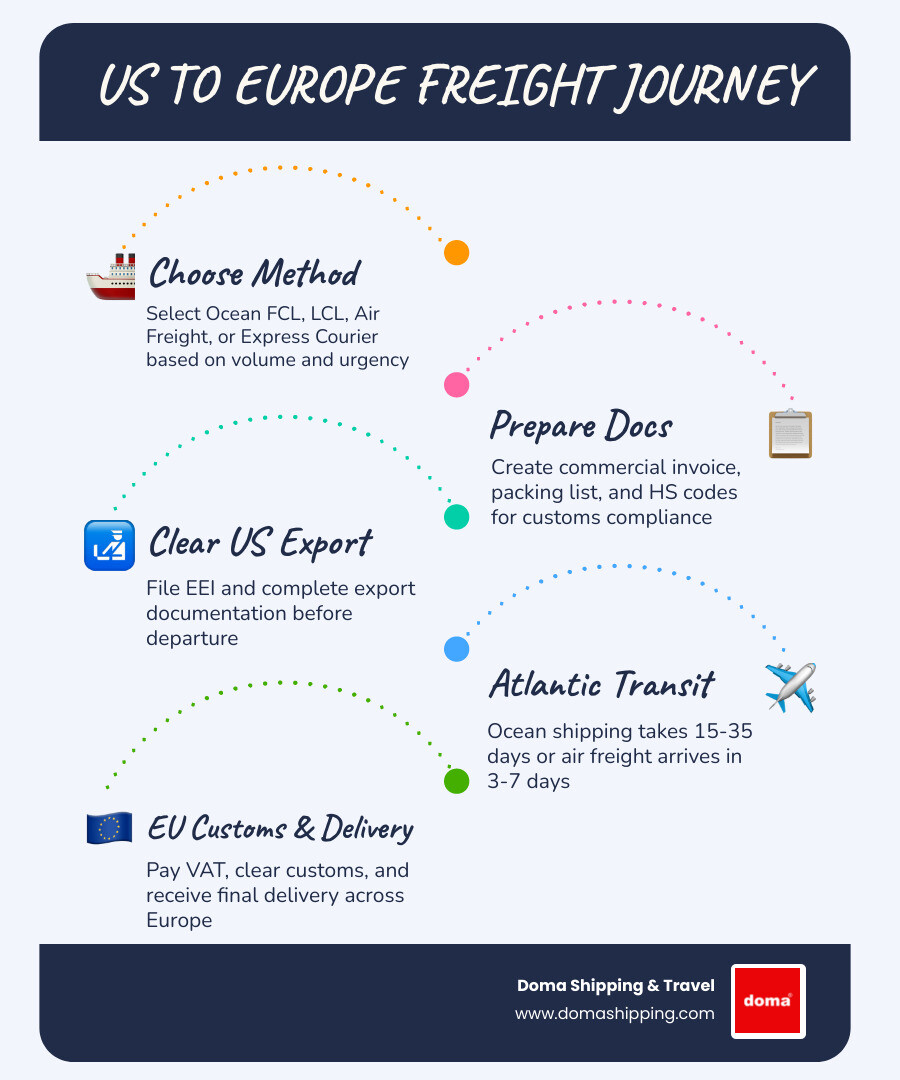
When we look at the logistics of moving goods from the United States to the European continent in 2026, the strategy depends entirely on the volume, weight, and urgency of the cargo. Navigating the Atlantic requires a clear understanding of the available transport modes.
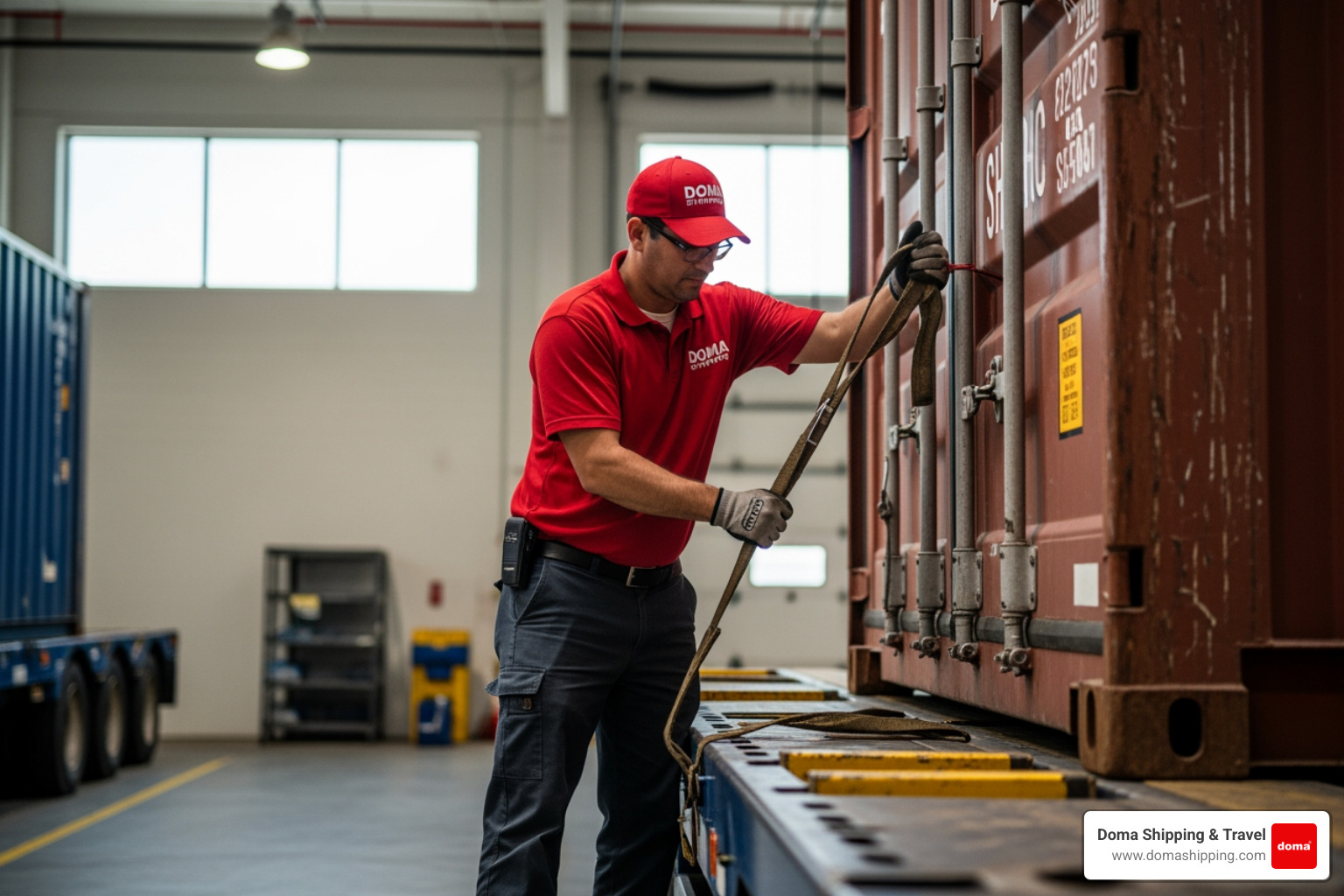
The backbone of international trade is ocean freight, but air cargo plays a vital role for time-sensitive items. For those managing larger moves, understanding everything you need to know about shipping containers overseas is the first step in successful planning.
Ocean freight is the most common method for US to Europe freight, particularly for heavy machinery, vehicles, and bulk commercial goods. The industry measures capacity in TEUs (Twenty-foot Equivalent Units). A standard 20-foot container offers approximately 1,172 cubic feet of space, while a 40-foot container provides about 2,389 cubic feet.
We generally categorize ocean shipments into two types:
When time is the most critical factor, air freight is the gold standard. While ocean transit can take several weeks, air cargo typically arrives at major European hubs within 3 to 7 days. This method is ideal for high-value electronics, perishable goods, or urgent documents.
As a TSA-certified freight carrier, we ensure that air shipments meet all security protocols. For those looking for the most rapid transit possible, exploring the express lane to Europe: unlocking the fastest international shipping options can provide the necessary speed for critical deadlines.
Clearing customs is often the most complex part of US to Europe freight. Every item entering the European Union must be correctly classified and documented to avoid delays at the border.

A key component of this process is the HS (Harmonized System) code. These 6-to-10-digit numbers tell customs officials exactly what is in your shipment and determine the applicable duty rates. Whether you are moving household goods or business inventory, knowing your stuff, their country: how to ship personal belongings without a hitch is essential for a smooth transition.
To move freight legally from the US to Europe, several documents must be prepared with precision:
If you are planning a move, our step-by-step guide to relocation transport USA-Poland covers these requirements in depth.
The regulatory landscape in Europe has shifted significantly in recent years. Since 2021, the EU has removed the VAT exemption for low-value goods, meaning all imports are now subject to Value Added Tax.
For businesses, the IOSS (Import One-Stop Shop) portal simplifies the collection and payment of VAT for distance sales of imported goods not exceeding €150. Understanding these nuances is a big part of from US to EU: mastering package delivery across the atlantic.
The efficiency of US to Europe freight often depends on which ports are used. In the United States, the Port of New York & New Jersey is a primary gateway for Atlantic crossings, handling approximately 7.8 million TEUs annually.
In Europe, the Port of Rotterdam remains the largest hub, handling about 14.5 million TEUs. For shipments specifically heading toward Eastern Europe, the Port of Gdańsk and Port of Gdynia in Poland have seen massive infrastructure investments, becoming major logistics centers for the Baltic region.
For our clients in the Chicago area, local hubs are equally important. Proximity to distribution centers near Mount Prospect, IL and the expertise of professional logistics teams ensure that cargo is consolidated and prepared correctly before it ever reaches the coast.
Once a large container ship arrives at a major “base port” like Antwerp-Bruges or Hamburg, the cargo is often transferred to smaller feeder vessels. These vessels carry containers to secondary ports such as Gdynia, Poland. This “hub-and-spoke” model is why we focus on the best ways to manage container shipping from Chicago, ensuring the inland leg of the journey is as seamless as the ocean crossing.
Safety and security are paramount when moving goods over thousands of miles. Proper preparation prevents damage and ensures compliance with international environmental standards.
One critical standard is ISPM15. All wood packaging materials (pallets, crates, dunnage) must be heat-treated or fumigated and marked with the official “wheat stamp” to prevent the spread of timber pests. Failing to meet this requirement can lead to your shipment being rejected at the European border.
Furthermore, we always recommend securing comprehensive cargo insurance. While carriers have standard liability, it is often limited. Using the best tools to track worldwide parcel services today also provides peace of mind, allowing you to monitor your shipment’s progress in real-time.
Choosing the right partner is the most important decision you will make. You should look for a provider with NVOCC (Non-Vessel Operating Common Carrier) licensing, which allows them to negotiate directly with shipping lines.
Experience in specific “lanes”—such as the US to Poland route—is invaluable. A partner who understands the local regulations at both the origin and destination can help you ship smart, not hard: finding your perfect international carrier. The goal is to learn how to ship to Europe without losing your mind or your packages by relying on experts who handle the complexity for you.
FCL (Full Container Load) means you have exclusive use of a 20-foot or 40-foot container. LCL (Less than Container Load) means your goods share space with other shipments. We generally recommend switching to FCL once your cargo volume exceeds 15 cubic meters, as it becomes more efficient for the space used.
Transit times vary based on the departure and arrival ports. A direct route from the US East Coast to Northern Europe typically takes 15 to 20 days port-to-port. However, for a door-to-door shipment starting in the Chicago area and ending in Poland, you should plan for 30 to 43 days to account for rail transport, consolidation, and feeder services.
The EU has strict regulations on certain items. Prohibited or highly restricted goods include certain chemicals, hazardous materials, specific animal products, and counterfeit goods. Additionally, excise duties apply to alcohol, tobacco, and perfumes. Always check the specific regulations of the destination country, as some nations have stricter rules than the general EU standard.
Navigating US to Europe freight requires a blend of technical knowledge, meticulous documentation, and reliable partnerships. At Doma Shipping & Travel, we bring over 30 years of experience to the table, specializing in the complex logistics of moving goods from the United States to Poland and across Europe.
From our locations in Chicago, Palos Hills, and across the Illinois suburbs, we provide a comprehensive suite of services. Whether you need help with container shipping, vehicle transport, or even more info about commercial goods services, our team is here to ensure your cargo crosses the Atlantic safely and efficiently. By handling everything from online shopping assistance to money transfers and travel booking, we strive to be your single, trusted point of contact for all things international.