
For Illinois auto shipping to Poland, start by gathering your vehicle’s title, dimensions, condition, and Chicago-area pickup details. Ask for an individual quote and confirm which shipping methods are available. Before handing over the car, check the U.S. vehicle export requirements, confirm the documents needed for your shipment, remove personal items unless their carriage is approved, and photograph the vehicle’s condition.
Doma Shipping & Travel can help coordinate vehicle transport and customs paperwork. Confirm the plan and required documents with its team before scheduling pickup.
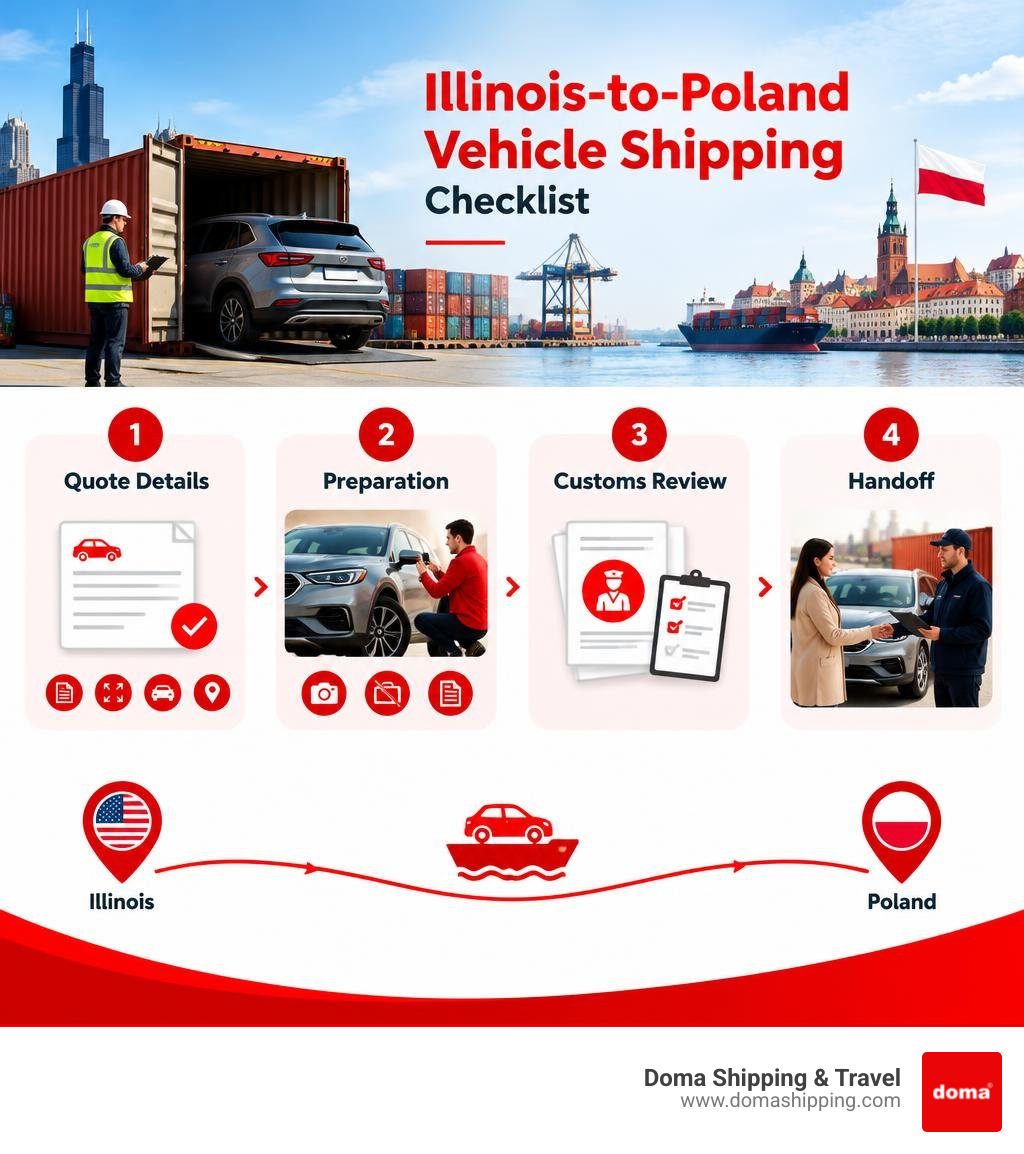
Illinois auto shipping terms to know:
Exporting a vehicle overseas requires precise coordination from the moment it leaves your driveway or storage facility. For over 30 years, our team at Doma Shipping & Travel has supported the Polish-American community across the greater Chicago area—including Chicago, Melrose Park, Mount Prospect, Roselle, Palos Hills, Algonquin, Niles, Park Ridge, Des Plaines, Glenview, Franklin Park, Schiller Park, Bensenville, and Schaumburg. We understand that navigating international shipping logistics involves balancing domestic pickup schedules, port cut-off dates, ocean freight transit, and customs clearance procedures.
When requesting an accurate quote, several factors come into play. Auto transport pricing is influenced by the make and model of your automobile, overall dimensions, curb weight, operating condition, and the chosen transport method. Please note that our online parcel calculator is intended solely for standard parcels and does not apply to vehicle or household removal quotes. To determine exact costs, refer to our verified price list and contact our team for an individualized assessment tailored to your route and timeline.
Timing is critical. U.S. Customs and Border Protection (CBP) mandates strict document submission deadlines before any motor vehicle can be cleared for export. We recommend initiating your arrangements several weeks in advance to ensure carrier availability and avoid last-minute delays.
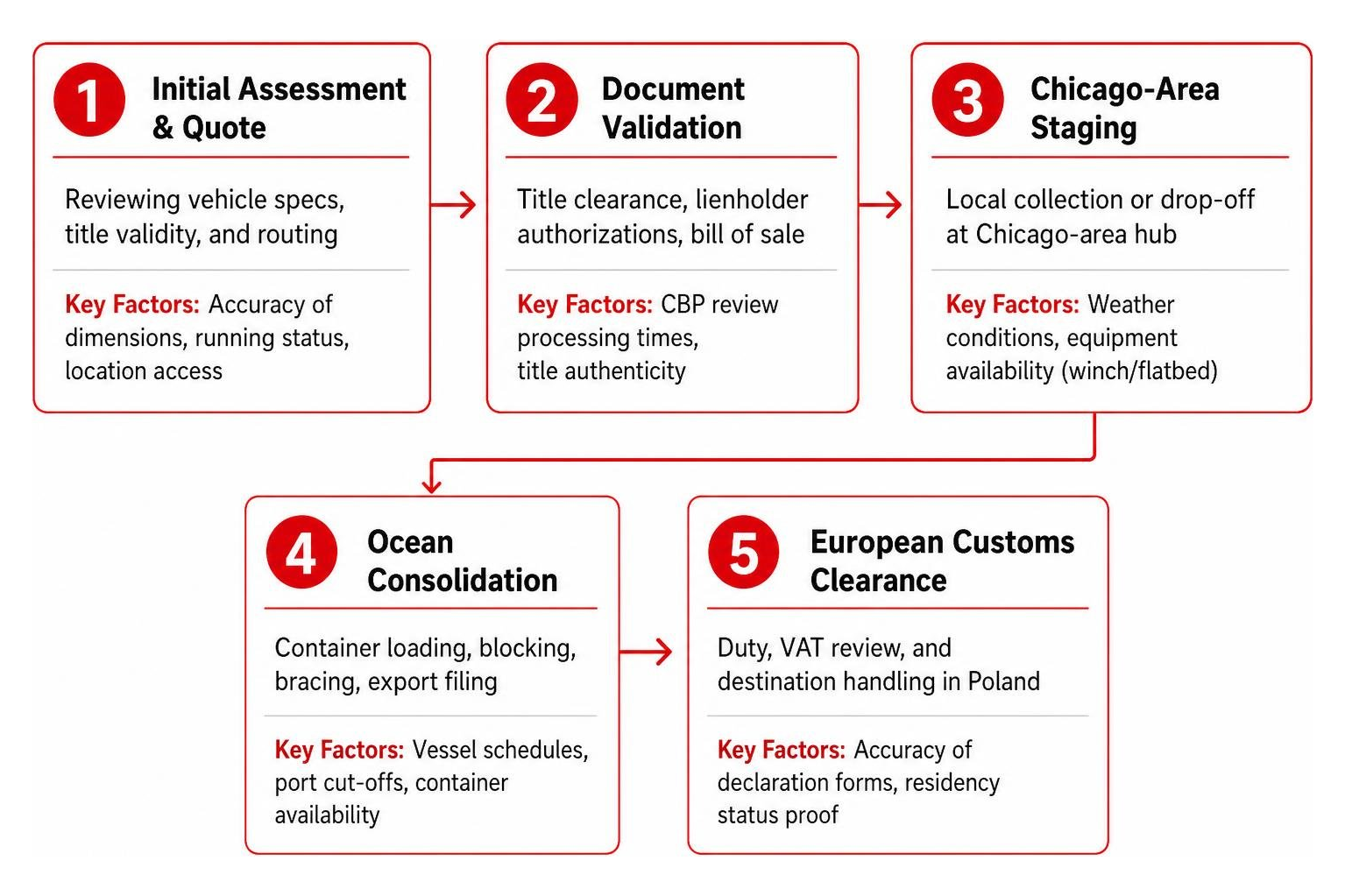
| Shipping Stage | Primary Operational Focus | Key Factors Influencing Timing |
|---|---|---|
| Initial Assessment & Quote | Reviewing vehicle specs, title validity, and routing | Accuracy of dimensions, running status, location access |
| Document Validation | Title clearance, lienholder authorizations, bill of sale | CBP review processing times, title authenticity |
| Chicago-Area Staging | Local collection or drop-off at Chicago-area hub | Weather conditions, equipment availability (winch/flatbed) |
| Ocean Consolidation | Container loading, blocking, bracing, export filing | Vessel schedules, port cut-offs, container availability |
| European Customs Clearance | Duty, VAT review, and destination handling in Poland | Accuracy of declaration forms, residency status proof |
Before scheduling, always review the official guidelines for Exporting a Motor Vehicle via U.S. Customs and Border Protection to ensure your paperwork meets federal standards.
Planning auto shipping in Illinois requires evaluating physical, logistical, and environmental variables:
Shipping a non-running car—such as an unfinished project vehicle, classic restoration, or salvage purchase—requires specialized handling. You must disclose the operating state of your vehicle upfront when requesting an individualized estimate.
Loading an inoperable vehicle requires specialized equipment, such as winches, rollback flatbeds, or specialized wheel-lift systems. If the car does not roll, steer, or brake, additional recovery equipment is required to maneuver it safely into an export container without risking body or undercarriage damage. Contact our bilingual support specialists to review your vehicle’s mechanical status so we can dispatch the appropriate handling resources across our Chicagoland service network.
Properly preparing your car minimizes delays, prevents transit damage, and facilitates smooth customs inspections both at the U.S. port of departure and upon arrival in Europe.
Selecting the right transport method depends on the vehicle’s market value, condition, and overall relocation budget:
If you are moving personal effects alongside your automobile, learn more about organizing a comprehensive relocation through our guide on shipping a car from the USA to Poland as resettlement property.
When our transport specialists arrive for pickup at your residence or storage facility in Des Plaines, Schaumburg, or Franklin Park, a comprehensive physical inspection is conducted.
Every pre-existing scratch, dent, or mechanical anomaly is marked on the Bill of Lading (BOL) or condition report. Both the carrier driver and the vehicle owner must review, confirm, and sign this document. Keep a signed copy for your records alongside your photo documentation. Our dispatch team coordinates export schedules and keeps you informed as your vehicle moves toward ocean consolidation.
Exporting an automobile requires strict adherence to U.S. federal laws and destination country import regulations. To avoid border delays or seizure, assemble the following verified documents:
When shipping to Poland or the European Union, import duty, excise tax, and Value Added Tax (VAT) may apply depending on vehicle age, engine displacement, and whether you qualify for personal relocation property exemptions (mienie przesiedleńcze). Exemption qualifications depend on specific residency durations and prior vehicle ownership periods; consult our team or the relevant customs authority to determine your eligibility.
Marine cargo insurance options should always be reviewed prior to transport. Standard carrier liability provides limited baseline protection; comprehensive marine insurance covers physical loss or damage from external causes during ocean transit. Document the vehicle’s condition thoroughly at handoff, and review our dedicated resource on shipping your car from Illinois to international ports to ensure complete regulatory compliance.
You should never assume personal items are accepted or insured inside a vehicle during transport. Maritime security standards and U.S. Customs export protocols place strict limitations on loose cargo stored in exported automobiles. In shared container shipments or RoRo transport, vehicles must generally be completely empty of personal belongings. When booking a dedicated full container (FCL), you may consolidate authorized personal goods, provided every item is accurately declared on a comprehensive packing list for customs clearance. Personal items inside the vehicle are not covered under standard auto transport cargo insurance. Contact our team in advance to verify whether your specific routing permits additional packed goods.
Total transit time varies depending on the pickup location across the Chicago metropolitan area, scheduling windows, domestic staging, ocean transit routes, port congestion, and local customs clearance at European entry ports like Gdynia, Bremerhaven, or Rotterdam. Typically, ocean freight from U.S. East Coast/Midwest staging hubs to northern European ports takes several weeks once the vessel departs. Weather patterns, seasonal shipping volumes, and customs document processing can influence these timelines. For current routing schedules and individualized estimates, explore our vehicle and machinery shipping services and speak directly with our dispatch specialists.
To protect your investment and avoid logistics pitfalls:
Successfully shipping an automobile from Illinois to Poland or broader European destinations requires proactive preparation, complete documentation, and experienced logistics oversight. By organizing your vehicle title, verifying customs paperwork, preparing the automobile to international maritime standards, and choosing the appropriate container transport method, you can significantly reduce the risk of unexpected transit delays.
Whether you are shipping a daily commuter car, a high-value classic, an inoperable restoration project, or a motorcycle, our bilingual team at Doma Shipping & Travel brings over three decades of trusted freight forwarding experience to your transport plan.
For an individualized vehicle shipping quote tailored to your exact make, model, and destination, reach out to our team through our contact page or consult our official price list today. Let our experienced specialists manage the logistics, documentation, and container shipping process from our local Chicago-area hubs directly to Europe.