Where Is Your Shipment and How Does a DHL Paket International Tracking Number Work
How to Track a DHL Paket International Shipment
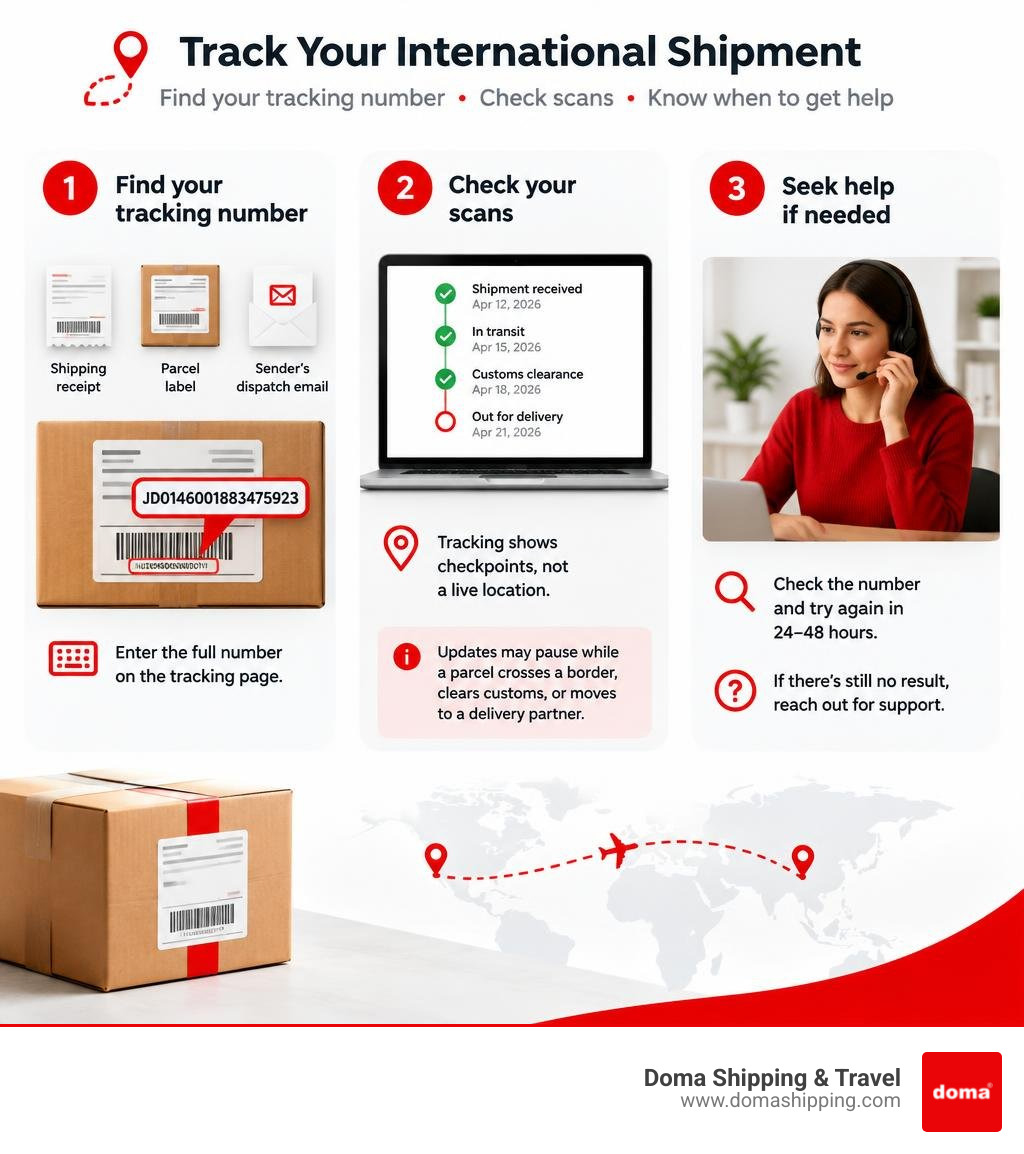
Find your DHL Paket international tracking number on your shipping receipt, parcel label, or sender’s dispatch email. Enter the full number on DHL’s tracking page to see the latest scan. If no result appears, check the number and try again in 24-48 hours. The first update may not show until DHL receives and scans the parcel.
Tracking shows checkpoints, not a live location. Updates may pause while a parcel crosses a border, clears customs, or moves to a delivery partner. This guide explains how to read those updates and what to do when tracking stops.
Doma Shipping & Travel ships internationally from the USA to Poland and other European countries. If your parcel was sent through Doma, use the tracking details provided for that shipment rather than assuming it has a DHL Paket number.
Dhl paket international tracking number terms explained:
Understanding the DHL Paket International Tracking Number Format and Features
Every overseas shipment needs a distinct identifier so sorting facilities, customs brokers, and postal authorities can log its journey. When managing cross-border logistics, learning everything you need to know about international parcel tracking makes it straightforward to pinpoint where your box is in the delivery pipeline.
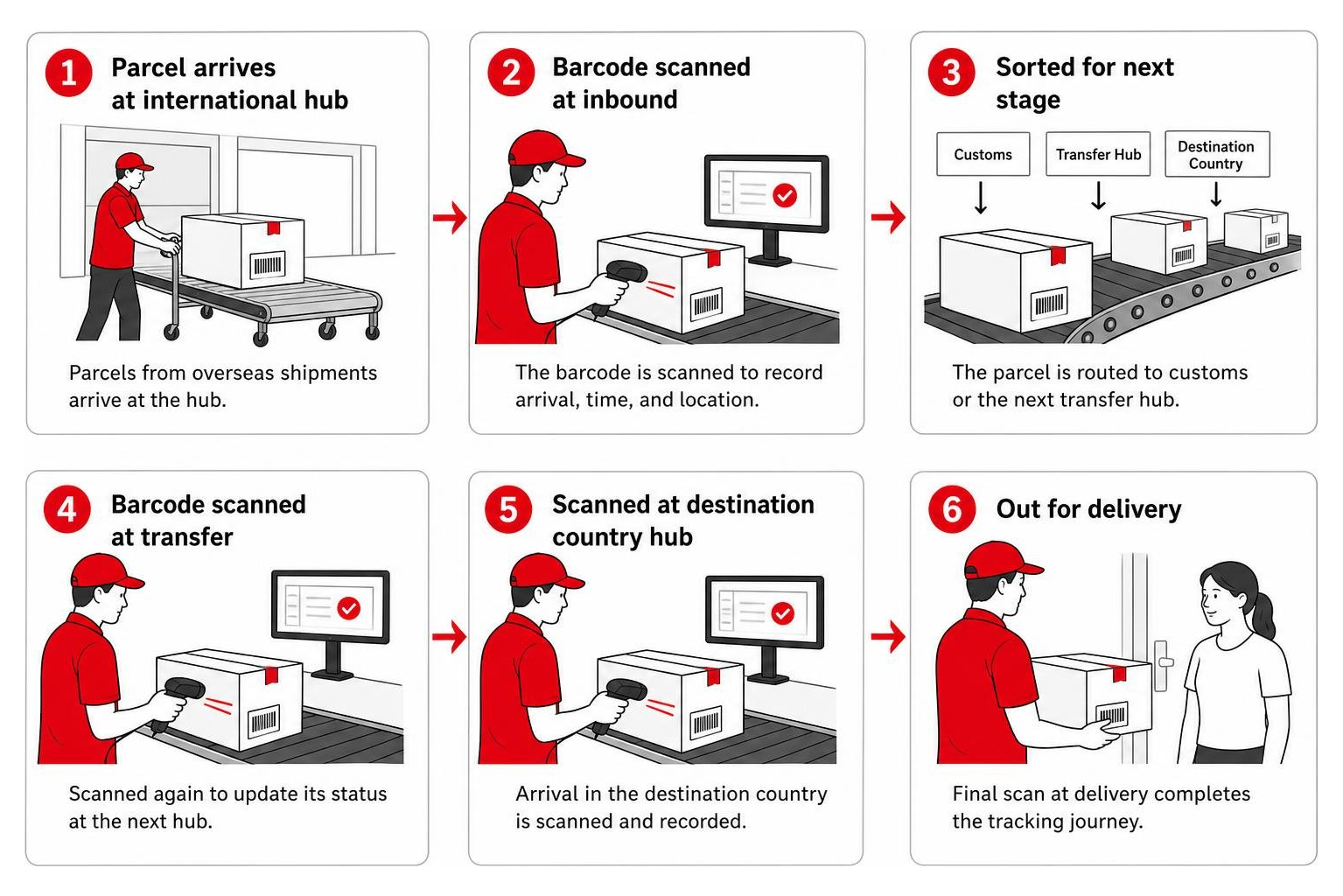
A tracking identifier acts as a digital passport for your box. As it travels between international distribution centers, sorting machinery reads the barcode on the parcel label, registering the time, location, and operational event in a centralized database.
How to Locate Your DHL Paket International Tracking Number
Finding your tracking number depends on how the shipment was originated:
Shipping Confirmation Emails: Online retailers and shippers automatically email dispatch notices once an order is packed. Look for phrases like „Track Your Parcel,” „Shipment Number,” or „Sendungsnummer.”
Physical Shipping Receipts: If you dropped off a package at a postal counter or service point, your paper receipt displays a barcode with the tracking string directly beneath it.
Waybills and Parcel Labels: The identifier sits above or below the primary scan code on the exterior shipping label.
Merchant Account Dashboards: Logging into the retailer platform where the purchase was made will reveal the fulfillment status along with the active tracking reference.
Structure and Syntax of a DHL Paket International Tracking Number
Unlike standard domestic parcels that may use simple numeric codes, international shipments use standardized alphanumeric patterns to ensure compatibility across global logistics databases. Tracking strings range from 10 to 30 characters.
Many international postal parcels follow Universal Postal Union (UPU) S10 standards. These 13-character codes start with two letters (such as „C” for standard parcel, „L” for letter-post/small packet, or „R” for registered items), followed by nine digits, and conclude with a two-letter country identifier like „DE” for Germany.
Other DHL network branches employ distinct syntax rules:
Carrier Division / Service
Typical Number Format
Character Length
Sample Syntax
DHL Paket International (UPU Standard)
2 Letters + 9 Digits + 2 Country Letters
13 Characters
CY123456789DE, RA987654321DE
DHL Paket (Domestic/Standard Numeric)
Purely Numeric
12 or 20 Digits
00340434161094019238, 329482910482
DHL Express
Numeric or Specific Prefix
10 Digits (or starts with JJD01, JVGL)
1234567890, JJD0199999999
DHL eCommerce
Alphanumeric (GM, LX, RX, JD)
10 to 39 Characters
GM2751140000000000, JD014600000000
DHL Freight
Numeric or Dash-Separated
9, 10, 14 Digits (or 1234-56789)
4589-12345, 9876543210
If you ever compare these with other major global carriers, you will notice distinct differences. UPS tracking numbers strictly feature an 18-character alphanumeric string starting with 1Z, FedEx primarily uses 12-to-20-digit numerical codes, and domestic USPS tracking generally relies on 20-to-22-digit numeric sequences.
How to Track DHL Paket Shipments Across International Borders
Tracking a parcel across borders involves checking status updates as it passes through sorting terminals, export customs facilities, and international transit hubs. Accessing the official carrier lookup page or a dedicated Tracking Portal gives you immediate access to milestone records.
When monitoring goods moving overseas, utilizing the easiest way to track international shipment systems prevents confusion, especially when multiple couriers handle different legs of the journey.
Step-by-Step Guide to Online Parcel Monitoring
Access the Tracking Interface: Open the official tracking tool via your web browser or mobile device, such as the regional Tracking – DHL – United States of America portal.
Input the Tracking Code: Enter your complete alphanumeric or numeric sequence into the input field. Avoid inserting extra spaces, hyphens, or special symbols unless your specific freight code explicitly requires them. If querying multiple shipments at once, separate distinct codes using commas, spaces, or semicolons.
Review Milestone Details: Click the search button to view the chronological event history. This logs departure scans, customs clearances, international gateway arrivals, and local transfer stages.
Subscribe to Milestone Alerts: Many portals permit users to register an email address or mobile number to receive automatic notifications whenever a new scan occurs. Shippers who regularly send overseas freight can master global parcel monitoring with a reliable world wide shipping tracker to keep tabs on multiple consignments simultaneously.
How DHL Paket Shipments Are Routed Internationally
International postal parcels move through a hub-and-spoke logistics network:
Origin Sorting: The parcel is dropped off, scanned, and routed to an international outbound hub (mail terminal).
Export Processing: Export documentation is registered, and the package is placed into an overseas air or ocean transport container.
Linehaul Transit: The shipment travels between continents. Because standard parcels do not contain active GPS tracking chips, status updates pause during ocean or long-haul air transit.
Import Customs Clearance: Upon arrival in the destination country, customs officers inspect shipping manifests, check package contents, and assess import duties.
Handover to Destination Postal Authorities: Once cleared by customs, DHL Paket consignments are handed over to the local national postal system or regional delivery affiliate for final-mile transportation.
Decoding Shipment Statuses and International Delivery Timelines
Understanding status messages helps you evaluate whether your package is moving normally or experiencing an operational hold. Knowing how to stay on top of your international shipping status makes reading these event logs simple.
Common Tracking Statuses and What They Mean
Shipment Information Received / Label Created: The sender generated a shipping label electronically, but the physical carton has not yet been processed at the initial intake facility.
Processed at Mailterminal: The parcel has arrived at a regional sorting center and passed through automated barcode scanning systems.
The shipment will be transported to the destination country/destination area: The item has been sorted for cross-border transit and is waiting for transport space on an outbound flight or vessel.
Arrival at Border Point of Entry / In Customs Clearance: The consignment has reached the destination nation and is undergoing border inspection.
Processed at Destination Hub: Local authorities have cleared the shipment and passed it to the final-mile carrier.
Out for Delivery: A local courier has loaded the parcel onto a delivery vehicle for final handover to the recipient.
Typical Delivery Times for European and Global Parcels
Delivery speed varies depending on the destination region, transit mode, and customs inspection depth:
Intra-European Union Shipments: Standard European postal deliveries typically conclude within 2 to 4 business days, as customs borders within the EU do not require import clearance checks.
Non-EU and Transatlantic Postal Shipments: Standard international parcel shipments between North America and European destinations typically take 5 to 9 business days, though extended border processing can stretch delivery to 1 to 2 weeks.
Express Air Services: Premium courier tiers like DHL Express prioritize transit, often completing deliveries within 2 to 3 business days globally.
Terminal Storage Holds: If a package cannot be delivered immediately due to an absent recipient or pending duty payment, postal facilities generally hold the parcel for up to 7 days before initiating a return to sender.
Troubleshooting DHL Paket Tracking Delays and Common Errors
Seeing your tracking progress stall can be stressful. Utilizing modern systems designed for real-time package tracking helps you determine when a delay is normal and when it requires action.
Why Tracking Information Is Not Updating
If your tracking display has not changed for several consecutive days, one of these standard logistics scenarios is usually the reason:
Initial Processing Window: Carrier systems regularly require 24 to 48 hours after label generation for physical intake scans to appear in public tracking portals.
Transit Checkpoint Gaps: International packages do not transmit real-time GPS coordinates. Long intervals without new scans occur naturally while a cargo container is mid-flight or crossing the ocean between international gateways.
Customs Inspections and Document Reviews: Border agencies operate independently of transport carriers. Packages selected for physical inspection or duty evaluation will show static tracking statuses until customs agents complete their review.
Handoff Between Partner Networks: When an international parcel transfers from an originating postal network to a destination postal entity, a short reporting lag can occur before the receiving carrier registers the package into their local tracking database.
Tracking Without a Number and Resolving Status Glitches
If your tracking number is missing, try these recovery steps:
Check Merchant Receipts: Review original payment confirmations, order invoices, and shipping notification emails from the retailer.
Utilize Alternative Reference Numbers: Specific freight divisions allow tracking via purchase order numbers, customer reference codes, or master bill numbers.
Contact the Shipper Directly: Senders hold the primary shipping manifests and can request formal carrier traces if an item has had no tracking activity for more than 10 days past its estimated delivery date.
Frequently Asked Questions About International DHL Tracking
When will tracking information appear after dropping off a package?
Tracking events typically populate within 24 to 48 hours after a parcel is dropped off. While a counter agent might scan the box immediately, internal database updates become visible once the carton arrives at the primary regional sorting terminal.
Why is my tracking status stuck at customs or a mail terminal?
A status indicating processing at a mail terminal or customs clearance point often reflects international administrative requirements. Cross-border packages must clear regulatory manifests, security screenings, and duty determinations. During high-volume seasonal shipping periods, customs queues can take a few additional days to clear.
Can I track an international package without the tracking code?
Standard public tracking search tools require a valid tracking code to retrieve shipment milestones. If you have misplaced this code, contact the sender or merchant who scheduled the shipment. They can look up your dispatch profile using your order ID, recipient address, or account reference.
Conclusion
Understanding how international tracking identifiers function brings peace of mind when sending or receiving cargo across oceans. From recognizing the 13-character UPU format to interpreting customs processing milestones, knowing what each status update means lets you monitor your parcel’s progress with ease.
At Doma Shipping & Travel, we have spent more than three decades helping the Polish-American community across the greater Chicago area ship parcels, personal effects, and commercial cargo from the United States to Poland and across Europe. Our bilingual team manages end-to-end overseas logistics, export documentation, and customs clearance so your international consignments arrive safely. For clear updates on your cross-border shipments to Europe, visit our dedicated tracking paczek platform to monitor your delivery progress every step of the way.