
Consolidation services to Poland combine smaller shipments from the USA into a shared international load. Each shipment is recorded and packed, then travels alongside other cargo before being sorted for delivery in Poland. This lets you ship boxes or pallets without filling a container yourself.
If you’re sending goods to family or moving to Poland, start with an accurate packing list and check which items may need customs documents. Sharing space does not remove the need to declare your own goods.
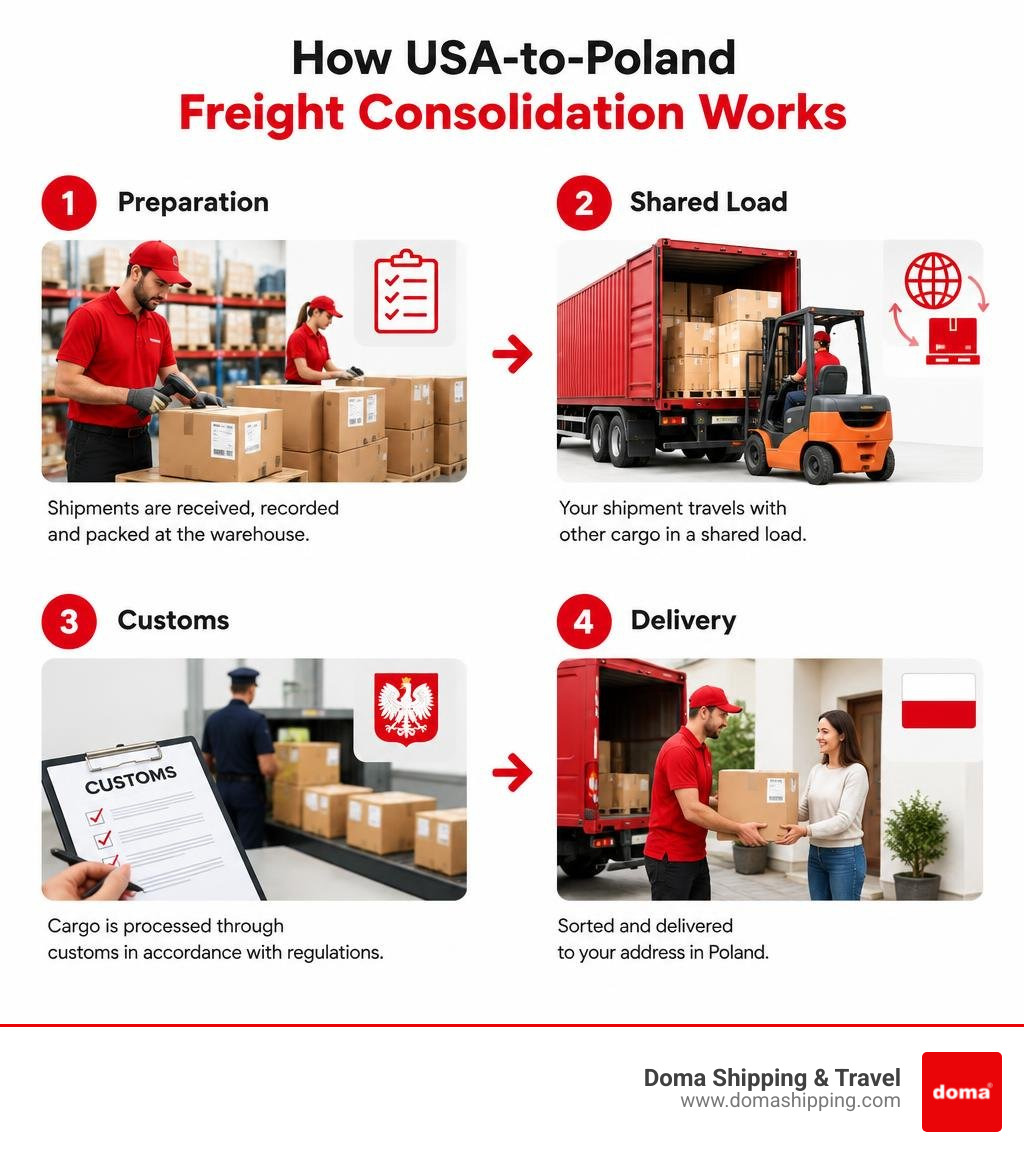
Quick consolidation services to Poland definitions:
International supply chains rely heavily on cargo grouping to maximize ocean container and air freight capacities. When shipping overseas from the United States, smaller individual consignments are brought together into unified shipments. This method, historically known in freight logistics as groupage, allows multiple senders to share container space efficiently. Navigating these requirements is straightforward when following a comprehensive guide to shipping to Poland in 2026.

The consolidation process begins across our regional receiving terminals in Illinois—including facilities in Chicago, Franklin Park, Schiller Park, and Niles. Individual packages, crated items, and commercial freight are logged into our centralized inventory management system. Our dispatch teams evaluate the weight, volume, and commodity classifications of each parcel, grouping complementary items to optimize space within standard 20-foot or 40-foot ocean containers or specialized air cargo pallets.
Cargo intake requires strict organization to maintain complete accountability. When freight arrives at an intake center—whether dropped off in Mount Prospect, Schaumburg, or Bensenville—the consignment undergoes thorough intake processing:
Once sea containers reach Europe, they transfer via modern rail and highway corridors directly to central consolidation points such as Legnica and Kielce. These strategic distribution hubs provide immediate cross-dock processing, dividing full container freights into regional ground delivery routes across Poland and neighboring European territories.
Securing cargo within shared ocean containers demands professional engineering and adherence to international safety standards. Unsecured loads risk shifting on open water or during rail transport, potentially damaging adjacent packages.

European transit regulations, specifically the EN 12195 standard, outline required restraint forces for road and intermodal transport. To ensure strict compliance:
Carrier liability frameworks require rigorous documentation of these cargo-securing steps before departure, ensuring that every box remains undamaged from our American loading docks to the final destination in Europe.
Choosing between consolidated groupage and dedicated container shipping depends on volume, shipment frequency, and operational requirements. Consolidating shipments provides balanced capacity planning for individuals and businesses alike.
| Shipping Factor | Freight Consolidation (Groupage / LCL) | Full Container Load (FCL) |
|---|---|---|
| Cargo Volume | Small boxes up to multiple pallets | Full 20ft or 40ft ocean container |
| Space Utilization | Pay only for exact volume/weight used | Dedicated container regardless of fill rate |
| Documentation | Handled under a consolidated manifest | Dedicated single-entry customs clearance |
| Flexibility | Frequent, regular departures | Dependent on accumulating full loads |
| Handling Steps | Consolidated at hub, deconsolidated at destination | Sealed at origin, opened at final destination |
| Ideal For | Personal effects, smaller commercial runs | High-volume industrial freight, full relocations |
Understanding the distinction between less than container load shipping and full container load shipping enables senders to select the optimal logistical framework for their schedule and cargo profile.
Freight consolidation eliminates the need to reserve an entire ocean container when shipping moderate quantities of goods. Senders utilize shared container space, dividing transatlantic transport capacities evenly among all participating cargo.
Consolidating shipments enables manageable scheduling:
Whether moving several boxes from Palos Hills, sending business samples from Elk Grove, or relocating household goods from Glenview, groupage ensures every cubic foot is utilized efficiently.
Commercial organizations rely on consolidated freight channels to maintain resilient, agile supply chains between North America and Central Europe. Utilizing integrated business freight solutions across Poland gives importers predictable schedules and dependable carrier accountability.

A single-carrier model reduces administrative complexity. With one logistics partner managing the cargo from origin intake across Illinois to European deconsolidation hubs, enterprises benefit from unified milestone tracking, predictable arrival schedules, and standardized handling.
Crossing international borders requires complete regulatory compliance. Consolidated shipping standardizes the customs entry process by aggregating multiple shipments under synchronized electronic declarations while maintaining individual accountability for every item.
Accurate documentation prevents delays at European Union points of entry. Every consolidated load requires complete itemization before export containers are sealed at American terminals.
Essential export and import documents include:
Senders preparing standard cartons via international parcel shipping must provide clear declarations to ensure trouble-free processing through Polish Customs.
Consolidated cargo moves through customs clearance via standardized manifest filing. Individual consignments are cataloged into an integrated electronic master document, enabling customs authorities at European ports to review entire containers efficiently.
Our bilingual logistics coordinators oversee each step of declaration processing, verifying documentation before ocean vessels depart U.S. ports. This advance preparation ensures that import duties, VAT classifications, and regulatory checks are completed smoothly, allowing cargo to move quickly from port terminals to regional delivery networks.
Overseas freight transit times vary based on the selected mode of transport, seasonal weather conditions, and port logistics.
When scheduling transatlantic shipments, consult our guide to pallet transport from the USA to Poland to choose the right transit schedule for your requirements.
Consolidation schedules and transit planning depend on several operational factors:
Modern consolidation logistics depend on responsive warehouse management systems and direct cargo visibility.
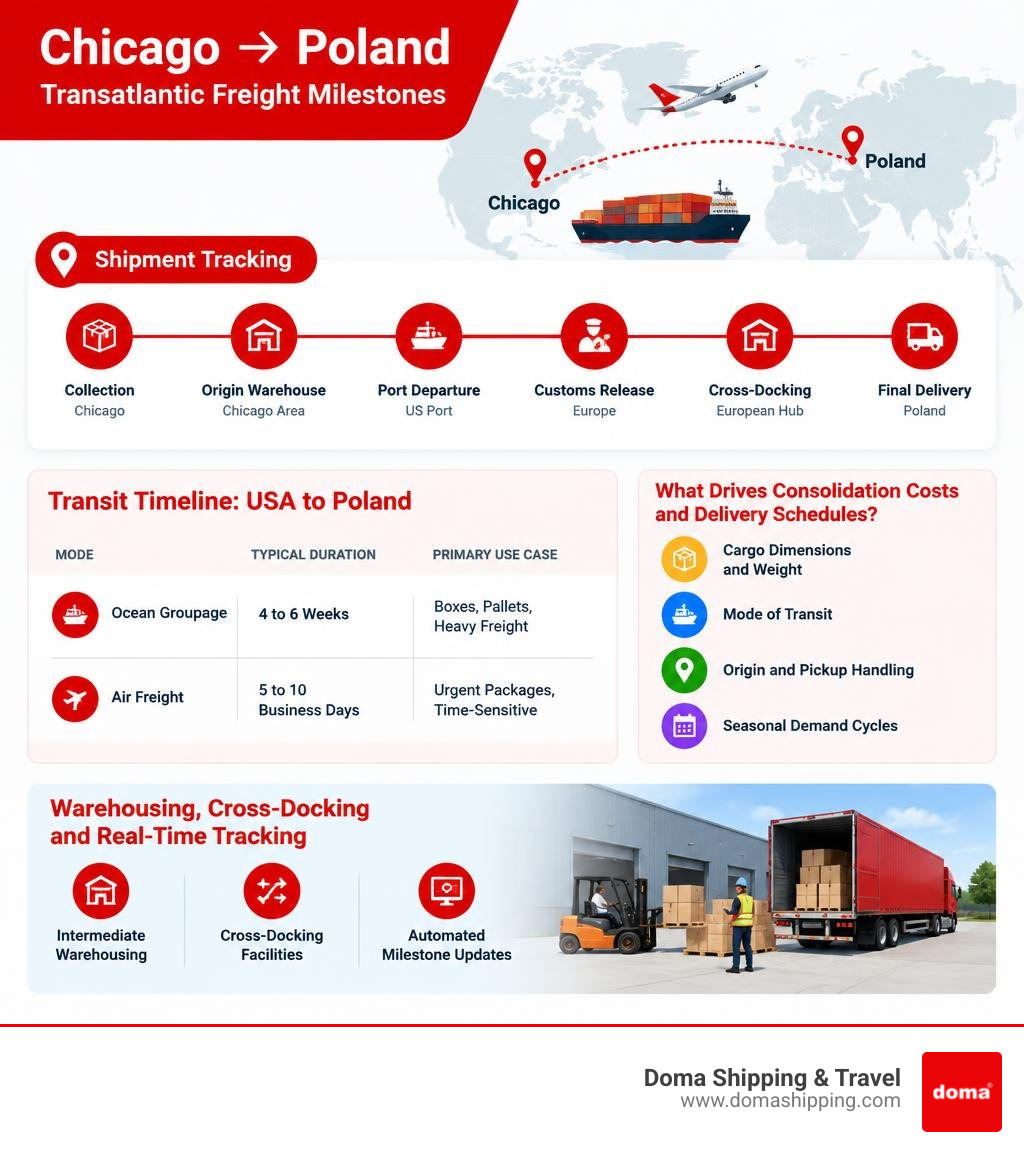
Our consolidation network offers end-to-end operational visibility:
Consolidation services accommodate a wide range of dry commodities, including palletized commercial merchandise, industrial equipment, personal household goods, boxed packages, and dry goods. Hazardous materials, flammable liquids, perishable foodstuffs requiring temperature control, and prohibited contraband cannot be consolidated into shared containers.
Shipments travel under standard international maritime and air cargo liability conventions. Senders can select extended freight insurance options for added protection. In the rare event of transit delays or physical damage, our bilingual customer support team in the Chicago area manages claims directly, using centralized tracking records to resolve issues promptly.
Working with a single carrier provides end-to-end custody of your shipment. It eliminates communication gaps between separate domestic trucking companies, export brokers, ocean lines, and foreign delivery agents. With one logistics partner managing origin pickup, container packing, customs clearance, and European distribution, you get clear accountability, synchronized tracking, and dedicated support.
Freight consolidation remains the most practical and efficient way to send boxes, pallets, and commercial goods from the United States to Poland. By combining multiple shipments into shared containers, senders benefit from regular departures, balanced resource use, and organized customs processing.
With more than three decades of experience serving the Polish-American community across Chicago, Melrose Park, Niles, Park Ridge, and surrounding suburbs, Doma Shipping provides complete international freight solutions. Our bilingual team assists you at every stage—from packaging preparation and documentation to transatlantic transport, customs handling, and door-to-door delivery across Poland.